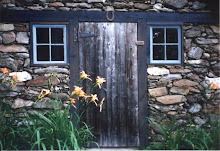
To That Room
And I return to that town,
to that house,
to that room,
the bones of the dead beneath me;
they know me
though I do not know them.
I'm surrounded by the books and papers
of other dead;
I know them
though they do not know me.
This earth: the remains of strangers
naturalized by death.
I return
because one must return,
because the dead must rise again.
A Distant Country
How many bedrooms do I need
to get a bit of sleep?
How many chairs
to sit myself down?
How many roads
to walk back to you,
my distant country?
This time I've gone
and I'm not coming back.
Your job, now, is to slip out,
lovesick and afraid,
and come in search of me.
Lightning Writes Poetry
Lightning never sits down at a table
to write poetry,
yet it is poetry's only embodiment.
It lights up the whole universe
then disappears.
What poet hasn't dreamed
of becoming lightning?
As For My Singing
"Sing, sing before we slit your throat."
Did they think fear
would disturb my song?
True, I was scared of life,
but death
is the last thing I'm afraid of.
Why would a free man fear
to meet a friend?
So let our embrace be tinged with blood.
As for my singing in this moment,
I want it to be perfect.
My freedom lies in this:
No matter what they do,
the murderers still
cannot disturb my song.
______________
Najwan Darwish
No One Will Allow You Tomorrow
translated from the Arabic by Kareem James Abu-Zeid
Yale Univ. Press, 2024