2025
daydreaming w/ Bob Arnold

Morning Letter to Friends
Bob Arnold
Children in the Wood

Bob reads his poem "Shelter" (2025)
New, perfect bound, 170 pages of poems
Longhouse, Publishers & Booksellers
Limited to only 100 copies:
$20
plus $5 shipping
by Paypal or check
_______________________________
LONGHOUSE
P.O. Box 2454
West Brattleboro
Vermont
05303


Purchase MUSEUM
~ Update ~
BTW, Birthday wishes for Bob with all love, Sweetheart!
 |
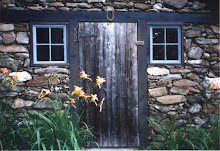
| Stone work by Bob Arnold, Summer Flowers 2025 |


Please use our email address :
longhousepoetry@gmail.com
Longhouse
PO Box 2454
West Brattleboro
Vermont
05303


New, perfect bound, 115 pages of poems
with an introduction by Margaret Randall
Limited:
$20
plus $5 shipping
by Paypal or check
_______________________________
LONGHOUSE
P.O. Box 2454
West Brattleboro
Vermont
05303

Here's a stone wall I built in March 2025 when two days of thaw slipped in for a moment and I got to work. I was widening a bar-way ten-feet and had to tear down the stone corner you see and rebuild. Tricky. The stone wall run in the background I built in the early 80s. The mound I'm standing on was leveled by shovel and all the stone pulled out of the ground and from an old stone wall in the way went into the new wall I am standing beside. The ground was still blocked with frost and going at it a little at a time each day removed the mound. Even before any of this work could be started there were two four foot high snow banks to shovel away and base ice to melt. Now three weeks later two full days of snow is back since March won't let go. Once it does, a full truck load of 3/4 stone will arrive and we'll get this bar-way looking pretty.
[ BA ]
photograph by Susan Arnold

A collection of ten new poems
_________________
Anthem
It was the most exciting country in the modern age. It had
mountains and rivers and cities and towns and villages and prairies
and canyons and dead ends and avenues and broadways and even
a sunset strip. A Big Muddy. It was an empire, and a folk song, and
a parade. A myriad of languages and skin color and appearances.
It had been away in world wars and bombed and also been bombed
upon, millions had died and also been born. The sun came up, the
sun went down. Stars at night overlooked all of it. Nothing was
spared. It was working, not perfectly, which is what made every
day involving. If the land was perfect, the sun and moon and stars
wouldn't have been needed. They came to help. All the people had
to do was also help themselves, and one another. It was already
there the way each person was made with two legs and two arms
and hands and two ears and eyes and a mouth that could talk. The
ability to talk! Animals couldn't talk but the people could talk to the
animals, they could talk to anything. To themselves, to a stranger, to
a loved one, while wandering lost in the woods. You are never lost
because you can talk. Until that day you refuse to talk and instead
you lie, which isn't talk, but backward words. And one comes and
lies and then another sees that easy advantage and they lie and soon
a room is lying, a whole building, all the town, into the bright lights
of the cities and soon lies sweep across the prairies. In less time than
you think everything that was working well, is now broken. A vast
majority have decided broken, somehow, is best. There are millions
of people who will now take over and lead this broken existence. In
basic electronics it is called a loose wire. Left to its own devices, it
will burn a house down.
~ Bob Arnold
$ 12.95
Free shipping in the USA
We accept Paypal or we can invoice you
Please use our email address of
longhousepoetry@gmail.com
More ways to order ~ through ABE Books, Alibris and Biblio
Payable by check ~
Longhouse
PO Box 2454
West Brattleboro, Vermont 05303
Trent Cooper
BOB ARNOLD'S
"FEW WORDS, MANY BOOKS, UNWAVERING LOVE"
Book Review: Cup, Faraway Like the Deer's Eye, and Darling Companion by Bob Arnold
by Svetlana Litvinchuk
October 4, 2024

Bob Arnold is one of those rare visionary poets whose work stands the test of time, bypassing trends to arrive at something foundational. With his impeccable vision, he makes it his mission to get us to slow down and see what matters in this brief life. Even from a moving train speeding from Chicago out west and back again, which is the setting for his collection, Darling Companion, he reminds us to take time to notice, to “find sunlight to sit in,” and to ponder things like, “Nebraska. When will they have time to chop all this corn” or the reasons why “as we cross America/ look up every main street— nobody.”
Arnold doesn’t use a lot of words yet manages to say so much. One remarkable quality of his writing is that there is almost no sense of the poet himself in his aphorism-like poems. His scenes are always grounded in a strong sense of place but his mastery is in showing while making the narrator invisible, managing to melt into the scenery with jewels like,
“in a new land
otherwise taken for granted—
the evening breeze
touching every leaf.”

This is a gift he bestows upon the reader— he offers pure glimpses and unmarred observations of landscapes and of Americana, urging us to pay attention, or in his own words, to “buy so many postcards— as if you’ll never return.” By stitching together tiny vignettes, Arnold paints a larger picture of rural life that seems to expand throughout his work. With precision and economy of words, he whittles poems down to attain the minimalist aesthetic that befits an ascetic. Take the poem, “Mountain” for instance, which with four simple words creates a story of a mountain greeting the day:
“Mount Blanca
Sunrise
Stone”
His work relies on recurring themes, and we get the sense that he writes poems the same way he builds cabins, constructing images piece by piece until they are large enough so the reader can walk around inside and look around. Much as in architecture, the materials are basic and uniform, the words are simple building blocks. But the artistry is in their configuration; the grandness is in the whole becoming greater than the sum of its parts.
Always present in his work is his obvious fondness for his partner, Susan, his cup of his love overflowing for her at every opportunity. In his book Cup, we get a deep yet brief and intimate glimpse of their decades-long love affair taking place in their small cabin where he chops wood, washes her hair by the fire, gazes at the way it falls in front of her face, and takes the time to admire her long cotton skirts as he melts snow into water, and we are endeared by the flour on her lips in her otherwise clean kitchen after she finishes baking and watches the river freezing, then thawing, then flooding the bridge into town. He shows us that we are ultimately defined by who we love and how we love them, by what we do and why we do it.
In Arnold’s work, Susan is not a figure left to our imaginations shrouded in mystery, as her photographs liberally grace the pages of his other books. In Far Away Like a Deer’s Eye, we get a deep look into his entire life through stories that span his childhood all the way into the present where we find him today, well into his 70’s, complete with color photos of the poet and his muse growing older together and as in love as ever. Through this glimpse of their shared lives we are warmed by the fire of the unfolding tale of the tender tale of their marriage and family.
Bob Arnold is a poet with a strong back and an open heart, but his words are not those of a romantic. He is never effusive or overly sentimental. His poems are bare as a no-frills cabin life in the woods of Vermont. Still, they are gentle, precise, and devoted, a hallmark of a carpenter who has been softened by years of reverence for the forest. His cool, even tone gives rise to a deep well of emotion as he tells us about “places[s] of many trees, grasses, and children playing and we could have broke down weeping to see the earth this way.” Over the decades, Arnold has honed the skill of helping us access a passion for the natural world and the interconnectedness of human relationships, showing us what a true humanitarian, environmentalist, and craftsman aspires to, leading us to beauty both very near and the very far with lines like,
“same stars as home
except these nearly
touch the ground”
and
“not electric lines anymore
across New Mexico plains—
strings of sunlight”

Despite his brevity, his attention to detail and simultaneous hawk’s eye for the big picture is a gift. Zooming in and out, he says much in what he leaves unsaid, painting millennia-long stories of fields with “trees far off/ never climbed by a child/ only crows.”
While each short poem has its own legs to stand on, with a singular pearl of wisdom to share, woven together into a collection the poems create an inspiring landscape. Through repetition of the images of things that surround him, like trees, snow, the wood stove, and the bowls in their kitchen, the reader can cobble together a broader panorama of the world and the few things in it that matter. Arnold makes connections in quiet, pensive, and humorous ways with observations like:
“$35 night
in Kayenta—
motel hot
water is cold
cold is scalding
drain is slow”
Wholly Zen with an untiring admiration for nature, his ability to notice and to help us see is unfaltering. His books are candid, the poems brief, yet in a series of vignettes strung together he opens our field of vision to an unfolding landscape that leads us up the mountain of the Self, placing a picture window in front of us and sitting us by the wood stove. As we gaze, he tells us stories, quietly gathers kindling, and builds a fire to keep us warm as we look out onto the world, remembering that our Earth is merely a “rock rising to light.” All that matters, his poems tell us, is to take a few deep breaths and to practice seeing the fleeting nature of life on our own, to find the beauty in it—the magic, the love.
Svetlana Litvinchuk holds a double degree in Foreign Language and Literature and International Studies from University of New Mexico. She is the author of a debut poetry chapbook, Only a Season (Bottlecap Features, 2024). Her work has been nominated for Best of the Net and has appeared or is forthcoming in Apple Valley Review, Sky Island Journal, Plant-Human Quarterly, ONE ART, Willows Wept, Union Spring Review, New Verse News, Merion West, Propagate: Fruits from the Garden Anyhology, Black Coffee Review, and elsewhere. Originally from Kyiv, Ukraine, she now lives with her husband and daughter in Cape Girardeau, MO. She is passionate about nature, the Earth, and sustainable agriculture. She is a reviews editor with ONLY POEMS.

This is a supreme cider donut
melt in your mouth donut
the clincher of a September day
after picking blueberries at
Green Mountain Orchards in
Putney, Vermont ~
No promo — they don't
know us and we don't
know them — even if
we have been scrambling
their bountiful hillsides
picking there for decades,
the best cider donut
we have ever had —
thank you!
______________________


Then & Now: 2 reviews, This Romance by Bob Arnold, Origen Press 1992 available from: Longhouse / Jacksonville Stage / Green River / Brattleboro VT / 0530 & Going Out on a Limb: a review of Bob Arnold’s Faraway Like a Deer’s Eye, Longhouse, West Brattleboro, Vermont, 2022.
A reverence of intimacy—of an intimacy which is always human—opens up for the one who enters into the mysteries of matter.
—Gaston Bachelard, The Poetics of Reverie.
This one THEN:
Bob Arnold is a poet whose prose is marked by value and measure, two elements missing from most of the poetry praised by critics weaned on the narcissistic psycho-babble that passes for poetry. Arnold's This Romance is a journal of this poet's daily life, documenting what is essential in a life lived close to the elements: stone work, carpentry, parenting, loving. As Janine Pommy Vega states on the back cover, it is "a love song to the whole of it-- fruit, bowl, rim, table, and watcher, jealous of the details." Vega’s statement is key to Arnold’s poetry, his life. It is a detailed illustration of Bachelard’s on Love & Writing:
To tell a love, one must write. One never writes too much. Love is never finished expressing itself, and it expresses itself better the more poetically it is dreamed.
And it's more. It's how all the details, life and writing, are measured. It's how we, readers and writers, value anything, especially our work, the work of writing.
In the midst of his observations about building with stone, Arnold briefly mentions a highly praised book similar to the one he has written: John Jerome's Stone Work. It's the book I thought of when I opened Arnold's to the first page. And after reading the first page, it was obvious to me that his book is infinitely more valuable to writers than Jerome's. Jerome writes of work as someone on vacation with the work of masonry, and he writes of writing as being on vacation from life (pages 65-68 if you want to check on me). Arnold begins his book with an image of himself reading in the midst of work, splitting wood for other people unwilling to do such labor. It is an image that proclaims this book and this writer as willing to measure himself against all writing as an accomplishment within nature rather than a refuge against it.
Another reason to love Arnold's book is that he is a real stylist. Unlike Jerome who writes with the internalized style manuals required of someone with his "credentials" — Esquire, Playboy, The New York Times Magazine —Arnold hasn't got a paragraph in his whole book. And the book is stylistically perfect.
Unlike the poets who call themselves worker-poets, striving for tenure by writing about the work their parents or grandparents did in mills, mines, and factories, Arnold works. He knows the value of work; knowing it he places his life in perspective, in balance, with his writing and his love of wife and child, hence: This Romance. The inclusiveness Pommy Vega mentions: his prose becomes a manual—a genuine hand book—for poetry. Throw out the how-to-write books and replace them with this how-to-live book.
Arnold takes his place with the small band of other poets I can think of -- Sue Doro, Ted Enslin, Sharon Doubiago, Janine Pommy Vega-- who are marked by their integrity, which is but another way to say "measure and value." It's $8.00 for the book. How long do you have to work to pay for it? It's only a wild supposition, but I'll state it anyway: if you know exactly how long you have to work to pay for the book you're more likely to buy it than if you haven't a clue about what that book and your own labor is really worth.


This One NOW:
Going Out on a Limb: a review of Bob Arnold’s Faraway Like a Deer’s Eye, Longhouse, West Brattleboro, Vermont, 2022.
In the mid-80s at the Deer Track Poetry Festival, Ted Enslin said to me as we were sitting in the sand looking out at Lake Michigan, "I saw a raccoon crawling carefully out on limb of an ash tree. It lost its grip and fell. I knew I had to somehow get that into a poem." And then Ted, but none of the rest of us, ran and jumped into the frigid waters and went under. I knew I had to somehow get “that” into this essay. And why is that? What is that?
Ted was a friend and a friend of Bob Arnold. There is that. And there is also, the water and music, which sometimes is the same thing. And Ted, more than any other poet I know, tried consciously to write poetry as music. Another friend of mine now dead, as are so many, had a line in one of his poems that went something like this: "An inch of water reflects a mile of sky". Lake Michigan is 1,180 cubic miles of water. Reflect on that. Imagine.
And now there is this book, 432 pages. Heavy. Although most of Faraway Like the Deer's Eye is assembled with photos and prose, a large section, almost a hundred pages, is built with Arnold's poetry. And here is where I go, along with that racoon way out on a limb: “This is the best poetry you are going to read this year, perhaps any”. So we begin with the poem that birthed the title of his book.
Faraway Like the Deer’s Eye
for Victor Jara, Chilean folksinger
Ah, yes, now I believe I know—
A cool breeze and very early morning
A wood thrush breaks from the pasture
Fences have all be mended
Here and there animal hair
I could spend all my time and limited space analyzing this first stanza. But analyzing means violence, taking something apart. I want instead to take part. Yet look at that last line. The image, without him mentioning it, is barbed wire. And with that others come to mind: being fenced in, wanting to escape, injury, pain. And these real ‘things’ make the poem not what fearful critics call a political poem but instead a love poem. This is how Arnold writes prose and poetry. It’s what real writers do. They invite you in. Imagine …. You are part of it.
The next stanza:
I think of Jara; Victor,
By jesus as they busted your fingers
And you kept to the last moment
Something loving, say your sister, far in your belly
Then they beat you like the backside of a horse
And it fell — my chore bucket spilled
Suddenly in Vermont
“Suddenly in Vermont”. If not there, where he is, then nowhere. There is more of this poem. I am trying to convince any reader to go find out what more there is. What more to this collection of his poetry. And the photos. And the prose: the personal biography, the biography of his press, Longhouse, which is intensely personal, his family, friends, his life-long companion. And a note about that. Faraway Like the Deer’s Eye, the book, is one long love poem to his wife Susan.
This is another crawl out onto the limb: “You can’t understand and therefore cannot appreciate what Bob Arnold has done with the writing, assembling, this book unless you understand what love is”. That's a tough one. I use “assembling” because Bob is a builder. As well as publisher and editor for 50 plus years who has published over 500 titles. That also is building, building a community. And he builds in his own, without federal or state grants. But always with Susan along with him. He also, I could keep on with these “alsos”, was a conscientious objector during the Vietnam War. He did community service then. Throughout all of his working life, he has always done service to the local and the poetry community.
I am going to offer a rather long quote from The Five Senses, Philosophy of Mingled Bodies, by Michel Serres. His book is about all of the human senses, that which joins us, conjunctions, conjugal, joins us to the material world, about the unacknowledged bias of sight, about the loss of hearing as knowledge, most of all, about touch as what joins not only physical bodies in loving but in knowledge gathered from human discourse in work and play. Serres after giving many examples of what he has learned from working with his father, from being a sailor, from travels through the world, privileging that knowing, explains:
No, I do not despise books, I love them so much that I have devoted my life to them. I love my language so much that I have given it all my time but we cannot bring a culture, a philosophy, to life without feeding it with what it is not…Professors, critics, theoreticians and politicians live on the closed side, the writer takes up residence on its outskirts, in the open, facing things that are hard…Aesthetics comes into play on the open side of language overlooking the garden.
Substitute in that quote “poetry” for “philosophy” and you can start to understand why Arnold is such an important poet for us now. In the account of one of his journeys out of Vermont to the west, he makes this statement: “It is a relief to hunt up poets in America today and not have to head to the nearest university.” Serres, anticipating criticism for his critique of language that is not rooted in hands-on, lived, experience felt the need to say, “I do not despise books”. No one could say that about Arnold, but it is understandable, that relief he felt about his hunt for poets outside the universities. He doesn’t make much of it. It’s just obvious: most poetry in this country comes out of the colleges, the workshops, a misapplied word certainly. If poetry is not primarily sourced in the real world where from writers who have more to offer than writing inspired by other writing, if poetry denies it is useful, then is it not useless?
Arnold is a stone mason. A carpenter. A builder. A man of experience who knows that hand work is never not also head work. Together. Joined. In hand, in order to touch. Poets lose contact without that felt knowledge. They end up writing only about themselves for other poets like themselves. They lose touch. And without even knowing that they once had it. That innate desire that started at birth. It is important, to the language that Arnold loves, that he write so many poems about the woman that he loves.
EVEN INSIDE
You were asleep
I blew out the lamp
Turned to you
A firefly blinked
Imagine. Real language is metaphor. It joins us in unexpected ways. Another about Love?
THE PLEASURES OF LOVE
The last of my noon hour
Black tin lunch pail
Sitting on a sap soaked maple stump
Woodchips nestled on my woolen socks
Finding a fruit cup she made for me
Clear cold glass in my oiled hand
Neat slices of strawberry and pear
It is their love-life of those fifty plus years together. If you separate any of this, it’s gone. Dead. His work is about life. That is what integrity is all about. In a culture such as this, from the news, the media, films, the constant wars that feed us death, he takes his stand, feet planted, head heavenly. And all is relevant to his life and his poetry. “And” you can’t separate them. Of course. On course. Like someone who knows his way and offers a humble gift to his readers, who he has welcomed as if they were at the threshold of his house and workshop. Accept it. And come on in.
_______
On Bachelard’s “the mysteries of matter”: Bachelard is not vague, but sometimes the meaning needs exploring, expanding. So much writing is embedded with un-acknowledge and unknown abstractions, creating metaphors and analogies that are little more than mind games, disconnected with the material life lived by the writer. Few books express the material base for culture better than Brian Fagan’s Fish on Friday: Feasting, Fasting, and the Discovery of the New World. The last sentence of his book:
It was not the sudden inspiration of famous names that brought Europeans to North America—not Columbus, Cabot, or the settlers at Plymouth Rock—but the thousand-year journey in pursuit of fish.
And it is much more than that. Fagan’s “pursuit of fish” has demonstrated that the metaphors millions have lived by have a history that is only revealed through the study of the materials that sustain us. And few poets writing today understand that and live daily with that understanding and write from that living than does Bob Arnold.