Showing posts with label Roberto Bolaño. Show all posts

Sunday, September 11, 2011

FETCHING ~


with Hurricane Irene


Twelve days, post-Irene, we received back our phone service and returned to our home life of fetching mail and bookshop orders the old-fashioned way — wait & see.

This ended twelve days of road travel and finding curious ways of getting out of this river valley clobbered about by the Irene flood. The road is looking better — we now have two miles down river from the covered bridge that is part normal and part one-lane and be courteous to your neighbor also on the road. But UPS still won't come down.

I can remember this vivid portrait the day after the storm when we came back from searching on bicycles what had happened to this region, only to find half the valley neighbors caught on a river bed ragged left road, all-a-tangle and gossip, cars, trucks, ATVs, those on-foot and now we join on bicycles, trying to get through a bottle neck.

Service trucks to repair things couldn't even begin to get down, so first the neighbors had to rebuild parts of this road and pack it down with their determination at either having a town habit of getting-to-town, or simply needing supplies or some relief right after the flood. But the road got remade in pieces and lumps.

Next came the power company to restore broken lines in at least a temporary relief kit (piggybacking electric lines), then the town road crew made a long bumpy ride inspection, some dumptrucks of gravel followed, and after that we saw a pole setter crew out in the hard rain standing up new poles for the telephone repair to get underway. It took awhile. It had to take awhile.

We visited town and college libraries everywhere and everyone on the staff was accommodating and friendly. Stay positive cynics!

One day we found ourselves in the deep bowels of a basement reference library pretty with two or three brand new wide screen Apple Macs at our whimsy. After struggling and learning the ropes with Dells and whatnot's, on the final days of searching we got behind the controls of old and familiar friends. This only inspired us to climb throughout the library multilevel floors, dark and catacomb-like, monkish immediately in feeling, and tremendous thousands upon thousands upon many more thousands of books in all languages and subjects at our fingertips. Too overwhelming to even begin to want to concentrate. We were enthralled by the spectacle of so much tenderness to books. Our climbing brought us to a tower that was closed. Students have this paradise at their daily disposal.

Back to earth we were making mailing labels, by hand, going from small town Texas to big place Australia and elsewhere. From a country that Gallup now estimates is in a "disengagement crisis" costing America in the order of $300 billion in lost productivity annually. I don't see this happening in the library we are playing somewhat mischief in, nor the town. It seems to be on a progressive cycle with an in-grain network of wealth. This wealth has been usurped, stolen, taken, misplaced, earned, manipulated, inherited, maintained with a fluency from a vast resource much too complicated to point any one finger at, but I'm getting closer and closer to pointing. I only see terrific losses in the majority of other small town New England and forgotten hamlets. Places easily washed away. Places that once were the charm and mother lode.

What is haunting is the massive library of books — all lit by the big windows with the lights shut off — that appear in unison,
untouched. Clean, upright, deliriously rich title after title and not one book pushed or jiggled out of place; with a lone student burrowed into a study carol in one corner, ears plugged in, face eating a computer screen. Oblivious to our book phantom frolic. Does this matter where it is? It's in America.

During all these travel days I've had just the companion with us — Roberto Bolaño's
Between Parentheses (New Directions). Great title for all of us! A volume collecting most of the brash and stellar newspaper columns and articles published between 1998 and 2003. The more I read of Bolaño, and I've read everything translated into English, the more I miss him. He's the Gombrowicz of our time and every time needs a Gombrowicz. There's nastiness and tenderness to the Bolaño touch, just as there is in the best of the natural world. He's so fine at celebrating and dismissing. He can't help but be everlasting with these qualities. He happens to think humor and curiosity are the two most important components of intelligence.

I've also had
Anne Grimes Collection of American Folk Music, book and CD, and this has provided a wood nutty taste to the travels.

Last night our son Carson gave us a lift in from town where we had gathered up from a day of travel four satchels of books and things. Precious notebooks stashed away with precious notes in jacket pockets and inner sleeves. We'd all talk nonstop on the ten mile drive catching up on where we've all been and how things are.


Roberto Bolaño


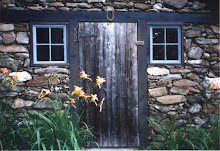
top photo © bob arnold

Saturday, March 26, 2011

BOOK LOVE ~


Roberto Bolaño


WHO WOULD DARE?


The books that I remember best are the ones I stole in Mexico City, between the ages of sixteen and nineteen, and the ones I bought in Chile when I was twenty, during the first few months of the coup. In Mexico there was an incredible bookstore. It was called the Glass Bookstore and it was on the Alameda. Its walls, even the ceiling, were glass. Glass and iron beams. From the outside, it seemed an impossible place to steal from. And yet prudence was overcome by the temptation to try and after a while I made the attempt.

The first book to fall into my hands was a small volume by [the nineteenth century erotic poet] Pierre Louÿs, with pages as thin as Bible paper, I can’t remember now whether it was Aphrodite or Songs of Bilitis. I know that I was sixteen and that for a while Louÿs became my guide. Then I stole books by Max Beerbohm (The Happy Hypocrite), Champfleury, Samuel Pepys, the Goncourt brothers, Alphonse Daudet, and Rulfo and Areola, Mexican writers who at the time were still more or less practicing, and whom I might therefore meet some morning on Avenida Niño Perdido, a teeming street that my maps of Mexico City hide from me today, as if Niño Perdido could only have existed in my imagination, or as if the street, with its underground stores and street performers had really been lost, just as I got lost at the age of sixteen.


From the mists of that era, from those stealthy assaults, I remember many books of poetry. Books by Amado Nervo, Alfonso Reyes, Renato Leduc, Gilberto Owen, Heruta and Tablada, and by American poets, like General William Booth Enters Into Heaven, by the great Vachel Lindsay. But it was a novel that saved me from hell and plummeted me straight back down again. The novel was The Fall, by Camus, and everything that has to do with it I remember as if frozen in a ghostly light, the still light of evening, although I read it, devoured it, by the light of those exceptional Mexico City mornings that shine—or shone—with a red and green radiance ringed by noise, on a bench in the Alameda, with no money and the whole day ahead of me, in fact my whole life ahead of me. After Camus, everything changed.


I remember the edition: it was a book with very large print, like a primary school reader, slim, cloth-covered, with a horrendous drawing on the jacket, a hard book to steal and one that I didn’t know whether to hide under my arm or in my belt, because it showed under my truant student blazer, and in the end I carried it out in plain sight of all the clerks at the Glass Bookstore, which is one of the best ways to steal and which I had learned from an Edgar Allan Poe story.


After that, after I stole that book and read it, I went from being a prudent reader to being a voracious reader and from being a book thief to being a book hijacker. I wanted to read everything, which in my innocence was the same as wanting to uncover or trying to uncover the hidden workings of chance that had induced Camus’s character to accept his hideous fate. Despite what might have been predicted, my career as a book hijacker was long and fruitful, but one day I was caught. Luckily, it wasn’t at the Glass Bookstore but at the Cellar Bookstore, which is—or was—across from the Alameda, on Avenida Juárez, and which, as its name indicates, was a big cellar where the latest books from Buenos Aires and Barcelona sat piled in gleaming stacks. My arrest was ignominious. It was as if the bookstore samurais had put a price on my head. They threatened to have me thrown out of the country, to give me a beating in the cellar of the Cellar Bookstore, which to me sounded like a discussion among neo-philosophers about the destruction of destruction, and in the end, after lengthy deliberations, they let me go, though not before confiscating all the books I had on me, among them The Fall, none of which I’d stolen there.


Soon afterwards I left for Chile. If in Mexico I might have bumped into Rulfo and Arreola, in Chile the same was true of Nicanor Parra and Enrique Lihn, but I think the only writer I saw was Rodrigo Lira, walking fast on a night that smelled of tear gas. Then came the coup and after that I spent my time visiting the bookstores of Santiago as a cheap way of staving off boredom and madness. Unlike the Mexican bookstores, the bookstores of Santiago had no clerks and were run by a single person, almost always the owner. There I bought Nicanor Parra’s Obra gruesa [Complete Works] and the Artefactos, and books by Enrique Lihn and Jorge Teillier that I would soon lose and that were essential reading for me; although essential isn’t the word: those books helped me breathe. But breathe isn’t the right word either.


What I remember best about my visits to those bookstores are the eyes of the booksellers, which sometimes looked like the eyes of a hanged man and sometimes were veiled by a kind of film of sleep, which I now know was something else. I don’t remember ever seeing lonelier bookstores. I didn’t steal any books in Santiago. They were cheap and I bought them. At the last bookstore I visited, as I was going through a row of old French novels, the bookseller, a tall, thin man of about forty, suddenly asked whether I thought it was right for an author to recommend his own works to a man who’s been sentenced to death.


The bookseller was standing in a corner, wearing a white shirt with the sleeves rolled up to the elbows and he had a prominent Adam’s apple that quivered as he spoke. I said it didn’t seem right. What condemned men are we talking about? I asked. The bookseller looked at me and said that he knew for certain of more than one novelist capable of recommending his own books to a man on the verge of death. Then he said that we were talking about desperate readers. I’m hardly qualified to judge, he said, but if I don’t, no one will.


What book would you give to a condemned man? he asked me. I don’t know, I said. I don’t know either, said the bookseller, and I think it’s terrible. What books do desperate men read? What books do they like? How do you imagine the reading room of a condemned man? he asked. I have no idea, I said. You’re young, I’m not surprised, he said. And then: it’s like Antarctica. Not like the North Pole, but like Antarctica. I was reminded of the last days of [Edgar Allan Poe’s] Arthur Gordon Pym, but I decided not to say anything. Let’s see, said the bookseller, what brave man would drop this novel on the lap of a man sentenced to death? He picked up a book that had done fairly well and then he tossed it on a pile. I paid him and left. When I turned to leave, the bookseller might have laughed or sobbed. As I stepped out I heard him say: What kind of arrogant bastard would dare to do such a thing? And then he said something else, but I couldn’t hear what it was.


This essay is drawn from Between Parentheses: Essays, Articles and Speeches (1998–2003) by Roberto Bolaño, translated by Natasha Wimmer, forthcoming from New Directions on May 30.


Seen as well in The New York Review of Books, MARCH 22, 2011


photo : laht.com