Friday, May 6, 2011
Hard Drive
Saturday the stuffed bears were up again
over the Major Deegan
dancing in plastic along the bridge rail
under a sky half misty, half blue
and there were white clouds
blowing in from the west
which would have been enough
for one used to pleasure
in small doses
But then later, at sunset
driving north along the Saw Mill
in a high wind, with clouds big and drifting
above the road like animals
proud of their pink underbellies,
in a moment of intense light
I saw an Edward Hopper house,
at once so exquisitely light and dark
that I cried, all the way up Route 22
those uncontrollable tears
"as though the body were crying"
and so young women
here's the dilemma
itself the solution:
I have always been at the same time
woman enough to be moved to tears
and man enough
to drive my car in any direction
from Drive
(Hanging Loose Press, 1998)
photo : nymag.com
Wednesday, May 4, 2011

Louis-Ferdinand Céline
Céline felt traditional moral and religious values were suspect; people were misled by prudish, deluded by false promises, invalid hopes and habits. He felt, for instance, as Almeras noted, physical sexuality was not obscene, but the concept of "love foreverness" was both an obscenity and a lie. It was his painfully human task to strip man's mask from his comfortable illusions, to speak out with vigor and clarity. He used one favorite image to describe his role in life, as the lead husky for an Arctic dog sled. Upon his sharpness of eye, his instinct for danger — a snow covered crevice, thin ice, a potential avalanche — rested the safety of all. His baying, loud and prompt, gave the warning note. In similar fashion Céline the writer warned of poverty, impending war, an Apocalypse, not with a murmur or a "by the way" (no equivocal would suffice), but with a howl to shatter the welkin: clear and meaning, heard by all, fulfilling his role as guide and crier.
Céline seemed to enjoy antagonizing his readers. After all, such an attitude aroused the public and sold books. Perhaps that was the price he was willing to pay. But not only did it sell books, it stirred up the country and impelled critics to offer their condemnation or to risk their approval of this rigorously independent writer, this literary anarchist. Many responded, each in his own way. Some found the author boring, obscene, immoral; others found him absorbing, refreshing, honest. To a few critics he was a mixture of all. He was compared to Swift as a parodist, to Zola as an observer, to Artaud, James Joyce, William Burroughs, Kafka, and the surrealists for defining himself through his style, to Pascal for his vision of solitude, to Rabelais for his boisterousness — albeit black rather than jovial. His style was described alternately as a breath of fresh air, a rancid effluvium, a fresco of satire. It was at once mean and gross with flashes of dignity, cynically sincere, a net in which human emotions were caught, an appropriate form with which to discuss the stench of human wretchedness. Impoverished in syntax, it was a rejection of formalism. "Not till Céline arrived," observed Marcel Ayme, "did we notice that French grammar was wearing a high collar, heavily starched." Both Céline's style and his person were " of the people."
For his pessimism, Hayman called him "the black magician of hilarity and rage," and P. H. Simon wrote that Céline would not "sugar-coat the pill." His world lived in abject wretchedness, Fowlie feels Céline was first to announce "the exclusive theme in contemporary literature: the absurdity of human life." Céline's humor reflected its source: Tyczka described his comedy as "a sadistic raillery of ugliness and decay," Tanguy calls him "a wolf of black humor, a catharsis for our time," and Godard sees him as moving from gag to satire to black humor, able to "laugh at the intolerable." In the same vein, Vitoux claims that Céline's words are to the wretchedness he describes as a remedy is to disease. His comedy, though rooted in despair, is irrepressible, outrageous, truculent, brutal, honest and cathartic.
These were the qualities that heavily influenced that course of literature in the twentieth century: despair, absurdity and the need for a new morality. Many writers were directly affected by Céline and acknowledged this indebtedness in their writing. Among them were Sartre, Queneau, Nimier, Henry Miller, Kurt Vonnegut, William Burroughs and the Beat Generation. In France a large number of writers tried to imitate Céline's seemingly effortless style in order "to make a buck." As he put it, but discovered the task was next to impossible. A slavish imitation of his style was inevitably superficial, A few such as Renzo Bianchini showed similar passions and moods, but even they fell short of matching his gueule. The power of oral language that was uniquely Céline's.
~ Stanford Luce, from the introduction to Conversations with Professor Y
( Dalkey Archive, 2006 )

Tuesday, May 3, 2011
WHERE IS THE COUNTRY
We were always searching for
That happy country we read about
In books when we were young?
Once we thought we'd found it,
And for a time we visited there,
But then we knew we'd been deceived;
It was not the dreamed-of country.
Or had we just deceived ourselves?
In making the choice of each other
Had we destroyed the happy land?

from Phantoms
(Aperture 1994)
photo:new directions
Monday, May 2, 2011

barred owl, western USA
Sunday, May 1, 2011
"...I don't know what's going to happen next. Do you?"
BIX BEIDERBECKE

photo © bob arnold
Saturday, April 30, 2011
Friday, April 29, 2011
ROSE STYRON
— a founding member of Amnesty International and to my mind an elegant spirit and mind at work, and for decades, for human rights and health, poetry, and the mother of four with her late husband the writer William Styron. The latter often over shadows the gifts of Rose Styron, but not really, since she gives fully to the work and now memory of her husband of over a half-century. On a hope, I once wrote to Rose Styron for some of her poems to include in the Origin sixth series I was collecting and editing in memory of its founder Cid Corman. She gave immediately and generously, without the usual latchings of a contract. I was a stranger tapping at the back door for a small handout, and she was just the type to answer and give generously. I trust we returned the favor.
PUSHKIN SQUARE
Pushkin
on his pedestal is sad.
Form Moscow to Chicago,
Paris to Damascus,
Capetown to Saigon,
lovers cry out to him
“Sing, sing for us, Pushkin!
The world is mad.
No one can hear our song.”
From Harlem to Havana,
Lima to Prague,
in snow-laced Leningrad
lovers cry
“Give us your land!
Fiercely we’ll guard and glorify
it as you taught us.
Trust us. Trust us.”
Lovers are never wrong.
The world is mad.
Through parks of iron,
forests of bone and chain,
lovers are crying,
“Find us, Pushkin, sing for us,
unhinge the door!
Our view is honor
but we miss
each other and the trees
and all those promises.
How long we’ve had
trysts to keep under your hand.
And lovers cry,
“Should we have known
there’d be no other chance?”
After such deaths as these
(the world is mad)
one love may meet
another, even dance
in Pushkin Square
but that love dare not be
his own.
Tears, stone,
stone tears
stone flowers spring
somewhere
from street to sky.
Pushkin
if you cannot sing for us
those stone years
sigh.
ORIGIN, sixth series
edited by bob arnold

charlie rose
Thursday, April 28, 2011
Wednesday, April 27, 2011
Cook's Hill
The bus let him off at the end of Parish Road
he walked past our house every night of the week
it was a dry town, working men
who wanted a drink had to go down to The Falls
and some women, they all had to get the last bus
up Central Ave.
He's drunk, ain't he?
No, my mother said, he's not drunk.
He doesn't drink any more, my father
said, not like he used to. Once in a while
he'll take a drink but that's all.
He walks like a drunk.
No, my father said, Charlie used to be an alky
but he walks like that because he was burnt.
You can't see it, my mother said, unless you get close
to his hands, but his legs
and part of his body are burned. He
can't help but walk that way.
He fell asleep smoking, my father said, the mattress
caught fire. Murray saved his life.
Saved the house too.
That's what makes him limp so.
He's a nice man, my mother said. He was always
a nice man, even when he was drinking.
They both are, those two,
they don't bother anybody.
from Valparaiso
(Listening Chamber, 1995)
Down from his hometown of Boston, Massachusetts, Duncan McNaughton wrote his first poem in Provincetown in 1961. Fifty years later he's going strong. There seems a conscientious pacing and rhythm between books; I recommend each one. The Poetics Program at the New College of San Francisco well remembers his contribution, as well as other Bay area events, in Europe, and his work in the mimeo generation as editor of both Fathar and Mother.
Monday, April 25, 2011
EARTH ~
Miss Crick's Workshop
amidst drawers
of baubles
for repair,
the pear
or pearl -
drops
of crystal
candle
chandelier
Bryan Broom's Room
the tubular
candlewick
bedspread
used as
curtains
gains
the condensed
weight of
bathwater
Anything may, with strict propriety
be called perfect
which perfectly answers
the purpose for which
it was made:
a packet of seeds
Today
I built
a Book:
began
the butternut
shoes
in May
in the folds
of fabrics
satchels of
aromatics
as sweet
flag strewn
between
pews
desert
buoyant pears
float
in a glass
bowl
as water
quells
dust from
the road
perfume invades
the dry blue
hydrangea
sheltered and
tethered by
the rockery
another paisley
a packet
of parsley's
curliness
Cabourg
the fine grass
of these dunes
scented &
crested by
the sound
of the sea
in a casement
window
the camouflaged
magpie
whose white
parts are
sky
the poem's
weight
as the braid
of a bird's
footpath
in the snow
from the shelves of
the alternative bookshop
the plans for
a dexion wheelbarrow
selected from SEEPAGES
SIMON CUTTS
The Jargon Society (1988)
Saturday, April 23, 2011
A North Carolina folklorist, lawyer, musician — what a cherished combination once upon a time!
Banjo and fiddler.
He first recorded this song the year my father was born, and then again in the late 40s.
Everyone of note has copied it, which is what you do in America to get ahead.
Just listen
Friday, April 22, 2011
Thursday, April 21, 2011
poem in july
water falls from the cup of a hand
late the moons silhouette behind clouds
wind in this hour
is the sound of a young girls dress
mist on the hair of her arms
her face sudden petal
in matchlight
trees cross the fields alone
windrows of new mown hay
a bird flies into her sleep
scent of rain
the wind pauses
knowing she is the sky
from Selected Poems 1970-1983
(Greenfield Press)
photo: usao.edu
Wednesday, April 20, 2011

FIVE ALARM
We saw first how the traffic was coming at us
Not right
Monday morning, a week of school vacation
And all this traffic, from where?
The closer we got to town, the more it appeared jumbled
Big pickup trucks and impatient drivers
Some frightened looks behind windshields
Then we saw the center of town was struck
A large fire on main street finally damped down
At the most elegant and historic section
Five floors, brick facade, slate roofing
Flames jumped for their lives for hours out the busted windows
Fire's devilish horns out the roof
Hysteria in the center of civilization
150 firefighters from three states were called in
Two million gallons of water was hosed
Firefighters were sent to the hospital
It was night time and a full moon was rising over our wooded hillsides
In the aftermath, in daylight, you could tell the different
Firefighters and towns by their different colored uniforms
Otherwise, all were equal all were spent
Water washed everywhere
Heavy smoke and water damage to all the stores on the bottom floor
This includes a thoughtful bath and kitchen boutique I went into once
An Asian craftsman, a Middle Eastern seller of fine delights, a restaurant that
Started as a bank where we obtained our house mortgage eons ago
Two shops at least that have just finished complete remodeling
Back to mud
And a legendary bookshop that shelved some of my books and much more
Mush
All that water used on the fire above---had to go somewhere---down
My wife and I walk up the startled main street closed to traffic
It now takes a state of emergency to find a town this quiet and humbled
Town folk walk dazed bewildered searching recalling sickened lost found
The closer we get to the building my wife holds me by the arm
Thirty years ago she worked here
When I look around I see behind us a young couple huddled, new to me
I don't know them but I do know them, she points high to
A blackened window for her companion's sake, and cries
Tuesday, April 19, 2011
Monday, April 18, 2011
EARTH ~
The Nameless Numbers: Counting Wolves, Counting Sheep
for Wolf 314F
“Through the centuries, we have projected onto the wolf
the qualities we most despise and fear in ourselves.”
—Barry Lopez, Of Wolves and Men
They killed her, those bastards, she with no name except Wolf 314F. They killed her with Compound 1080, laced inside the leg meat of a dead deer. Of a sheep. Colorless salt, used as metabolic poison. Convulsions, dizziness, uncontrollable running. Vomiting, hyperextension of the limbs, unbearable pain. She died alone on a quiet Colorado road. Dirt. Ranch hands at the slack. Twenty-four miles north of Rifle. Picture that as you try to count yourself to sleep. Count the unlaced sheep populating your eye, the salted sheep dropped from planes that should make you want to die.
Let’s talk numbers. Let’s say the effectiveness of sodium fluoroacetate as a rodenticide and mammalian predacide was reported in 1942. Let’s talk science. Let’s say the number 1080 refers to the catalog name of the poison. Let’s say sodium fluoroacetate occurs naturally in at least 40 plants in Australia, Brazil, and Africa. That it’s so powerful, a teaspoon could kill 100 people. That it’s classified as a chemical weapon in France. In Spain. Count with me, repeat: 1942, 1080, 40, 100. 314F. Numbers say, Stick to the numbers. Forget her name. Let’s say one, two, buckle my knee. Shoo fly, don’t bother to bite this plague perfectly into us. Kick the canine bitch into a ditch, they say, where wolves can no longer whelp.
Okay, you bastards, let’s talk numbers. She had traveled through four states. Logged more than 1,000 miles from her Montana home. She had howled with five others from the Mill Creek Pack, had left Yellowstone, alone, to find a mate. She had nannied and licked three pups from new-birth blind into joyful uncoordinated tumbling toughs. She had precisely seven and a half whiskers on the muzzle of her snow-mount face.
Gray. 314F was gorgeous gray. Beautiful bark of the lovely dark. Moving in moonlight across snow. Shadow of a secret self. A cloud-covered moon across all that cold. So much is falling from the sky. Such lost sleep. So many pieces we count as we shake ourselves awake. The project entails distributing fluoroacetate-baited meat from the air. Sheep, deer, belly of the calf.
They killed her and she had no name. They killed her and she licked the salt. They killed her and she convulsed into yelps. They killed her with the meat of something dead. Sheep, sheep, they count the sheep. In bed. They are already dead themselves.
Numbers? You want to hold the entire painful equation? In your mouth? They shear the sheep and buy a wool shirt. Exhaust the hens and lay a college fund. Drive the cattle to market to lace the table with steak. Nothing is as simple as good and wrong, right and bad. Uncomplicated as addition adding up to subtraction. But poison, I say, is poison. Never ranch-worthy. Convulsions, always cruel.
Numbers? You want numbers? The numb numb numbing of primordial deep? Cut the sleep mask open into complete darkness. Count the sleep medicines moaning in the sink. Remember in your insomniatic sexual urge that each lamb jumping the gate can drop a wolf permanently dead.
They killed her, and she had no name. (I would have called her Elsa or Shadow.) They killed her, careful, on a Colorado road. They killed her in Rifle without a gun. They killed what was once a young tumbling pup. They killed the shadow of the shadow’s sleep. Alone. Elegant. Gray. They killed the lovely of the lovely dark. Shame on them. Shame. Shame shame shame on them. I give this to them, those bastards—dropping into their sleep this leg meat of words laced with cyanide, with strychnine, with 1080 grains of the cruelest salt of everlasting blame.
~ George Kalamaras
Saturday, April 16, 2011
from Paragraphs
9
It was the custom of my tribe to be silent,
to think the song inwardly, tune and word
so beautiful they could be only held,
not sung; held and heard
in quietness while walking the end of the field
where birches make a grove, or standing by the rail
in back of the library in some northern
city, or in the long dream of a tower
of gothic stoniness; and always we were alone.
Yet sometimes two
heard it, two separately together. It could come
nearby in the shadow of a pine bough
on the snow, or high in the orchestral lights,
or maybe (this was our miracle) it would have no
intermediary —
-------------------a suddenness,
---------------------------indivisible, unvoiced.
from Brothers, I Loved You All
poems 1969-1977
(Sheep Meadow Press)
Ever the New Englander, born in Connecticut in 1921, Hayden Carruth lived the last few decades of his life teaching and getting by in and around Syracuse, New York. A work horse technician with the long poem, narrative, essay, jazz portraits and as a longtime editor in the field. The poem above comes from his seminal long poem "Paragraphs", written during his richest (I'm biased) years in Vermont.
photo : nndb.com
Friday, April 15, 2011
It's been a long winter of isolation, snow shoveling, snowshoe hiking and publishing many new booklets see here.
Bob's new book of back country life YOKEL is out and circulating, and we're working on forty years of Bob's love poems to be published in early 2012.
All the while B. has been reading aloud American noir novels to Sweetheart (and anyone else over hearing in the laundromat, in the truck, parking lots, kitchen, thawing porch): Chandler, Cain, Goodis, Fearing, Thompson, Himes. Hardcore.
With Scott and Helen Nearing scholar Greg Joly we are preparing a small book of nonfiction by Helen Nearing ~ Helen's reminiscences of an old-timer they met on the Maine coast when they arrived there from Vermont in the 1950s. A previously unpublished piece with black and white photographs.
For anyone interested we are working on the literary archive of old family friend Janine Pommy Vega, who passed away late in 2010. We all miss Janine. Bob is Janine's executor. Bob is also the literary executor for both Lorine Niedecker and Cid Corman. We have recently released a new booklet by Cid of his personal ink stamps used on all his correspondence, and for those who ever received a letter from Cid, you know just what we are talking about. This one is titled Chop.
A new and extra large Longhouse booklet has been issued of Janine's last poems
Walking Woman With The Tambourine.
We're always working on moving Lorine into all corners of the world. And many help us along.
New booklets of all sizes are also ready from John Bradley Fordtopia, and Ken McCullough Diet for the Smallest Planet, plus a palm-size booklet of Li Po translated by JP Seaton, ideal for that spring hike in the woods. New poems by Hanne Bramness in Norway will be issued in May.
So, we're busy and mainly outdoors, and in the night and on rain days, we'll build the Birdhouse.
Thursday, April 14, 2011

Dock Boggs was born Moran Lee "Dock" Boggs in 1898 and died on his birthday in 1971. Two of Dock's classic songs were on Harry Smith's 1951 Anthology of American Folk Music. A coal miner most of his life, Dock Boggs began recording in the 20s and like many treasures hidden away in the hills, he stayed hidden while working his trade and living with his back and hands. He was one more discovery in the 1960s from the youthful pursuit of musicians like Mike Seeger, who sought out their folk heroes to perform again live and likewise head into the studios to record. A round of applause for this good sense. Virginia born, the youngest of ten children, Dock Boggs drew much of his music from the landscape and those found therein: African-American itinerant players, camps, stories heard around the table, in the field. All his recordings are gems, perhaps the easiest to be found are on the Folkways and Smithsonian labels.
An excellent piece on the coal miner and "up-picking" banjo player by Jack Wright may be found on the link below.
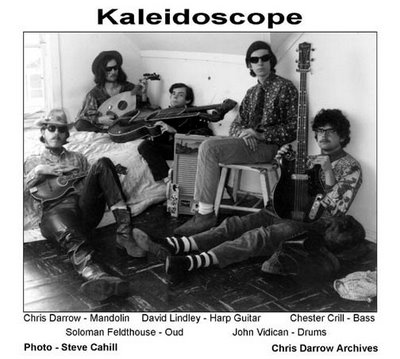
I also include, w/ pleasure, Kaleidoscope at work.
http://www.oldtimeherald.org/archive/back_issues/volume-6/6-5/dock-boggs.html
Wednesday, April 13, 2011
[posted by Susan]
Recently Banned Literature
Site updates, poetry, notes, and marginalia by William Michaelian
[Monday, April 11, 2001 post]

William Michaelian