Monday, September 10, 2018

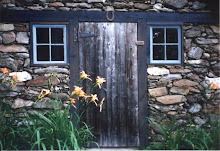
STONE HUT ( 14 ) ~


The cairn Bob built for Janine Pommy Vega in our woodlot


48


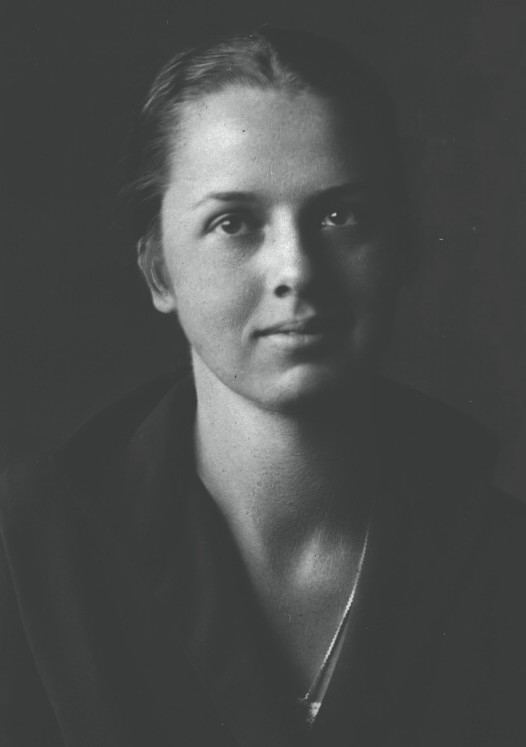
When our close friend, the poet Janine Pommy Vega died at the age of 69 outside of Woodstock, New York (Willow), she had left a defined Will, and in that Will she made me the executor of her estate. She also stated that Susan and I would receive the copyright to her name. In short order, I met what was left of her immediate family: brother, nephew, and two nieces, and also some of Janine’s great extended family of friends around the world — many of them poets, singers, teachers, musicians, hustlers, working-class joes and janes, outsiders, professionals, publishers, neighbors, and mountain climbers, like Janine, who had scaled peaks from the Catskills, up into the Andes, and the mysterious reaches of Nepal. Yes, quite a woman.

I’m not ready to write extensively about Janine, that will come, but more about a stone cairn I built for her in our woodlot in Vermont. It would be ten times the size of the stone cairn we laid up for another poet friend Cid Corman — that was made at the summit to our Vermont land, a few steps into the twenty-first century when Cid died, and we made that cairn by hiking the trail up to the summit most every day and any good stone we found along the way on the trail, we picked up and added to the slowly formed cairn that would be for Cid. Think of each stone picked up as a haiku poem, which Cid was a master at writing and translating from the Japanese, and you’ll quickly get an image in your head how some stone structures can go up: line by line/stone by stone. The only odd stone away from the path we hiked on that came to the cairn was one a friend brought, round granite solid, and we set that down into the center of the cairn. The cairn’s been up there now a decade catching leaves, taking snow, slowly but ever surely disappearing like the best of stumps. That’s Cid.


Susan and Janine in Vermont


Janine was different. Janine was an activist, teacher, performer, raconteur, and maybe not as easily understood for her learned discipline and hidden charms. I found a location for her cairn that took the morning sun in the woodlot at the ease of a eastern slope, around the tallest maple trees and where plenty of old stone wall had fallen away, but the stone was there, you just had to dig and find it. Over a few August days I did just that and built a cairn in, what I had hoped would be, the shape of something familiar in Nepal or Ireland, two places on earth Janine was drawn to. For a few years now we’ve watched the stone cairn season with its surroundings, take on the light, the snow, rain, leaves falling, and chipmunks and squirrels passing over and through. It may be finally her birthday coming in February when we’ll put some of her ashes there.


49


If you want to know about stone, when Hurricane Irene came to Vermont in late summer 2011, it left us in stone.

We were returning from northern New Hampshire the night before the hurricane and already we could see military and National Guard convoys moving south on the interstate. What is this all about? we thought. In an eerie lighting and swirling fog. The sky was already messed up, but it wasn’t raining, just spooky. 


"Split-Rock" in our front yard


The next morning we rose early as usual, it was our wedding anniversary, and it was raining heavily and it only became heavier. We could hear the river rising, then roaring. The roaring part concerned us enough to go have a look, and that’s when we saw a river we’ve never seen in our lives. It was no longer a river, it was a water mass grown up and out of its form, speeding into the woods, rising up and over the road, gobbling the road, and rising many feet by the minute, so it could be — there was nothing that was going to stop it. It was only raining heavier. We were in rain gear following the river along the higher edges of the road, and the river was now a tidal wave. Maybe fourteen feet higher than we ever knew it. We met a neighbor we also never knew we had wandering like the young father he is asking us if the river would reach his house. It turned out I built this house decades ago and tried to assure him, not knowing anything myself, that the river wouldn’t get to where he was, huddled upstairs with a family. Rain pelting off our faces. River louder and louder, overpowering the woodland, going anywhere it damn well pleased. As humans, visitors to planet earth of land and water, we simply got to watch and wait.

The next day we all crawled out of our caves. Much of our dirt road was gone. It was obliterated the further south you went and where the river always widened and was wilder. The road wouldn’t open for months, and it took all those months to first realize what had happened and what is it that had to be done, and then all the stone started to get moved back into place; the stone that made roads. Neighbors teamed up and helped one another. Town laborers scratched their heads and tied together town-to-town to assist. We hiked down four miles from our house south into Massachusetts only to find all the road gone away, not a speck left, not even a hint. All we had was bare ledge from the mountainside the road curled around and hugged, and this is where stone would be brought back in and river banks were painstakingly rebuilt from scratch, large flat stone and cube rock after rock, days on end, and dumptrucks were the norm for weeks into months. Bringing stone. A life moved on stone.


Susan and Eleanor the day after Hurricane Irene


When we eventually got north up into our Vermont village, I met up with the two oldest residents who grew up as children here, and I knew both to be practical and hardworking folks. The woman said she had never seen anything like this ever in her life, and certainly not in our village, and the old man listening, a worker, quietly agreed nodding his large head. “The river was this close to the covered bridge,” he said to me, squinting his serious eyes, as he held his two large hands up and apart eight inches. Whoever designed and whoever built the covered bridge should now be complimented for laying in maybe one more height of stone beneath the bridge. It stood standing when many other bridges in the state went away.


Bob & Greg Joly putting down another steel roof.


50


Oscar Weatherhead, and in fact, Hap Weatherhead — there’s two names for you. Old timers I once knew or worked with. Last names from the earth and sky. They’re disappearing on us. At the age of fifty I was also seriously called “an old timer” by another old timer, much longer in the tooth than I was. I was always drawn to the old timer, the worker, ever since the age of ten and I was working in the family lumber business. There was “Slim,” Jim Duffy, Freddy Zarek, “Big John,” Frank Lazarczyk, Max Lebech — all builders. They didn’t read much, but for my sake they would pick up this book you’re reading. They were curious, keen listeners, devoted to their life and work. They’d take off their own shirt for you to wear. Out in the gardens and farmland were both “Weatherheads,” plus Harvey Cutting, Lee Stone, Alden Bell, Don Squires, Carl Eckhart, Lester Clark, Anna Carey, Ted Enslin, Richard Levasseur, Dudley Laufman, Gerry Hausman, Jonathan Greene, Greg Joly, and Peter Wilde. Pete turned a tractor over on himself causing a terrible mishap that took his life. One winter we built the swinging footbridge over the Green River together. In the sawmills were Bing Denison, Fred Miller, and Chuck Lynde who would consider himself too young to be an old timer. With repairing old vehicles were Ronny Barton, Denny King, J.D. Whitney, and Larry Croiser. I also met the Chinese scholar and translator Bill Porter (Red Pine) who came looking for me in Vermont as what I consider a prime old ways traveler, definitely with all that grace, bark and tumble place where all old timers settle…like Eleanor vanWaveren,  Alan Belville, Pete Higley, and Bill Barker, who, like me, aren’t even close to hanging up their tool belts yet. 


all photographs by Susan & Bob Arnold


Stone Hut
a builder's notebook
Bob Arnold
1988, 2013


Sunday, September 9, 2018

KENDRA SMITH ~


GERRY LOOSE ~


my poetry

is entirely made up

of the sounds of rain

on leaves


—————————————————

Gerry's new book is
night exposures
Vagabond Voices 2018
(Glasgow, Scotland)


photograph by Dominique Carton


Saturday, September 8, 2018

Thursday, September 6, 2018

Wednesday, September 5, 2018

OPERATION CHAOS ~


GRACE PALEY ~


Grace Paley & Robert Nichols


Here


Here I am in the garden laughing

an old woman with heavy breasts

and a nicely mapped face


how did this happen

well that's who I wanted to be


at last    a woman

in the old style    sitting

stout thighs apart under

a big skirt    grandchild sliding

on    off my lap    a pleasant

summer perspiration


that's my old man across the yard

he's talking to the meter reader

he's telling him the world's sad story

how electricity is oil or uranium

and so forth    I tell my grandson

run over to your grandpa    ask him

to sit beside me for a minute    I

am suddenly exhausted by my desire

to kiss his sweet explaining lips


——————————

Grace Paley


Monday, September 3, 2018

STONE HUT ( 13 ) ~


Helen Nearing


47


Something unique happened years after the first edition of On Stone was published and the book was floating along the edges of going out of print. A friend was in Maine and had access to some of the private library of author and homesteader Helen Nearing. This was on the coast of Maine, where Helen had gone after leaving years of homesteading in Vermont with her pioneer husband, the social and political activist Scott Nearing. Both Helen and Scott Nearing were stone builders. When On Stone appeared, I sent Helen Nearing a copy and in typical barter trade-off, she sent me back her book Our Home Made of Stone. Scott Nearing had now been dead almost ten years. She inscribed the book to me and also thanked me for the copy of On Stone. I had no idea until twenty years later, how extensively she read my book when my friend found Helen’s copy and sat himself down with the book and went through every page, jotting down by hand all of Helen’s notes and underlining she made in the book. About this book you are holding. The first forty chapters. Here are her notes.


“Dear BobI ran into HN’s (Helen Nearing) copy of “On Stone” and she underlined things — so for your archives”:

page 5 — “Otherwise, the hut is laid dry, the way I liked to work with stone.”

page 14 — “The big ones you tip the wheelbarrow on its side …to move,  carefully.”

page 18 —  

a) “A stonemason gets enjoyment looking at stonework, it’s in the blood.”
b) “stone for the right stone to fit that crack.”

c) “From looking for the stone…selecting another.”

page 18 — “After awhile it becomes a coordination…like nothing could.”

page 22 — “I was sitting in the car and he was about to follow …into the house that summer.”

page 26 — “Dirty yellow russets still grow on those trees.”

page 27 — “Since I’m not a purist and needed stone…I had to harvest stone.”

page 40 — “The hut is now a personality…and it will return the favor.”

page 50 — “…instead of a part-time labor of six months.”

pages 51-53 — HN has underlined THE ENTIRE PAGES from: “Books. …It keeps the appetite whet.”

page 56 — Helen’s “ ! ” next to: “light blue windows” (Scott Nearing and Helen Nearing used blue between the rafters in both stone houses, I’ve tracked this to Ernest Flagg’s Stone Houses, ed.)

page 57 — “In the woods I was taking from walls other men built.”


page 60 — 

a) “a third of that time was spent in the woods finding the stone to build.”

b) “loads of flat, wonderful stone, with at least two good faces on the stone.”

c) “It was boring to look at.”

d) “surprise of a flat stone, with even one good face, and save that for a corner stone in the hut, or a stone pad under the windows.”

page 61 — “the stone was spread on the ground…and basic stone being the largest pile.”

page 63 — 

a) “Maybe it is the work, but stonemasons seem an independent bunch. Most, like myself, work alone.”

b) “There is much picking up of stone…Work runs smooth.”

c) “I searched the places out and continued to return for longer looks, enjoying new detail in the work at every visit.”

page 64 — 

a) Helen’s “?” next to: “I won’t tell you where this happened.”

b) “Stone talking to stone.”

page 65 —

a) “I can wear gloves loading stone onto the Willys and then unloading, but often I have to feel the stone I am working with and gloves get in the way.”

b) “I used that broken stone and know right where it is in the hut, buried between the outer and inner walls.”

page 65 — “almost enough for one day”

page 69 — 

a) “The stone floor would be a special hunt of locating the best large stone, and very flat.”

b) “I would wait awhile for new stone to roll down…piling them on the shore.”

page 70 — “Flipping the stone down the hill to the Willys parked close to the hill…— they were rare enough.”

page 72 — “A chalkline”

page 80 — 

a) “More stone was quarried in France during this time than all of ancient Egypt.”

b) (Bob on Knut Hamsun) — “Knut Hamsun writes about the same thing in his own life…He wrote that it gave him the opportunity for his mind to think — write in his head  while becoming one with his hand.” (HN wrote “SN” next to this. Something she commonly did when a sentence illuminated Scott Nearing’s character, ed.)

page 81 — 

a) “If I go with stone, it will have to be padded with mortar…I don’t want to worry about a high stone tipping away and beaning them.”

b) “I decide on using stone and packing mortar behind the stone…then use the stone left over from the sidewalls piled away in one corner of the site.”

page 82 — “Eight years later has them looking out of stone.”

page 83  — “…laying stone against the boards from the outside.”

page 86 — “What he saw was a structure built for the ground, out of the ground. Naturally he understood.”

page 88 — “I waved to Scott who didn’t have to use the Willys. The tree gave us a cord-and-a-half of firewood…There is a photograph of Susan, with Carson in her lap, sitting up on it.”

page 89 — “…cut firewood for the following winter, order garden seeds, shovel lots of snow.”

page 94 — 

a) “It is now late September…Mortar the edges.”

b) “…I wheelbarrowed the two yards of gravel…as a pad for the stone.”

c) “I feel pretty secure. When the pond is dry you can see where the ledge pops up…  —  the old timers knew when to stop digging.”

pages 94-95 — 

a) “I spread and tamp the gravel inside the hut…level with my eye.”

b) “Every stone has a use.”

c) “butter it around all the edges”


page 96 — “battening whatever scrap lumber I had horizontally to the interior”

page 98 —

a) “A ladder had to be built to reach from the stone floor to the loft. I went into the wood lot…saved from the roof job and rounded the edges.”

b) “There would be no lock on the door.”

page 99 — “I hadn’t planned it that way.”

page 101 — “Susan terms ‘junk jobs’…digging an underground electric line…Like Carson I was willing to look only a few feet around me and enjoy it.”

page 102 — “Save the hardwood for the house. One other job was to flash the rear corners of the roof where it met ledge.”

page 102 — “Sweeping the stone floor was my gift to the hut at each visit. It was an exercise between us.”

page 107 —

a) “I wanted to hold my fork that way but my father wouldn’t let me. The soda bread mixed with egg yolk on the plate.”

b) “He bought a bicycle and like his Belfast days…all through the Berkshire Hills.”

pages 110-111 — “My father liquidated his lumber business in 1985. Given another three years…distinguishing a 10-common nail from a 12-common nail.”

page 112 — “I tucked a book in my lunchpail and when others broke for lunch I would listen to the chatter, eat, and read.”

page 116 — 

a) “The town of Carmel, California…the granite from the coastline to build his home.”

b) “made the Jeffers home…The house and tower are rock, not pretty,”

pages 116-117— 

a) “The Jeffers house is squa …Better known as Hawk Tower,”

b) “landscape where he carved out the life poem.”

c) “You need to have the ocean in your ears…the poems, the life were true.”


page 123 — “Firewood was cut with a bowsaw and all three bowsaws were kept sharp, clean, hung on a nail out of the weather.”

pages-123-124 — 

a) “Susan taught herself gardening and weaving. I taught myself treework and stonework.”

b) Helen’s “!” next to:  “a pair of chain saws and bowsaw.”

c) “I have never worked along aside a better worker than Susan, she has few complaints…and sometimes helping me lift a stone that weighs more than both of us.” (I think HN sees some of herself in this portrait, ed.)

d) “What is important to me is that we have done it together.”


Bob & Susan Arnold at
Saratoga Battleground, NY.
1990s
photo by Carson


some photographs by Susan, Carson & Bob Arnold


Stone Hut
a builder's notebook
Bob Arnold
1988, 2013


Saturday, September 1, 2018

TARA BERGIN ~


Composition for the Left Hand


Last night I met a trophy hunter

who admired my slender fingers —

he held my left hand up to the light

and praised the pretty white skin

on my palm and let me flare my fingers

out like the antlers of a stag — he took my wrist

and I didn't insist on a phone number —

I gave him mine,

even knowing what his game was.

I played it and all the time I knew

he'd want to claim some trophy or some prize.

He was a trophy hunter —

believe me, he had guns

in a glass cabinet like the one

my grandmother kept her champagne glasses in

(such rich families I've been involved in)

and he cleaned them regularly

with a long thin pipe

and a soft oily rag —

he was a paying hunter, you see,

the best in the company,

and he really didn't want me at all.

He only wanted some kind of trophy,

something pale and palmate

that he could hang on his wall

after the whole ugly thing was over.


————————

Tara Bergin
This is Yarrow
Carcanet Press 2013


Friday, August 31, 2018

MORRIS HIRSHFIELD ~


Beach Girl


Stage Girls with Angels


Girl with Pigeons


Garden Stand and Birds


Woman


Inseparable Friends


Tiger