Saturday, January 11, 2014

JEFFERY BEAM READS BOB ARNOLD ~


Hello! A rare posting by Susan on an ice cold day and a sunny walk along our river, to return home and receive a cue from Bob's friend John Phillips in England — take a look at this! Forget the deep freeze, and feeding the wood fires —  I'd rather share Jeffery Beam's loving generous essay at Oyster Boy Review 21, now gathered here below for you. While Bob's books may be found on Amazon, they are available locally here at Longhouse Publishers & Booksellers. With much appreciative thanks to Jeffery ~ 
                                                                      

Susan


Plain-Spoken Love
Books by Bob Arnold
Jeffery Beam


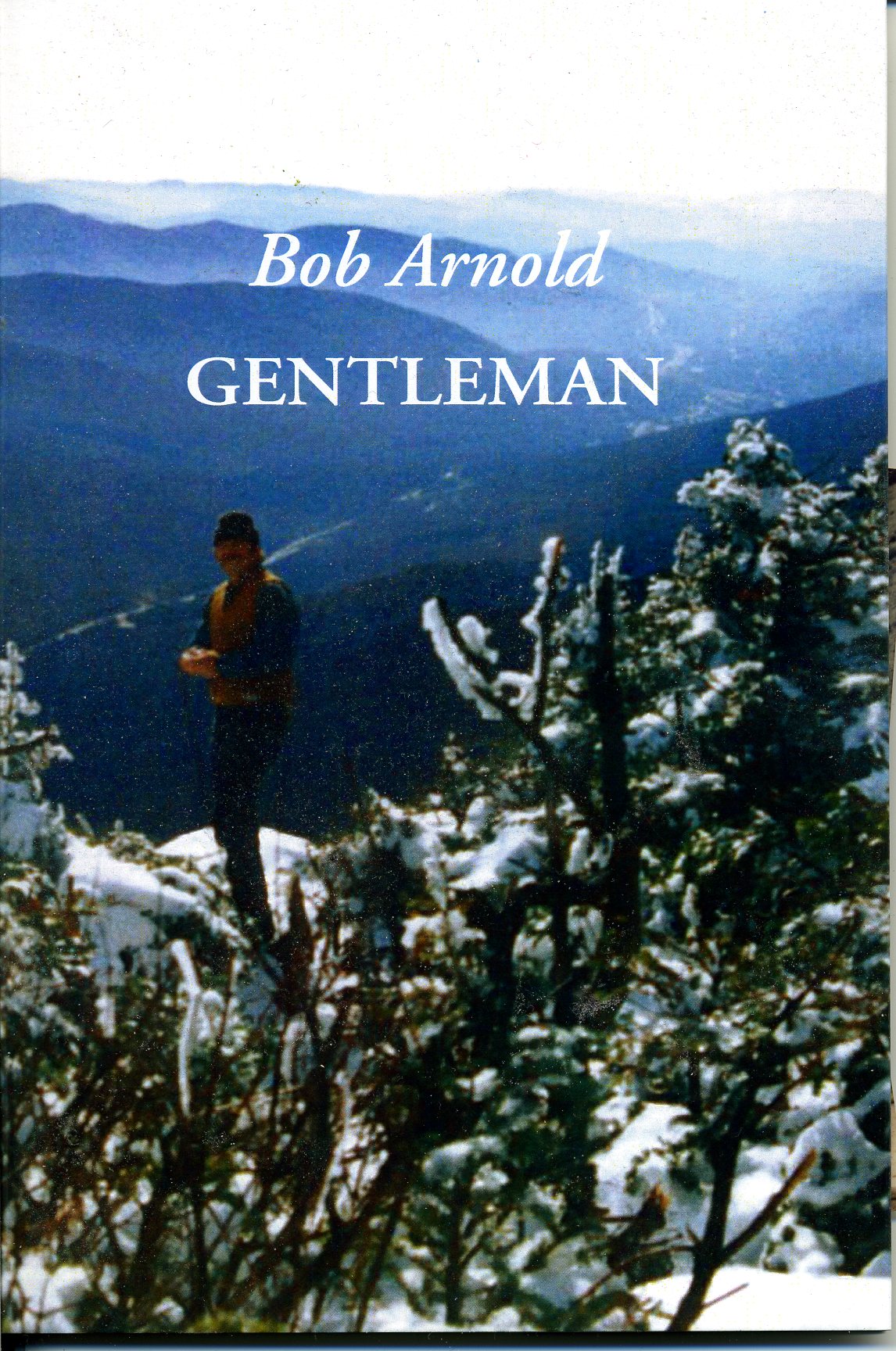
Gentleman.
Bob Arnold.
Woven/Longhouse Publishers & Booksellers, 2011.
39 pages, $20 (paperback).
ISBN: 1929048106.
Buy at Amazon.


Yokel: A Long Green Mountain Poem.
Bob Arnold.
Longhouse Publishers & Booksellers, 2011.
139 pages, $18 (paperback).
ISBN: 1929048090.
Buy at Amazon.


I'm in Love with You Who Is in Love with Me.
Bob Arnold.
Longhouse Publishers & Booksellers, 2012.
151 pages, $18 (paperback).
ISBN: 1929048114 (Library of Congress).
Buy at Amazon.


___________________


There's nothing imagined about Bob Arnold, and yet his whole life has been the product of imagination, and imaging a life that is as forceful as a wood chop, as clear as a woodpecker's call, as circular and varied as tree rings, as fragrant as a strip of cedar wood. Arnold's a master stonemason; a builder in the old ways of form, function, and perfect fit; a friend to chainsaws, pick-up trucks, stonecutter's tools, rivers, and grosbeaks; a lover of women (one woman in particular for over forty years); and a man's man—meaning the kind of man that knows himself and who you are (male and female or whatever new way you define yourself) and welcomes whatever that is with equanimity and generosity round the campfire.

But Arnold's also one of the finest poets writing in America, one of the cleanest and purist, and without self-aggrandizement. Although he's been published by some of the finest small presses around, and at this point in his life is probably well known in the poetry world beyond his close cadre of admirers, he still keeps himself whole and wholesome in his country Vermont retreat, with wife and soul-mate Susan. You won't find him bandied about by the academic world or the slick world of poetry celebrity, and he still publishes many of his books himself, but Arnold is the real thing. The thing that lasts. That sticks. That will be as solid a long time after the celebrity poets have slipped into storage stacks.

Arnold, too, has earned a deep appreciation from many poets and writers, including myself, for his Longhouse poetry publishing projects and his blog postings about poetry, literature, art, culture, and politics. His poetry reflects the kind of respect for the language, and for the world and the people and things in it, that's quite rare. It's a poetry laid down with as fine a mind and hand as the walls he builds—responding always to the lay of the land. Simple and spare when required. More discursive and filled with storytelling verve and kick when necessary. Always, however, ringing in the mind with spiritual light, the sound of a thing well-said and carefully thought-out, both visceral and enlightened, tender and spot-on, good-humored, patient, loyal, and resolute. There's a charismatic human spirit behind this work, that appeals because its charm is sincere and without airs. Each poem is a hot cup of tea on a below freezing morning, or a tumbler of cool spring water when the heat's got at you.

I've never met Arnold, although I will name him as a friend, a mentor, and an inspiration for close to a decade now. So, you can take my words with a grain of salt if you want, but seek out two interviews in Jacket magazine, follow his care-taking of the estates of Cid Corman and Lorine Niedecker, and read the work. You can't disagree.

The latter two of these books are part of a trilogy. Bob's words (I'll call him Bob now that I've revealed myself as one of his devotees): "The trilogy is called Woodlanders. The first two books are Yokel and I'm in Love with You Who Is in Love with Me. I'm the idiot, certainly not you, having to tell you these titles but I have to get in the groove. The third book, forthcoming, is titled The Woodcutter Talks. The trilogy covers poems and life over 40 years in the same place in Vermont, home, marriage, building work, stonework, woods river, and that psych-folk son." The Woodcutter Talks, the third book, is just out. Get it. There's no preferred order. Like the tree-rings, their order is circular.

A handful of poems in the small chapbook Gentleman reappear in I'm in Love for it was published as a tribute (as many of Bob's books are) to Susan. It's a lovely thing to hold, and would make a sweet gift book to a beloved, or to a nature enthusiast. For some reason the poems herein remind me of James Laughlin's poems. I think it's the off-hand charm, the small ironies and little twists of thought and language that take the reader to a place not only pleasantly in the Now but also so richly sensual. "To have every bird in the woods / Finally sing and I am known to it / Is all the morning I ask // To see the flower garden / Move as a dress on your body / Is all the day I wish // To have the stars rise from the river / And you think of me not as crazy / Has to be the night ahead." ("To Have") There's a relaxed sexiness to these poems—I'm In Love bursts with it. Bob's love for the earth is just as vibrant and coyly robust as it is for Susan: "Early in the day / Building a house / Far from any town / With no other sound / But the river and the / Rhythm of nails pounding— / And once between raps of / The hammer I heard nearby / A woodpecker answer." ("Answer") That woodpecker sound is as naked and attractive and absorbed into the poet as Susan's body under her dress. I think of these poems as if Jean Follain might have written such if his world had not been one of such a magnitude of loss.

I wrote Bob upon receiving and reading Yokel. "Dear Bob. Just a note to say how much I've enjoyed reading Yokel. The people are all drawn with such a clear plain love—a plain-spoken love drawing them out. They live on the page and, of course, remind me of many of the kind of folk with which I grew up in North Carolina country. It's the generosity and good humor of your portraits that's so compelling—and the ease with which you evoke your woodland community—and how it holds together even when the facts say it shouldn't. I love too the way you've strung the poems like a necklace of acorns around your life and the energies of Yokel, Sweetheart, Preacher, and Native making the strand. As always there are so many poems I love it would just mean listing the contents. Wisdom and storytelling all combined with your usual energy, grace, tongue-in-cheek, hand-on-hammer, hand-in-pocket, kiss on Susan's lips. I think it one of your major accomplishments."

Yokel is a book about being human, how unlike and alike we are, and is built in praise of the colloquial. It's Our Town and Edwin Arlington Robinson and Frost and Whitman and Jonathan Williams' Appalachia, but not. Bob has taken his wide reading from Rimbaud to Asian poetry, from Woody Guthrie to H.D. and understands how the colloquial is the Classic, and the romance of the backwoods a philosophical inquiry into living. It's also about how Bob and Susan have, over their years in Vermont, become native, become local, while keeping their private intelligences to themselves, bringing them out for sharing with the right visitor or neighbor. Bob doesn't leave out the invasion of the modern into his idyllic countryside and a number of poems track the challenges of old colliding with the new. In "Earrings" Yokel who would "plow snow / all his life" recalls "from a heated / Cab tonight / Coffee thermos / Between his legs" seeing a pretty woman on a back road with "Four earrings in / Each ear and her / Friend had one / Stuck through / Her nose." Or as in "Old Town": "When proudly announced at town meeting / Cable was coming to the area / In the front row one old native raised an arm / Asking, Does that mean I have to get a TV?"

I look forward to reading The Woodcutter Talks. I know it'll be full of pithy sayings and wise observations brought on my tree and storm and river, nail and roof and board. I'm In Love seems appropriate as middle volume for the trilogy. Susan sandwiched between their lives as neighbors and locals, and Bob's livelihood taking care of their and other's buildings and the landscape that nourishes their rural life. You got a flavor of the poems earlier. Suffice it to say, that if you are loved, or ever have been, or will be, Bob's kind of love is what you are after. Worshipful—but not to detriment, honest, playful, wise, tender, and with just the right amount of rubosto. He's Adam and Romeo, Orpheus and Odysseus, Shah Jahan and Rama. And he can build and fix whatever you want (and welcomes your help as well as a back rub), and is a perfect father too. Dante nor Petrarch loved no more: "They have been together and in love so long now / That when they think of an earlier life apart, it / Isn't possible. Or it seems another life entirely. / After all it was childhood only before they met." ("In the Land of Slush") That's the kind of forthright take-no-prisoners kind of adoration Laughlin writes too. "It was childhood only" a killer line. Everything in Bob's world is touched by Susan's presence—mittens, stray dogs, candy wrappers, and fireflies. It all evokes wonder and delight, and most of all, gratitude in Bob's eyes, manifesting in his words some of the most delightful, endearing, joyful, and spiritual rich love poems ever written.
I could go on. Let Bob speak, I hear a voice tell me. It can be a big bad rotten / world out there— / find a leaf / hide under it / float upon it / clothe yourself. ("Make Do") 


http://www.oysterboyreview.org/issue/21/

 Oyster Boy Review
Post Office Box 1483
Pacifica, CA 94044 


Friday, January 10, 2014

TWO STRONG WINDS ~


Amiri Baraka
(October 7, 1934 ~ January 9, 2014)


At one time in America — certainly from the 60s into the 70s — these two men held the news and our culture by storm. Before the endless era of 24-hour-vacuous, Reality TV, liars to the left of you and liars to the right, and before the general rule of zombie nation — we had activists, poets, musicians, fathers and mothers who put their lives on the line for a greater good. Carter Camp was born in White Eagle, Oklahoma and was an American Indian Movement (AIM) activist from the Ponca tribe. He was one of the organizers of the Wounded Knee standoff.

Someone at the New York Times should have their mouth washed out with soap at describing Amiri Baraka as "polarizing". Dick Cheney is polarizing, not Baraka. A man who was a poet, short story writer, novelist, essayist, teacher, lecturer, political activist, community organizer, playwright of note with an Obie Award and other celebrations, ground-cutting musicologist of the full bore  jazz era — and young poets take note — with his first wife Hettie Cohen, editor and publisher of the literary magazine, Yugen, which published much of the great work of the Beats. On top of with Diane di Prima establishing a second literary magazine, The Floating Bear. These were magnificent homemade and enduring publications. Not self-published ground meal disappearing acts. A third act for Baraka was founding the small press Totem Press. Black Nationalism publications and anthologies would follow.

If anything, he was unique. Slight of figure. A rightful threat.

I had a friend who brought Baraka into one of the toughest correctional institutions in New York State to read and work poetry with the prisoners. She said he had them all dazzled and committed to song by the end of the visit. No surprise.

~ BA


Wednesday, January 8, 2014

LEOPOLD SEDAR SENGHOR ~


  Léopold Sédar Senghor 


  As Federico Garcia Lorca arrived and wrote his master stroke poems to New York City, so did Senghor, translated here by gay activist, professor and author Melvin Dixon


To New York


(for jazz orchestra and trumpet solo)


New York! At first I was bewildered by your beauty,

Those huge, long-legged, golden girls.

So shy, at first, before your blue metallic eyes and icy smile,

So shy. And full of despair at the end of skyscraper streets

Raising my owl eyes at the eclipse of the sun.

Your light is sulphurous against the pale towers

Whose heads strike lightning into the sky,

Skyscrapers defying storms with their steel shoulders

And weathered skin of stone.

But two weeks on the naked sidewalks of Manhattan—

At the end of the third week the fever

Overtakes you with a jaguar’s leap

Two weeks without well water or pasture all birds of the air

Fall suddenly dead under the high, sooty terraces.

No laugh from a growing child, his hand in my cool hand.

No mother’s breast, but nylon legs. Legs and breasts

Without smell or sweat. No tender word, and no lips,

Only artificial hearts paid for in cold cash

And not one book offering wisdom.

The painter’s palette yields only coral crystals.

Sleepless nights, O nights of Manhattan!

Stirring with delusions while car horns blare the empty hours

And murky streams carry away hygenic loving

Like rivers overflowing with the corpses of babies.


                                          II


Now is the time of signs and reckoning, New York!

Now is the time of manna and hyssop.

You have only to listen to God’s trombones, to your heart

Beating to the rhythm of blood, your blood.

I saw Harlem teeming with sounds and ritual colors

And outrageous smells—

At teatime in the home of the drugstore-deliveryman

I saw the festival of Night begin at the retreat of day.

And I proclaim Night more truthful than the day.

It is the pure hour when God brings forth

Life immemorial in the streets,

All the amphibious elements shining like suns.

Harlem, Harlem! Now I’ve seen Harlem, Harlem!

A green breeze of corn rising from the pavements

Plowed by the Dan dancers’ bare feet,

Hips rippling like silk and spearhead breasts,

Ballets of water lilies and fabulous masks

And mangoes of love rolling from the low houses

To the feet of police horses.

And along sidewalks I saw streams of white rum

And streams of black milk in the blue haze of cigars.

And at night I saw cotton flowers snow down

From the sky and the angels’ wings and sorcerers’ plumes.

Listen, New York! O listen to your bass male voice,

Your vibrant oboe voice, the muted anguish of your tears

Falling in great clots of blood,

Listen to the distant beating of your nocturnal heart,

The tom-tom’s rhythm and blood, tom-tom blood and tom-tom.


                                       III


New York! I say New York, let black blood flow into your blood.

Let it wash the rust from your steel joints, like an oil of life

Let it give your bridges the curve of hips and supple vines.

Now the ancient age returns, unity is restored,

The reconciliation of the Lion and Bull and Tree

Idea links to action, the ear to the heart, sign to meaning.

See your rivers stirring with musk alligators

And sea cows with mirage eyes. No need to invent the Sirens.

Just open your eyes to the April rainbow

And your eyes, especially your ears, to God

Who in one burst of saxophone laughter

Created heaven and earth in six days,

And on the seventh slept a deep Negro sleep.


___________________
Léopold Sédar Senghor
from The Collected Poems 
translated by Melvin Dixon
University of Virginia Press


Léopold Sédar Senghor (1906–2001) was Senegal’s first democratically elected president from 1960 to 1981. A poet, writer, and statesman Senghor was born near Dakar in the town of Joal to a Fulbe mother and a Serer trader father. He was educated at the École Nationale de la France d’Outre-Mer in Paris, where he became friends with Aimé Césaire who he co-founded the Negritude movement, which promotes distinctly African cultural values and aesthetics, in opposition to the influence of French colonialism and European exploitation. After earning his French citizenship, Senghor taught in Tours and Paris. He joined the French army during World War II and spent 18 months in a German prison camp. After serving successive terms representing Senegal in the French National Assembly, Senghor returned to his native land, where he led his nation’s independence movement in 1960.

Residing part-time in France, he wrote poems of resistance in French.  His nonfiction work includes numerous volumes on politics, philosophy, sociology, and linguistics.

He passed away at his home in France at the age of 95.


Tuesday, January 7, 2014

POSTCARD 25 ~


photo : ralph eugene meatyard
lucybelle crater and her close friend lucybelle crater
in the grape arbor
1971


Monday, January 6, 2014

DAVID SPEAR IN HAVANA ~


Ten Days in Havana
David M. Spear
Gnomon Press
P.O. Box 475
Frankfort, Kentucky
40602-0475


Sunday, January 5, 2014

JO ANN KELLY ~


Jo Ann Kelly's Birthday!
(5 January 1944 — 21 October 1990)

Gone over twenty years ago now and remaining one of the finest bluesmakers there was


KISSING ~


“I can’t write without a reader. It’s precisely like a kiss — you can’t do it alone.” 
J o h n   C h e e v e r


Saturday, January 4, 2014

JOHN CAGE'S ROARATORIO ~


Performers ~
John Cage, Voice
Joe Heaney, Singer
Seamus Ennis, Uillean pipes
Paddy Glackin, Fiddle
Matt Malloy, Flute
Peadher Mercier, Mell Mercier,

to peter garland


Thursday, January 2, 2014

J.D. WHITNEY ~


A Two-Booklet-in-One publication
designed as two way traffic on the foldout page
J.D. Whitney gives us poems that match and pair and touch one another
what the poet terms "dually" in the best sense of the word


 a sample of one section of the booklet


copyright J.D. Whitney

Use Paypal? Order now with free shipping ~ $12!


Wednesday, January 1, 2014

A NEW YEAR KINDA GUY ~


Townes Van Zandt


Townes Van Zandt - Sunshine Boy by Susan Arnold on Grooveshark


(2013)


All tracks previously unissued
Omnivore Recordings
Produced for release by Cheryl Pawelski
Liner notes Colin Escott


TVZ
(March 7, 1944 – January 1, 1997)


POSTCARD 24 ~


Chic Johnson in "Sons of Fun", 1941
photograph by W. Eugene Smith


Tuesday, December 31, 2013

BE MY HUSBAND ~


ANTONY & THE JOHNSONS


antony and the Johnsons by Susan Arnold on Grooveshark


Antony Hegarty was born in Chichester, West Sussex, England, UK, in 1971.

Block out all knowledge — in other words go blank and float — and receive the sounds of Antony:
 an aura who seems vocally out of Pavarotti and whales calling.
 No judgements. No conclusions. Allowance.


songs compiled by BA from recordings below


ALBUMS


Antony and the Johnsons, 1998
I am a Bird Now, 2005
The Crying Light, 2009
Swanlights, 2010

(Live recordings)

Live at St. Olave's, 2003
Cut the World, 2012
Del suo veloce volo, 2012
(w/ Franco Battiato)


SOON ~


~ for Edie & Kathy ~


Monday, December 30, 2013

ODE ~


Pablo Neruda


Ode to the First Day of the Year
Oda al Primer dia del ano


We identify it
as if
it were
a wooden horse
different from
all horses.
We adorn
its forehead
with a ribbon,
we hang
on its neck colorful rattles,
and at midnight
we get ready to receive it
as if it were
an explorer descending from a star.

The way bread resembles
yesterday's bread,
a ring all rings:
the days
blink
clearly, jingling, fleetingly,
and lie down in the dark night.

I see the last
day
of this
year
on a train, toward the rains
of a distant purple archipelago,
and the man
on the machine,
complicated like a clock from heaven,
lowering his eyes
to the infinite
ruler of the rails,
to the shining handles,
to the nimble bonds of fire.

Of conductor of trains
accelerating
toward the black
stations of the night,
this end
of the year,
without wife or children,
is it not the same for the one gone, the one coming?
From the roads
and workshops,
the first day, the first dawn
of the starting year,
has the same rusty
color as the iron train:
and people along the way
greet it,
cows, villages,
the vapor of the first light of day,
without knowing
it is
the year's door,
a day
heralded
by bells,
adorned with plumes and carnations.

The earth
does not
know it:
it will receive
that golden
day, gray, heavenly,
it will extend it over hills,
it will wet it with
arrows
of translucent
rain,
and then
it will curl it
in a tube,
will store it in the shadows.
It is thus, but
a small
door of hope,
new year's day,
although you are
like the bread
of all breads,
we will live you in a different way,
we will eat you, flower you,
wait for you.
We will place you
like a cake
in our lives,
we will light you
like candelabra,
we will drink you
as if
you were a topaz.
New
Year's
Day,
electric day, fresh,
all the leaves
emerge green
from
the trunk of time.

Crown us
with
water,
with open
jasmine,
with all the aromas
deployed,
yes,
even though
you're
only
a day,
a poor
human day,
your halo
beats
over so many
tired
hearts,
and you are,
oh new
day,
oh forthcoming cloud,
bread unseen before,
permanent
tower!


P A B L O   N E R U D A
translated by Ilan Stavans


____________________

All the Odes
Pablo Neruda
edited by Ilan Stavans
Farrar 2013


Sunday, December 29, 2013

POSTCARD 23 ~


odilon redon
"sita", 1893


Saturday, December 28, 2013

BASIA BULAT ~


On the music scene since 2004 as vocalist and playing guitar, autoharp, hammered dulcimer, piano, ukelele, charango, Basia Bulat grew up in Etobicoke, Ontario where her mother was a music teacher who taught piano and guitar. She is an honorary member of Ontario's "Polonia" Polish community.


selections compiled by bob arnold from the albums below


Studio Albums

_______________________

Oh, My Darling (2007)
  Heart of My Own (2010
Tall Shadow (2013)