Showing posts with label Arthur Rimbaud. Show all posts
Tuesday, January 3, 2023
Wednesday, January 1, 2020
Monday, May 23, 2011
ILLUMINATIONS ~

CITY
I am an ephemeral and not at all dissatisfied citizen of a
metropolis thought to be modern because every known
taste has been avoided in the furnishings and exteriors
of its houses as well as in the plan of the city. Here you
would never point to the traces of any monument to
superstition. Morality and language are reduced to their
most basic expression, indeed! These millions of people
who feel no need to know one another experience such
similar kinds of education, occupation and old age, that
their life-spans must be several times shorter than those
which a mad statistic determines for the peoples of the
continent. Just as, from my window, I see new specters
rolling through the thick and eternal fumes of coal fires,
—our shadow of the woods, our summer's night! —
modern-day Furies, in front of my cottage which is my
country and all my heart since everything here resem-
bles this, —Death without tears, our active daughter and
servant, and a despairing Love, and a pretty Crime
whimpering in the mud of the street.
RUTS
On the right, the summer dawn wakens the leaves and
vapors and sounds of this corner of the park, and the
embankments on the left hold within their purple shad-
ows the thousand rapid ruts of the damp road. Parade of
enchantments. Indeed: parade floats covered with gilded
wooden animals, masts and multicolored canvas back-
drops, drawn by twenty dappled circus horses at full gal-
lop, and children and men on the most amazing beasts;
—twenty vehicles, embossed, flag-draped and decked
with flowers like old-fashioned or fairy-tale coaches,
filled with children costumed for a suburban pastoral. —
Even coffins under their canopy of night brandishing
ebony plumes, fleeing to the sound of huge blue and
black mares' hooves.
WAR
In childhood, certain skies focused my seeing: all char-
acters modulated my features. Phenomena were set in
motion. —Now, the eternal inflection of moments and
the infinity of mathematics chase me across this world
where I undergo every civil success, respected by strange
childhood and abnormally large affections. —I dream of
a War of righteousness or force, whose logic will be quite
unexpected.
---It's as simple as a musical phrase.
DAWN
I embraced the summer dawn.
---Nothing was moving yet on the facades of palaces. The
water was still. Encampments of shadows still lingered
along the road through the woods. I walked, walking liv-
ing and warm breaths, and jewels looked on, and wings
arose noiselessly.
---The first undertaking, in the pathway already filled
with fresh, pale sparkles, was a flower which told me its
name.
---I laughed at the blond wasserfall disheveling itself
through the pines: at its silver summit, I recognized the
goddess.
---Then I lifted the veils one by one. In the pathway, ges-
ticulating. On the plain, where I denounced her to the
cock. In the great city she fled among the steeples and
domes, and running like a beggar along the marble
quays, I chased her.
---Father up the road, near a laurel grove, I wrapped
her in the veils I had collected, and I felt, a little, her
immense body. Dawn and the child fell to the bottom of
the wood.
---When I awoke it was noon.

from ILLUMINATIONS
ARTHUR RIMBAUD
JOHN ASHBERY (trans.)
Norton 2011
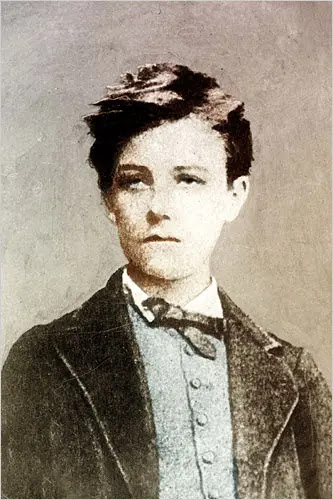
Rimbaud (1854-1891) was known by one as a "disreputable, mean, ruthless, perverse, hateful wretch. He was also one of the greatest poets who ever lived." Ever restless, he managed to travel three continents before succumbing to cancer at age 37. Supposedly his poetry and creative life was all together done with by age 21. We say it has an eternal flame.

ARTHUR RIMBAUD
CITY
I am an ephemeral and not at all dissatisfied citizen of a
metropolis thought to be modern because every known
taste has been avoided in the furnishings and exteriors
of its houses as well as in the plan of the city. Here you
would never point to the traces of any monument to
superstition. Morality and language are reduced to their
most basic expression, indeed! These millions of people
who feel no need to know one another experience such
similar kinds of education, occupation and old age, that
their life-spans must be several times shorter than those
which a mad statistic determines for the peoples of the
continent. Just as, from my window, I see new specters
rolling through the thick and eternal fumes of coal fires,
—our shadow of the woods, our summer's night! —
modern-day Furies, in front of my cottage which is my
country and all my heart since everything here resem-
bles this, —Death without tears, our active daughter and
servant, and a despairing Love, and a pretty Crime
whimpering in the mud of the street.
RUTS
On the right, the summer dawn wakens the leaves and
vapors and sounds of this corner of the park, and the
embankments on the left hold within their purple shad-
ows the thousand rapid ruts of the damp road. Parade of
enchantments. Indeed: parade floats covered with gilded
wooden animals, masts and multicolored canvas back-
drops, drawn by twenty dappled circus horses at full gal-
lop, and children and men on the most amazing beasts;
—twenty vehicles, embossed, flag-draped and decked
with flowers like old-fashioned or fairy-tale coaches,
filled with children costumed for a suburban pastoral. —
Even coffins under their canopy of night brandishing
ebony plumes, fleeing to the sound of huge blue and
black mares' hooves.
WAR
In childhood, certain skies focused my seeing: all char-
acters modulated my features. Phenomena were set in
motion. —Now, the eternal inflection of moments and
the infinity of mathematics chase me across this world
where I undergo every civil success, respected by strange
childhood and abnormally large affections. —I dream of
a War of righteousness or force, whose logic will be quite
unexpected.
---It's as simple as a musical phrase.
DAWN
I embraced the summer dawn.
---Nothing was moving yet on the facades of palaces. The
water was still. Encampments of shadows still lingered
along the road through the woods. I walked, walking liv-
ing and warm breaths, and jewels looked on, and wings
arose noiselessly.
---The first undertaking, in the pathway already filled
with fresh, pale sparkles, was a flower which told me its
name.
---I laughed at the blond wasserfall disheveling itself
through the pines: at its silver summit, I recognized the
goddess.
---Then I lifted the veils one by one. In the pathway, ges-
ticulating. On the plain, where I denounced her to the
cock. In the great city she fled among the steeples and
domes, and running like a beggar along the marble
quays, I chased her.
---Father up the road, near a laurel grove, I wrapped
her in the veils I had collected, and I felt, a little, her
immense body. Dawn and the child fell to the bottom of
the wood.
---When I awoke it was noon.

from ILLUMINATIONS
ARTHUR RIMBAUD
JOHN ASHBERY (trans.)
Norton 2011
top photo: Étienne Carjat
Rimbaud (1854-1891) was known by one as a "disreputable, mean, ruthless, perverse, hateful wretch. He was also one of the greatest poets who ever lived." Ever restless, he managed to travel three continents before succumbing to cancer at age 37. Supposedly his poetry and creative life was all together done with by age 21. We say it has an eternal flame.
Monday, November 8, 2010
WALKER ~

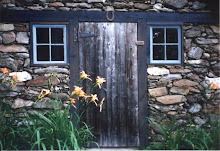
photo: © bob arnold
dartmouth.edu
I’ve been reading John Ledyard again, our man stopped by Catherine the Great in 1788 when he attempted to walk around the world. He did do a fair portion: touching down on America's western shores before Lewis & Clark, through some of Europe, all of Lapland. Pretty much considered an early day terrorist while in Russia (their fur trade possessiveness, Ledyard’s own aggressive interest in fur and trade).
While in Hanover, when crossing from Vermont into New Hampshire, we noticed the marvelous bridge, quite fancy, is named after Ledyard. Many of the biographies of the man are written by Dartmouth College alumni. The one who arrived in Hanover when the college was nineteen months old, its first half dozen acres roughed out and first built by a minister and his slaves, with a college charter proclaiming "education and instruction of the youth of the Indian tribes" which didn't quite succeed. Fleet-footed Ledyard lasted only one year. He had other things to do — like dropping a shoreline white pine and hollowing it out as a 50 x 3 foot dugout canoe, handwork he learned while recruiting students from the Six Nations Iroquois and paddling down the Connecticut to his family home in Connecticut. His favorite author Ovid as book companion.
Born in Groton, Connecticut in 1751 to the well-to- do, this sea captain's son and dreamer was shunned any inheritance that went to a younger brother, and for his 37 years got by on wit and wisdom and walking. Lots of walking. Some of his associates were the sailor John Paul Jones, Captain James Cook, and Thomas Jefferson, who slipped the adventurer funding and ideas, the latter the former didn't quite have the stomach for. While serving as the American ambassador in Paris, Jefferson hatched this brainstorm journey for Ledyard to explore the American continent — through overland Russia, crossing the Bering Strait and down across America to Virginia. Ledyard said he would do this on-foot. He would prowl across 2/3 of Russia before facing Catherine the Great's authority.
Aboard James Cook's final voyage, where the captain was murdered on a Hawaiian beach, Ledyard became a British marine for four years. He circled the world. Wrote of his adventures. One hundred years before Arthur Rimbaud, John Ledyard traveled into Africa as an explorer for the African Association and would die there at the same age as the poet (37); who never made it back, as was his plan. Ledyard's plan was characteristically bold: he would lead an expedition from the Red Sea to the Atlantic. Not at all well, close to Cairo, Ledyard died in 1789 overdosing on vitriolic acid and was buried in the sand dunes along the Nile. The precise location has never been found.
While in Hanover, when crossing from Vermont into New Hampshire, we noticed the marvelous bridge, quite fancy, is named after Ledyard. Many of the biographies of the man are written by Dartmouth College alumni. The one who arrived in Hanover when the college was nineteen months old, its first half dozen acres roughed out and first built by a minister and his slaves, with a college charter proclaiming "education and instruction of the youth of the Indian tribes" which didn't quite succeed. Fleet-footed Ledyard lasted only one year. He had other things to do — like dropping a shoreline white pine and hollowing it out as a 50 x 3 foot dugout canoe, handwork he learned while recruiting students from the Six Nations Iroquois and paddling down the Connecticut to his family home in Connecticut. His favorite author Ovid as book companion.
Born in Groton, Connecticut in 1751 to the well-to- do, this sea captain's son and dreamer was shunned any inheritance that went to a younger brother, and for his 37 years got by on wit and wisdom and walking. Lots of walking. Some of his associates were the sailor John Paul Jones, Captain James Cook, and Thomas Jefferson, who slipped the adventurer funding and ideas, the latter the former didn't quite have the stomach for. While serving as the American ambassador in Paris, Jefferson hatched this brainstorm journey for Ledyard to explore the American continent — through overland Russia, crossing the Bering Strait and down across America to Virginia. Ledyard said he would do this on-foot. He would prowl across 2/3 of Russia before facing Catherine the Great's authority.
Aboard James Cook's final voyage, where the captain was murdered on a Hawaiian beach, Ledyard became a British marine for four years. He circled the world. Wrote of his adventures. One hundred years before Arthur Rimbaud, John Ledyard traveled into Africa as an explorer for the African Association and would die there at the same age as the poet (37); who never made it back, as was his plan. Ledyard's plan was characteristically bold: he would lead an expedition from the Red Sea to the Atlantic. Not at all well, close to Cairo, Ledyard died in 1789 overdosing on vitriolic acid and was buried in the sand dunes along the Nile. The precise location has never been found.
photo: © bob arnold
dartmouth.edu
Subscribe to:
Posts (Atom)