Showing posts with label John Clare. Show all posts

Friday, January 20, 2017

TO MY COTTAGE ~


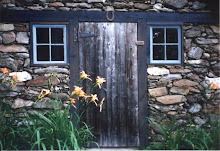
To My Cottage


Thou lowly cot where first my breath I drew,

Past joys endear thee, childhood's past delight

Where each you summer's pictured on my view,

And, dearer still, the happy winter-night

When the storm pelted down with all his might

And roared and bellowed in the chimney-top

And pattered vehement 'against the window-light

And on the threshold fell the quick eaves-drop.

How blest I've listened on my corner stool,

Heard the storm rage, and hugged my happy spot,

While the fond parent wound her whirring spool

And spared a sigh for the poor wanderer's lot.

In thee, sweet hut, this happiness was proved,

And these endear and make thee doubly loved.


__________________

John Clare  (1793~1864)
poems selected by Paul Farley
Faber 2007


Saturday, December 8, 2012

EARTH ~


John Clare


". . .the poems of Clare's that still make a catch in the breath and establish a positively bodily hold upon the reader are those in which the wheel of total recognition has been turned. At their most effective, Clare's pentameters enrage not just the mechanical gears of a metre: at their most effective, they take hold also on the sprockets of our creatureliness. By which I only mean that on occasion a reader simply cannot help responding with immediate recognition to the pell-mell succession of vividly accurate impressions. No one of these is extraordinary in itself, nor is the resulting poem in any way spectacular. What distinguishes it is an unspectacular joy and totally alert love for the one-thing-after-anotherness of the world. Here, by way of illustration, is another one of Clare's sonnets in couplets — perhaps we should call them supplets — picked almost at random from the ones Clare wrote at Northborough during his early and middle forties:


The old pond full of flags and fenced around

With trees and bushes trailing to the ground

The water weeds are all around the brink

And one clear place where cattle go to drink

From year to year the schoolboy thither steals

And muddys round the place to catch the eels

The cowboy often hiding from the flies

Lies there and plaits the rushcap as he lies

The hissing owl sits moping all the day

And hears his song and never flies away

The pinks nest hangs upon the branch so thin

The young ones caw and seem as tumbling in

While round them thrums the purple dragon flye

And great white butter flye goes dancing bye


Rarely has the butteriness of a butterfly been so available. The insect has flown into the medium and survives forever there as a pother of lip movement and a set of a substituted feet in the scansion of the line. And the old pond here is like the cesspool in "The Mouse's Nest", in so far as it embodies for Clare not only the reality of all such places as places, with distinct characters and histories, but also their value as a set of memories and affections at the back of his mind. There is dreamwork going on here, as well as photography. The casual rightness and potency of the thing come from a level of engagement well below the visual; in fact, the whole poem acts as a reminder of how integrated and concentrated a poetic response can be. What is unstated can still be felt as a potent charge inside or behind an image or a cadence, and what lies behind the self-possession, the sureness of tone and grip on place in such a poem is Clare's great feat of endurance in the face of historical and personal crises."


_________________________

SEAMUS HEANEY
from Finders Keepers
selected prose 1971-2001
(Farrar, 2002)


From Helpston in rural Northamptonshire, John Clare was born in 1793.


Tuesday, December 14, 2010

EARTH ~


john clare (1793-1864)


Lost in a wilderness of listening leaves


John Clare had his doubts about John Keats, a poet he had never met.


"In spite of all this his descriptions of scenery are often very fine but as it is the case with other inhabitants of great cities he often described nature as she appeared to his fancies & not as he would have described her had he witnessed the things he described."


An age old tale between the bumpkin and the flatlander.


john keats (1795-1821)


I live in the eye


Here is Keats at Ambleside water fall (England's Lake District); the first water fall he had ever seen:

"We afterwards moved away a space, and saw nearly the whole more mild, streaming silverly through the trees. What astonishes me more than any thing is the tone, the coloring, the slate, the stone, the moss, the rock-weed; or, if I may so say, the intellect, the countenance of such places.The space, the magnitude of mountains and waterfalls are well imagined before one sees them; but this countenance or intellectual tone must surpass every imagination and defy any remembrance. I shall learn poetry here."


You want to hug him with that last line.


robert frost & wallace stevens, key west 1940


Yet I am the necessary angel of earth


"I have seen cowboys; I have seen prairie dogs; hundreds of wild ducks, Indians in camp with smoke coming through their discolored tent-tops; I have seen mountains swimming in clouds and basking in snow; and cascades, and gulches."


...says Wallace Stevens the future executive from Hartford, Connecticut, freshly peeled off from a Harvard graduation and New York Law School and piercing through Canada's wild landscape aboard the Canadian Pacific Railroad in 1903, exhorting to the "character of mountains above timber-line."


It was part of a six-week hunting trip, and the images and bounty of it stayed with the poet through all of his poetry and to his deathbed.


"Downward to darkness, on extended wings."


photo: frost/stevens c/o alfred knopf