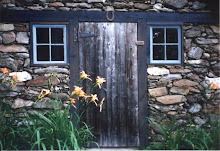
Redwood log notch work Fort Ross, California

Out of the car
playing catch
find dry
roadside
snake skin
w/perfectly
formed head
while looking
for the ball
Chapter 36
Jack London.
Flora Wellman, a seamstress, came to resent her
bastard son born from the assistance of one
William H. Chaney, a do good for nothing
"astrologer" who wandered and through a
succession of wives included Flora Wellman from
those whom he abandoned. The baby would be
handed to Mrs. Alonzo Prentiss to wet-nurse for the
first year, and no one could have predicted this lost
boy, given up by everyone but Mrs. Prentiss, would
become a legend before he was thirty and found dead
on his fortieth year. Before all of that the boy was
thrown very young into farm work and later as a child
laborer in urban jobs which presented a sense and
footing to the surroundings of his birthplace in San
Francisco, where he cruised its bay as an oyster pirate
and would live to see in his thirtieth year the city burn
and spill to ruin in the 1906 earthquake. By then he
was Jack London, named when Flora married farmer
John London when "Johnny" London was a year old.
We can only imagine Mrs. Alonzo Prentiss disappeared
from the scene. Also, and a bit humorlessly, imagine this —
how today London would fit just right in the portrait of
some crook or social outcast — prosecutor clearing
his voice and exclaiming: "Your Honor, young London
was abandoned at birth, raised by a black woman —
his mother may have been a prostitute, we aren't sure —
but we know his father was a crook, and of course John London
was beaten and forced to work in various unsavory jobs as
a child" ..., etc. And the real Jack London would have
nothing to do with it. As a teenager he took off to become
a pirate, filling his own sails on the high seas while
struggling through sixteen hour days in canneries
and jute mills before he went to sea aboard his boat
the Razzle Dazzle, which he bought from borrowing
money from his former wet-nurse, now "Aunt"
Jennie Prentiss, the black woman London felt more
a son to than his own mother. Jennie Prentiss didn't
disappear from London's life; nothing disappeared, as
in all engaging lives everything connects. You might
have this overwhelming feeling and gut reaction
when traveling into Sonoma County, on the fringes
of the vineyards but far enough from the respectable
charter of Napa Valley, where folks in double earrings
and bickering moods won't blink an eye at wanting to
charge you $110 a night at the Best Western in
Yountville just up the highway north of the town of
Napa, and we can't even smell grapes from here! You
would do better to go to Jack London's burned down
dwelling at Wolf House and don't be surprised how
easy it isn't to find; the charm and retreat of the place
is just that. Scratching up correct road directions to
the town of Glen Ellen, where London lived his last
years, as did another marvel, M.F.K. Fisher, is tough
enough. The people in the area might be like those in
Bolinas on the coast and how a few of us are here in
Vermont — tearing down every road sign and direc-
tion because — quite politely and don't take it per-
sonally — we don't want to see you. Well we managed
the curl of directions deciphered from our maps and
books, including the straight forward AAA Guide. We
didn't bother a soul asking how to find London, even
though in the heart of one town, which we guessed to
be Glen Ellen, one can locate the Hungry Wolf Res-
taurant — which presents a London aura — but we
didn't stop since we are in a rush near evening thinking
some park gate will close and we won't be able to
get in; though certainly we would hike in if it came to
that, which it did. The best parts of California you
have to hike or slip up ground to get to, whether the
base of Yosemite Falls where we scurried one morning
away from the crowds mesmerized upon one bridge
(the damn bridge now reminds me of a bridge I
waited upon in Orlando's Disney World trying to
catch a glimpse of Susan, Carson and his red-haired
cousin Megan tipping over the crest of the ride Splash
Mountain, where you sit in a peanut shell which at
the top of this water track each vessel participant, like
it or not, it's too late! are nipped at a ninety degree
angle; yes the world drops out from under you as the
boat glides to the waterfall ledge and the kingdom of
Disney World can be overviewed, and down the
chute the peanut shell goes with everyone aboard
either screaming for their lives, raising their arms
(teenagers) or biting their tongue and worse. It lasts a
few seconds, is all, and kids generally want to go back
up again); so I wonder now, having scrambled to the
base of Yosemite Falls, becoming drenched in its
flower, and seeing tucked away in a crevice, some
young giddy adventurer sending us a friendly wave as
if to say he has also climbed to the foot of something
marvelous. And of course he has. Will a Splash
Mountain someday be running over Yosemite Falls?
The crowds appear to view the falls waiting for some-
thing to happen. At Jack London State Historical Park
nothing is happening. The large parking lot is vacant
and by a stroke of luck the park closes at seven and
here it is exactly six o'clock with the birds starting to
grace the woodlands' twilight. Don Herron is on target
in his excellent book The Literary World of San Francisco & Its Environs:
"No other literary site in this state gives the visitor the feeling
of commercial success that Beauty Ranch does —
the realization that a man by virtue of his writing
transformed one of the most magnificent areas in
the state into a personal Shangri-la."
London moves to his beauty ranch in Glen Ellen
when he is twenty-nine years old. It's 1905.
In the famous earthquake the following year, most of
the homes occupied by the London family will be
destroyed, while many others will fall in the current
of urban renewal that would dash through Oakland in
the decades after London's death. No dwelling connected
to London stands in San Francisco today, but plaques
can be found, and across the bay in Oakland is
Jack London Square where the cabin London inhabited
as a prospector in Alaska was hauled down from
Henderson Creek by London devotees, discovered
in the late i96os, and supposedly the log framework
is fully restored hunched upon the square in
Oakland with other Jack London memorabilia. We
passed that up on our drive, saving it for the drinking
and shopping characters in the Jack London revue; I
mean London returned from the Yukon because his
health was failing him, it was either flee the north or
die from scurvy. He left for the Alaskan gold fields in
1897 at age twenty-one and returned a year later, sick
as a dog, his stepfather dead, and the prospect of paying
the rent and bills for the London family now facing him.
He'd done his pirating, worked the laundries,
canneries, delivered newspapers, even switched
from being "prince of the Oyster Pirates" to a law
enforcement official in the Marine Fish Patrol, which
lasted only a few months and was replaced with less
glamorous jobs as a longshoreman and salmon fisher
where London frequented waterfront saloons teaming
up with socialist thinkers who counseled young
Johnny about the life he had been forced to endure
as a child to hack labor — how it only enriched the
wealthy. Before Alaska, when Jack London signed on
with a sealing expedition to Russia and Japan, he was
seventeen years old. The next few years would find
him hoboing, riding the rails, arrested for vagrancy
and revealing his true identity — no matter the
$1,000,000 he earned in his later years as a writer —
"I loved life in the open," London wrote. "Learning
no trade, but drifting along from job to job, I looked
on the world and called it good, every bit of it." A man
who practiced what he preached. The walk to London's
Wolf House is a life built in the open and since the
park will close in one hour we are compelled to
follow the signs and stick to the path. A sign at the top
of the path, near the House of Happy Walls, built by
Charmian London, Jack's second wife and perhaps
spiritual equal, is a handsome stone building housing
more Jack London artifacts than you might have any
interest in. But then the doors are locked and we are
forced to look through the tall windows scanning over
London's typewriter, large globe, worn books, and I
can't see further into the darkening rooms but have
lifted Carson up to peek in so he has an idea about the
heroic writer of The Call of the Wild followed by
The Sea Wolf, stories he is familiar with involving ice bitten
men and their wolf-type dogs, millions of dollars
grossed on the books and films for a failed adventure
by a young San Franciscan for one year of his life
who would return — like Mark Twain's failures at
mining in California's Washoe and Sierra — to a
civilization ready for their tales from the frontier.
But that sign near House of Happy Walls (I love that
name) does say rattlesnakes are off the pathway, plus
poison oak, so we will behave and not steer away. The
path for a moment is blacktop, plenty wide enough
for two, though buckling in places which eventually
gives way to a comfortable dirt trail and finally an
access road that goes the rest of the way to Wolf
House and London's grave. This road must be for
services, but we are all alone out here, sunshine wet-
ting the tops of trees and one can imagine London,
newly divorced from his first wife Bessie and now
wedded to Charmian, having already written the
books establishing his name, now buying the first
one hundred thirty acres, followed by an additional one
thousand more, where London has decided to finally
settle down, raise livestock, and develop his theories
on agriculture. And of course write at his superhuman
routine — sleep for four and a half hours, rise at
dawn, and write one thousand polished words a day.
London upheld that schedule from the time he was
twenty-four years old when his first book The Son of the Wolf
was published. He kept the schedule until he was
dead and buried on his ranch — "Beauty Ranch" —
as it is known, on November 22,1916. Exactly forty.
The official report declares he died of uremic poisoning,
but others believe it was a morphine overdose, and
all fingers point to his book many of us read as boys;
later devoting our lives to writing and adventure
after we finished Martin Eden, where London's
autobiographical character committed suicide.
Thank Ina Donna Coolbrith, the librarian at the
Oakland Public Library, who London credited as being
the most influential woman in his life; this poet-librarian
brought the world of books to the young London
which no doubt saved his boyhood from a cable
of drudgery and hysterical living into the evolution
of self-learning. The adventure went to sea, into
the much hyped Alaska gold, over the open road
and into the books entirely activated by a wild nature,
the wolf tooth and claw, where man greets the animal
on his turf and lives it out. Very few writers have taken
their dreams to this limit, then crashed as quickly as
London had after his $70,000 expenditure: Wolf
House — today gothic in ruin, the dream structure
London had plans to guide his empire — burned in
an unexplained fire the night of August 25,1915. Now
to give you an idea just how possessed London was
— and it shows remarkably well viewing the ruins of
Wolf House — this house burns in 1913 during the
same year he had built one house and then another
back in Oakland because he thought the first house
and location was unhealthy for his children. It liter-
ally all comes crashing down. How Charmian survived
until 1955 living in her House of Happy Walls,
dedicating her life and property to the memory of Jack
London, is a devotion to man, literature and beauty.
Never mind that London was crazed during all this
time developing Beauty Ranch, buying acreage, that
midway into the plans he would up and have his yacht
the Snark built, just a year after the earthquake, when
lumber in San Francisco was fetching a premium
price. From 1907 to 1909 London and Charmian set
sail aboard the poorly constructed Snark with the talent
of attracting publicity on their around-the-world-cruise.
There is no feeling to this flighty side of London when
you stand before his gravesite, an enormous undressed
stone in a grove of manzanita. The trail to the site is
clearly marked, and we go there before Wolf House
which is around another bend then down into a wooded gully.
The grave reminds us of Emerson's stone in Sleepy Hollow Cemetery
in Concord, Massachusetts, except London's is surrounded
by a strong iron fence. Only his close family,
ranch hands and, of course, his writing pal George
Sterling were at the burial when London's ashes were
planted. The site is unadorned as any sentence in
The Call of the Wild; you pilgrimage and see but you must
walk awhile through Beauty Ranch to get there. Wolf
House is almost a frightening idea after a visit to the
grave. Down in its domain, but only the flammable
wood dimension — roof and flooring— is vanished
from the dream. The stone of the building hulks on.
It seems the fire was only yesterday, monumental in
scope and final construction, great round caliber rock
mortared well to one another, pillared in places is the
effect. The park has framed a walkway to beset a vista
into the Wolf, and no doubt to save the curious from
scaling the walls as we step almost cautiously around
the structure, stopping to gape into one castle-like
room: here is a dry "reflecting pool" of London's own
design, now spattered with wet leaves since the interior,
without a roof, is in motion with the outdoors.
The pool looks more to be a cement trough. The entire
location draws a parallel with Tarkovsky's film Stalker
where the lost souls in the film are provoked at
some point to wade through an unpleasant pool of
water. They have the roles of writers. We feel Jack
London with us and would rather get away — the fire
that caught up with his remarkable but frantic life has
left a haunting memory — one easy to ridicule despite
the fact the presence of the Wolf is ominous enough
to be alive. It is so unlike Robinson Jeffers' celestial
stone house and tower in Carmel. Jeffers' tower
handiwork, built by himself towing stone by stone
up from the Pacific, remains as the man who set
each stone there. Jack London lost direction. He had
his Wolf House built on an ordered dream manufac-
tured from a great deal of money earned from his
writing labors; almost without choice from the life he
had experienced, these stories had to be told. And today
they have been translated into eighty languages.
I like to imagine Jack London on icy Henderson
Creek. Whenever I see a wolf or track or claw logo I
think of London. If you go to Beauty Ranch, sit out in
the vivacious grassland in the sun. Perhaps you will
spot the large crow we saw perched on a low branch
when hiking the pathway back to our car, halfway to
the House of Happy Walls, closing in on seven
o'clock and maybe this wary bird we called "Jack"
thought nobody was around.

playing catch
find dry
roadside
snake skin
w/perfectly
formed head
while looking
for the ball
Chapter 36
Jack London.
Flora Wellman, a seamstress, came to resent her
bastard son born from the assistance of one
William H. Chaney, a do good for nothing
"astrologer" who wandered and through a
succession of wives included Flora Wellman from
those whom he abandoned. The baby would be
handed to Mrs. Alonzo Prentiss to wet-nurse for the
first year, and no one could have predicted this lost
boy, given up by everyone but Mrs. Prentiss, would
become a legend before he was thirty and found dead
on his fortieth year. Before all of that the boy was
thrown very young into farm work and later as a child
laborer in urban jobs which presented a sense and
footing to the surroundings of his birthplace in San
Francisco, where he cruised its bay as an oyster pirate
and would live to see in his thirtieth year the city burn
and spill to ruin in the 1906 earthquake. By then he
was Jack London, named when Flora married farmer
John London when "Johnny" London was a year old.
We can only imagine Mrs. Alonzo Prentiss disappeared
from the scene. Also, and a bit humorlessly, imagine this —
how today London would fit just right in the portrait of
some crook or social outcast — prosecutor clearing
his voice and exclaiming: "Your Honor, young London
was abandoned at birth, raised by a black woman —
his mother may have been a prostitute, we aren't sure —
but we know his father was a crook, and of course John London
was beaten and forced to work in various unsavory jobs as
a child" ..., etc. And the real Jack London would have
nothing to do with it. As a teenager he took off to become
a pirate, filling his own sails on the high seas while
struggling through sixteen hour days in canneries
and jute mills before he went to sea aboard his boat
the Razzle Dazzle, which he bought from borrowing
money from his former wet-nurse, now "Aunt"
Jennie Prentiss, the black woman London felt more
a son to than his own mother. Jennie Prentiss didn't
disappear from London's life; nothing disappeared, as
in all engaging lives everything connects. You might
have this overwhelming feeling and gut reaction
when traveling into Sonoma County, on the fringes
of the vineyards but far enough from the respectable
charter of Napa Valley, where folks in double earrings
and bickering moods won't blink an eye at wanting to
charge you $110 a night at the Best Western in
Yountville just up the highway north of the town of
Napa, and we can't even smell grapes from here! You
would do better to go to Jack London's burned down
dwelling at Wolf House and don't be surprised how
easy it isn't to find; the charm and retreat of the place
is just that. Scratching up correct road directions to
the town of Glen Ellen, where London lived his last
years, as did another marvel, M.F.K. Fisher, is tough
enough. The people in the area might be like those in
Bolinas on the coast and how a few of us are here in
Vermont — tearing down every road sign and direc-
tion because — quite politely and don't take it per-
sonally — we don't want to see you. Well we managed
the curl of directions deciphered from our maps and
books, including the straight forward AAA Guide. We
didn't bother a soul asking how to find London, even
though in the heart of one town, which we guessed to
be Glen Ellen, one can locate the Hungry Wolf Res-
taurant — which presents a London aura — but we
didn't stop since we are in a rush near evening thinking
some park gate will close and we won't be able to
get in; though certainly we would hike in if it came to
that, which it did. The best parts of California you
have to hike or slip up ground to get to, whether the
base of Yosemite Falls where we scurried one morning
away from the crowds mesmerized upon one bridge
(the damn bridge now reminds me of a bridge I
waited upon in Orlando's Disney World trying to
catch a glimpse of Susan, Carson and his red-haired
cousin Megan tipping over the crest of the ride Splash
Mountain, where you sit in a peanut shell which at
the top of this water track each vessel participant, like
it or not, it's too late! are nipped at a ninety degree
angle; yes the world drops out from under you as the
boat glides to the waterfall ledge and the kingdom of
Disney World can be overviewed, and down the
chute the peanut shell goes with everyone aboard
either screaming for their lives, raising their arms
(teenagers) or biting their tongue and worse. It lasts a
few seconds, is all, and kids generally want to go back
up again); so I wonder now, having scrambled to the
base of Yosemite Falls, becoming drenched in its
flower, and seeing tucked away in a crevice, some
young giddy adventurer sending us a friendly wave as
if to say he has also climbed to the foot of something
marvelous. And of course he has. Will a Splash
Mountain someday be running over Yosemite Falls?
The crowds appear to view the falls waiting for some-
thing to happen. At Jack London State Historical Park
nothing is happening. The large parking lot is vacant
and by a stroke of luck the park closes at seven and
here it is exactly six o'clock with the birds starting to
grace the woodlands' twilight. Don Herron is on target
in his excellent book The Literary World of San Francisco & Its Environs:
"No other literary site in this state gives the visitor the feeling
of commercial success that Beauty Ranch does —
the realization that a man by virtue of his writing
transformed one of the most magnificent areas in
the state into a personal Shangri-la."
London moves to his beauty ranch in Glen Ellen
when he is twenty-nine years old. It's 1905.
In the famous earthquake the following year, most of
the homes occupied by the London family will be
destroyed, while many others will fall in the current
of urban renewal that would dash through Oakland in
the decades after London's death. No dwelling connected
to London stands in San Francisco today, but plaques
can be found, and across the bay in Oakland is
Jack London Square where the cabin London inhabited
as a prospector in Alaska was hauled down from
Henderson Creek by London devotees, discovered
in the late i96os, and supposedly the log framework
is fully restored hunched upon the square in
Oakland with other Jack London memorabilia. We
passed that up on our drive, saving it for the drinking
and shopping characters in the Jack London revue; I
mean London returned from the Yukon because his
health was failing him, it was either flee the north or
die from scurvy. He left for the Alaskan gold fields in
1897 at age twenty-one and returned a year later, sick
as a dog, his stepfather dead, and the prospect of paying
the rent and bills for the London family now facing him.
He'd done his pirating, worked the laundries,
canneries, delivered newspapers, even switched
from being "prince of the Oyster Pirates" to a law
enforcement official in the Marine Fish Patrol, which
lasted only a few months and was replaced with less
glamorous jobs as a longshoreman and salmon fisher
where London frequented waterfront saloons teaming
up with socialist thinkers who counseled young
Johnny about the life he had been forced to endure
as a child to hack labor — how it only enriched the
wealthy. Before Alaska, when Jack London signed on
with a sealing expedition to Russia and Japan, he was
seventeen years old. The next few years would find
him hoboing, riding the rails, arrested for vagrancy
and revealing his true identity — no matter the
$1,000,000 he earned in his later years as a writer —
"I loved life in the open," London wrote. "Learning
no trade, but drifting along from job to job, I looked
on the world and called it good, every bit of it." A man
who practiced what he preached. The walk to London's
Wolf House is a life built in the open and since the
park will close in one hour we are compelled to
follow the signs and stick to the path. A sign at the top
of the path, near the House of Happy Walls, built by
Charmian London, Jack's second wife and perhaps
spiritual equal, is a handsome stone building housing
more Jack London artifacts than you might have any
interest in. But then the doors are locked and we are
forced to look through the tall windows scanning over
London's typewriter, large globe, worn books, and I
can't see further into the darkening rooms but have
lifted Carson up to peek in so he has an idea about the
heroic writer of The Call of the Wild followed by
The Sea Wolf, stories he is familiar with involving ice bitten
men and their wolf-type dogs, millions of dollars
grossed on the books and films for a failed adventure
by a young San Franciscan for one year of his life
who would return — like Mark Twain's failures at
mining in California's Washoe and Sierra — to a
civilization ready for their tales from the frontier.
But that sign near House of Happy Walls (I love that
name) does say rattlesnakes are off the pathway, plus
poison oak, so we will behave and not steer away. The
path for a moment is blacktop, plenty wide enough
for two, though buckling in places which eventually
gives way to a comfortable dirt trail and finally an
access road that goes the rest of the way to Wolf
House and London's grave. This road must be for
services, but we are all alone out here, sunshine wet-
ting the tops of trees and one can imagine London,
newly divorced from his first wife Bessie and now
wedded to Charmian, having already written the
books establishing his name, now buying the first
one hundred thirty acres, followed by an additional one
thousand more, where London has decided to finally
settle down, raise livestock, and develop his theories
on agriculture. And of course write at his superhuman
routine — sleep for four and a half hours, rise at
dawn, and write one thousand polished words a day.
London upheld that schedule from the time he was
twenty-four years old when his first book The Son of the Wolf
was published. He kept the schedule until he was
dead and buried on his ranch — "Beauty Ranch" —
as it is known, on November 22,1916. Exactly forty.
The official report declares he died of uremic poisoning,
but others believe it was a morphine overdose, and
all fingers point to his book many of us read as boys;
later devoting our lives to writing and adventure
after we finished Martin Eden, where London's
autobiographical character committed suicide.
Thank Ina Donna Coolbrith, the librarian at the
Oakland Public Library, who London credited as being
the most influential woman in his life; this poet-librarian
brought the world of books to the young London
which no doubt saved his boyhood from a cable
of drudgery and hysterical living into the evolution
of self-learning. The adventure went to sea, into
the much hyped Alaska gold, over the open road
and into the books entirely activated by a wild nature,
the wolf tooth and claw, where man greets the animal
on his turf and lives it out. Very few writers have taken
their dreams to this limit, then crashed as quickly as
London had after his $70,000 expenditure: Wolf
House — today gothic in ruin, the dream structure
London had plans to guide his empire — burned in
an unexplained fire the night of August 25,1915. Now
to give you an idea just how possessed London was
— and it shows remarkably well viewing the ruins of
Wolf House — this house burns in 1913 during the
same year he had built one house and then another
back in Oakland because he thought the first house
and location was unhealthy for his children. It liter-
ally all comes crashing down. How Charmian survived
until 1955 living in her House of Happy Walls,
dedicating her life and property to the memory of Jack
London, is a devotion to man, literature and beauty.
Never mind that London was crazed during all this
time developing Beauty Ranch, buying acreage, that
midway into the plans he would up and have his yacht
the Snark built, just a year after the earthquake, when
lumber in San Francisco was fetching a premium
price. From 1907 to 1909 London and Charmian set
sail aboard the poorly constructed Snark with the talent
of attracting publicity on their around-the-world-cruise.
There is no feeling to this flighty side of London when
you stand before his gravesite, an enormous undressed
stone in a grove of manzanita. The trail to the site is
clearly marked, and we go there before Wolf House
which is around another bend then down into a wooded gully.
The grave reminds us of Emerson's stone in Sleepy Hollow Cemetery
in Concord, Massachusetts, except London's is surrounded
by a strong iron fence. Only his close family,
ranch hands and, of course, his writing pal George
Sterling were at the burial when London's ashes were
planted. The site is unadorned as any sentence in
The Call of the Wild; you pilgrimage and see but you must
walk awhile through Beauty Ranch to get there. Wolf
House is almost a frightening idea after a visit to the
grave. Down in its domain, but only the flammable
wood dimension — roof and flooring— is vanished
from the dream. The stone of the building hulks on.
It seems the fire was only yesterday, monumental in
scope and final construction, great round caliber rock
mortared well to one another, pillared in places is the
effect. The park has framed a walkway to beset a vista
into the Wolf, and no doubt to save the curious from
scaling the walls as we step almost cautiously around
the structure, stopping to gape into one castle-like
room: here is a dry "reflecting pool" of London's own
design, now spattered with wet leaves since the interior,
without a roof, is in motion with the outdoors.
The pool looks more to be a cement trough. The entire
location draws a parallel with Tarkovsky's film Stalker
where the lost souls in the film are provoked at
some point to wade through an unpleasant pool of
water. They have the roles of writers. We feel Jack
London with us and would rather get away — the fire
that caught up with his remarkable but frantic life has
left a haunting memory — one easy to ridicule despite
the fact the presence of the Wolf is ominous enough
to be alive. It is so unlike Robinson Jeffers' celestial
stone house and tower in Carmel. Jeffers' tower
handiwork, built by himself towing stone by stone
up from the Pacific, remains as the man who set
each stone there. Jack London lost direction. He had
his Wolf House built on an ordered dream manufac-
tured from a great deal of money earned from his
writing labors; almost without choice from the life he
had experienced, these stories had to be told. And today
they have been translated into eighty languages.
I like to imagine Jack London on icy Henderson
Creek. Whenever I see a wolf or track or claw logo I
think of London. If you go to Beauty Ranch, sit out in
the vivacious grassland in the sun. Perhaps you will
spot the large crow we saw perched on a low branch
when hiking the pathway back to our car, halfway to
the House of Happy Walls, closing in on seven
o'clock and maybe this wary bird we called "Jack"
thought nobody was around.
~ Bob Arnold, from American Train Letters
(Coyote Books, 1995)
(Coyote Books, 1995)

photo © bob arnold