Tuesday, January 11, 2011


DEATH VALLEY ~


Marta Becket


Maybe born to be a ballerina (1924), to this day Marta Becket is living and performing from her own private theater: Amargosa Opera House in Death Valley Junction, California.

We stayed there once but slept in the parking lot, arriving way too late in the full moon for anyone to notice.

While performing with a road show in 1967, a flat tire stopped MB momentarily at this dusty four-corners and she decided to stay. If I remember correctly, she bought the whole town! Wind blown and sun~baked. Perfectly ghostly.

A dancer, painter, choreographer and desert rat (a lover of animals, mostso burros, cats and wild horses) this former Rockette from Radio City Music Hall is performing to this day at age 86.

In 1970 a crew from National Geographic discovered her paradise where she was performing on stage without an audience. Look around on the walls and one will see the murals the artist has painted of her world — classical sites and faces and applause.

Track down Todd Robinson's documentary film from 2000, it'll be a pleasure.


photo: jengray.com


Sunday, January 9, 2011

EARTH ~


BACK ROAD CALLER


FIRST SNOW AS I SPLIT WOOD


Thin snow falling into
Valley fog, quiets everything,
No bird call, nothing flying.
The splitting wedge and hammer
Echo over the pasture
While the flakes open bigger
For no reason other than snow.
And I straighten my sweaty back
To watch this world, lend a tongue
And taste it melt.


FARMER’S WIFE


Four dozen eggs under her arm,
That’s how she greeted us.
We weren’t coming for eggs
But for a currant bush
Waiting in the dooryard
Wrapped tight in burlap.
I lifted it into the back
Of the truck since that’s
What I was hired to do,
Waited in the early sun
Leaning against the tailgate
While the two old ladies talked.
And with the eggs still under
Her arm she also turned to speak
With me, eyes dazzled like light
In water, checkered blue flannel
Shirt, out-worn by all of her
Sons and now on her back; torn
At the elbows, but warm.
Everything is just right
On this hill farm and I’ve only
Been here 5 minutes. Crows flap
West to east from the wood’s edge
Long over the flat face of pasture,
A manure spreader is backed up
To the kitchen door stacked neat
With stovewood, the lawn is mowed,
And we’ve caught this farmer’s wife
In between the chicken coop and
The house; white hair combed back
With ruddy hands that pick eggs
Each morning, and when she talks
She mentions all of her family.


NOW


Without any warning,
No wind or dampness,
Just as I was about to
Step out from under
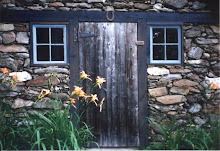
The empty stall,
Shake woodchips
After chain saw work
From my rubber boots
Then split the wood —
Sleet rained down all at once
As if someone whispered now
Caught even the chickadees
Feeding in the overgrown
Raspberry canes, but I
Watched as they regained
Themselves over the
Pasture, flying away


CLAYTON


Clayton always had a pricky word
To say about the hippies.
They lived in a commune
Over the hill from his farm.
He ran into them at three places
At any one time during the year —
Either when he was hunting the hill
As he did every year for 40 years,
Or when he was running his snow-machine
On the back roads.
Finally he would see them in town
Every other Friday, when he was
Cashing his check from the state park.
And they was always cashing
Some other kind of check,
Smiling at him.

Of course I was a hippie to Clayton too
Because I had the long beard,
But we worked together when he came home
To his farm on the river.
Helped him screed the foundation floor
Under his house and lay down the roof, too —
Fix fence, cut the firewood and solder sap pails.
But one day I’ll never forget
Was when we were haying the lower mowing in August —
His wife had moved out long ago
And he was living with his son
And the big TV antenna.
But these summer days were spent
A long time haying,
Waiting on the weather
And broken down farm machines.

We had just finished up work,
Had the trailer swayed down loaded
With 200 bales and were coming around
The bend near the second swimming hole
When Clayton caught sight of something
Standing fresh out open
In the shallow part of the river —
A young woman soaping herself
And blonde naked as pine lumber,
Sunlight enshrined in the water
Around her knees.
We both stared like idiots
Until we got broadside with her,
Then we looked straight ahead
Business as usual
But I know she didn’t move.

Further up the road
Clayton twisted his sunburned neck
And skinny white t-shirt
Around in the tractor seat,
Looked back where I was
Holding onto the trailer stakes
And hollered, “I never did mind the hippie women!”


WARM


Apple, poplar, ash,
Cherry, red maple,
Pine, basswood, oak,
These are the woods
That we sawed today,
In two hours of thinning,
Selecting, we made a cord —
Trampled branches on snow
Worked without words.
Simple thoughts, like picking
Up these sticks — back and
Forth in the mind — until we
Stop to rest together against
The pile, brushing off woodchips,
Shedding hats and gloves,
And because we kiss, I warm
My hands beneath your blouse.


FARLOW


Just imagine Farlow
On Washington’s Birthday
When he came out the back door
Into his woodshed and caught
Clayton’s small hunting-pup
Digging through his trash.
According to the story
He told the game warden
Was that the pup attacked him,
So he had to shoot it.

Clayton never bought that story.
He knew from past experience
Of his own that Farlow’s wife
Had left him six months
After they moved here from Connecticut.
He was spending weekend nights
And now weekdays
In bars in town after work,
Might have even brought home a lady,
But most probably not.

Clayton could read Farlow’s house lights
A quarter-mile away from where
He sat nights in his kitchen —
No houses in-between.
If he used the scope of his rifle
He could even see more.
As winter sunk in
Farlow was keeping odd-hours —
Arriving home late,
Wandering around the house weekends,
And shooting his rifle off for hours
In his field on Sunday afternoons.
The house was said to have an arsenal —
Maybe 30 rifles and pistols for one man —
And it only took one to shoot the dog.

After that, Clayton didn’t deal with him,
Didn’t pay attention to his house lights,
And in turn Farlow leased out his hayfield
To someone else, instead of Clayton —
First time in years.

Since then both men have remarried,
Moved away, and the house of Farlow’s
Was bought by a millionaire gentleman farmer.
I still hear Farlow target practicing
In his field on a Sunday afternoon,
Even though he is long gone.
Clayton’s son says they have so many puppies
Around at his father’s old place
That they’ll probably have to drown a few of them
In the river this spring.


SCOUT


Here you are again
Late at night
Snow falling in the valley
Life on snowshoes

Hardly faraway from home
In fact, isn’t that the glow
Of the kitchen lamp
Lighting through the trees

I’ve spend the better part
Of darkness stamping in
A mile wide circle enjoying
The measure of going nowhere

Stand with me
Waste some time
Everything you’ve always wanted
Is all around you


© Bob Arnold
from Where Rivers Meet
(Mad River Press)


photos © bob arnold

Friday, January 7, 2011

Wednesday, January 5, 2011

I PAINT ~


Diego Rivera

"Man at the Crossroads" begun in 1933 for the Rockefeller Center in New York City, was removed after a furor erupted in the press over a portrait of Vladimir Lenin. Look right under the upper right wing, or is it a propeller. . .


E.B. White

I Paint What I See


"'What do you paint, when you paint on a wall?'
Said John D.'s grandson Nelson.
'Do you paint just anything there at all?
'Will there be any doves, or a tree in fall?
'Or a hunting scene, like an English hall?'

'I paint what I see,' said Rivera.

'What are the colors you use when you paint?'
Said John D.'s grandson Nelson.
'Do you use any red in the beard of a saint?
'If you do, is it terribly red, or faint?
'Do you use any blue? Is it Prussian?'

'I paint what I paint,' said Rivera.

'Whose is that head that I see on the wall?'
Said John D.'s grandson Nelson.
'Is it anyone's head whom we know, at all?
'A Rensselaer, or a Saltonstall?
'Is it Franklin D.? Is it Mordaunt Hall?
Or is it the head of a Russian?

'I paint what I think,' said Rivera.


'I paint what I paint, I paint what I see,
'I paint what I think,' said Rivera,
'And the thing that is dearest in life to me
'In a bourgeois hall is Integrity;
'However . . .
'I'll take out a couple of people drinkin'
'And put in a picture of Abraham Lincoln;
'I could even give you McCormick's reaper
'And still not make my art much cheaper.
'But the head of Lenin has got to stay
'Or my friends will give the bird today,
'The bird, the bird, forever.'

'It's not good taste in a man like me,'
Said John D.'s grandson Neslon,
'To question an artist's integrity
'Or mention a practical thing like a fee,
'But I know what I like to a large degree,
'Though art I hate to hamper;
'For twenty-one thousand conservative bucks
'You painted a radical. I say shucks,
'I never could rent the offices-----
'The capitalistic offices.
'For this, as you know, is a public hall
'And people want doves, or a tree in hall
'And though your art I dislike to hamper,
'I owe a little to God and Gramper,
'And after all,
'It's my wall . . .'

'We'll see if it is,' said Rivera.


from ~
The New Yorker, May 20, 1933


Description of the Art Work

A Mural portrait commissioned by Nelson Rockefeller for Rockefeller Center in New York City. Its subject was to be "human intelligence in control of the forces of nature." The 63 feet by 17 feet mural contained in the center a portrait of Lenin.

Description of incident

"On May 22, 1933, Rivera was called down from his scaffold where he was still working on the unfinished mural. He was handed a check for $14,00, the balance of his fee, and informed that he had been dismissed. Within 30 minutes the mural had been covered by tarpaper and a wooden screen.

Results of incident

"Seeking a compromise, Rockefeller suggested that Rivera should replace Lenin with some unknown face; the artist offered to add Lincoln but refused to expunge Lenin. Charged with willful propagandizing, he declared only that "All art is propaganda." Since he had accepted his payment, Rivera was unable to force the Rockefellers to exhibit or even keep his work. The mural was subsequently removed from the wall..." The Encyclopedia of Censorship, J. Green, Facts on File, pg. 254

Source: The Encyclopedia of Censorship, J. Green, Facts on File


photos:


the rockefeller plaza mural

frida kahlo & diego rivera

diego rivera working on the mural


Monday, January 3, 2011

JANINE & BADGER


[ click on image for a bigger world ]


designed & printed by susan & bob arnold

sorry, gang, we lost the "comments" for a moment...will return.

Saturday, January 1, 2011

I AM A MAN ~


Ernest C. Withers


Ernest C. Withers (1922-2007), photographer, worked sixty years documenting the civil rights movement in America, the Memphis blues scene, the Negro Baseball League, black folklore, and he traveled with Martin Luther King, Jr., during most of his public life, garnering photographs that are today the hallmark of that period. No one else had quite the touch nor knew how to instinctively position portraits — the sweat, the earth, the sound — between the very public street and the killing floor. His baseball photographs show faces rarely seen as he found them. When you hold his now scarce book of photographs gathering all these worlds, you're holding something. I found my copy in a dim-lit basement shop. In the dross there, it glowed.

Amongst the highlights and courage of the man now come allegations he worked as a paid informant for the FBI from 1968-1970. Who knows what that entailed? His family, and he had eight children, aren't buying the charges; others are affixing negative labels. This was a very complicated and hopeful, yet murderous time in American history (lots of snitches), and this is quite a versatile artist. He had a large family to support, plus he was known to give his photographs away to ministers who couldn't afford to pay. Look at the character of the man, but not at the expense of the brilliant work. These are photographs that lead the way.


ernest c. withers
mule train leaving Mississippi for Washington D.C. Poor People's March 1968


ernest c. withers
sanitation workers solidarity march Memphis 1968


ernest c. withers


ernest c. withers


Ernie Banks, Larry Doby, Matty Brescia, Jackie Robinson, youngster, Memphis 1953
ernest c. withers


Satchel Paige


Memphis Red Sox
ernest c. withers


ernest c. withers


Martin Luther King, Jr. Washington D.C.
ernest c. withers


Pops Staples


When we listen to the gospel and rhythm & blues of Roebuck "Pops" Staples (1914-2000), we're hearing the soul of a man born on a Mississippi cotton plantation, was one of 14 kids, and who dropped out of school after the eighth grade. He'd go on to know and play with Charlie Patton, Robert Johnson, Son House — a killer line-up. Then there was his personal friendship with Martin Luther King, Jr. By 1948 he formed The Staple Singers with his young children (Mavis, Yvonne, Pervis, Cleotha) singing in local churches; this spread all over the country, all over the world. Forever legendary on Stax Records. Pops Staples' peaceable yet resonant and shimmering recordings may be picked up as an influence for many current acts, including the stage sound of Bob Dylan. His youngest, Mavis, carries on the music and the grace.


ernest c. withers
Ike & Tina Turner
paradise, ca. 1962


Howlin' Wolf
wdia goodwill revue
city auditorium, ca. 1960

ernest c. withers


ever cool B.B. King

ernest c. withers


Elvis Presley & B.B. King
december 7, 1956
ernest c. withers


ernest c. withers


Lionel Hampton, Memphis 1955
ernest c. withers


Ernest C. Withers


a gorgeous moment: young woman w/ her voter registration card, Fayette County, Tennessee, 1960
ernest c. withers


ernest c. withers


Friday, December 31, 2010

PASSING ~


The loveliest holiday lit village we saw in 2010


photo © bob arnold


WITHNAIL ~


My thumbs have gone weird!


Withnail & I
directed & written by Bruce Robinson
Handmade Films 1986


WITH ME ~


steve lacy


Thursday, December 30, 2010

SON ~


For the holiday season Carson brought us out the new album by Isobel Campbell & Mark Lanegan. Campbell (b. 1976, Glasgow) is best known with the band Belle & Sebastian, which she departed from in 2002. Lanegan (b. 1964, USA) is a versatile swingman with many bands: starting with Screaming Trees and Queens of the Stone Age. His collaborative abilities with others seems limitless. We're showing a song, or maybe I'll find two, from Campbell & Lanegan's third album Hawk. Carson knew we would like it.


street photo © bob arnold


Wednesday, December 29, 2010

ATOMIC ~


Count Basie with his orchestra


His mother taught him how to play piano while taking in wash for a living in Red Bank, New Jersey — and Fats Waller would help out with some music pointers years later — born in 1904 and gone by 1984, Basie ran his orchestras like a well-timed train for nearly 50 years. A man born in racism, as were many in his bands, never mind two world wars, depressions, economic crashes to eat your eyes out, Red Scare, McCarthy witch hunts, the jitterbug, fox-trot, congas, the fading of swing and the up-step of be-bop, and all Basie ever wanted was for his audience "to get the beat." Turn it up. The walls of the houses and trees or neighborhoods should shake.


Tuesday, December 28, 2010

YESTERDAY ~


image © bob arnold


Monday, December 27, 2010

THE SMILE ~


Thank you Monica ~
Poet Janine Pommy Vega reads at the College of Poetry, Warwick, New York. November 13, 2010. Video by Monica Claire Antonie.


Sunday, December 26, 2010

EARTH ~


"Janine Vega has the capacity to channel the intuition of children down to death, Hell and the devil. If my child attends her classes, we'll sue.
-- Excerpt from a parent's letter to a local school."

from Janine Pommy Vega, Mad Dogs of Trieste


A TREE FULL OF BIRDS

--------------------for Janine Pommy Vega


That's what I heard one morning

In a no-nothing town between

Phoenix and Tucson, where it

Appeared desolate and desperate

With a mall and a motel and a big

Highway running through it all

And even the motel desk didn't

Know the name of the route number

Of the highway when I asked the

Next morning with a desire to go

To the mountains north — as if no

One went to the mountains from here —

But I did, and before I left, hours

Before I asked any questions, birds

By the hundreds came to the trees and

Bushes of this motel square, dipping

Even into the swimming pool, and whether

It was sunrise that lit each bird yellow

Or if in fact they were yellow and each

Singing magnificently in the coolness of

Daybreak when I was awakened gladly

And stepped out my door and onto a long

Balcony to see and hear and feel the most

Beautiful day in the world begin


Bob Arnold
from Once In Vermont
Gnomon


SOME GREATEST HITS WITH JANINE


She wrote to me from Lake Titicaca, the heart of the Inca Civilization,
my first 'fan letter' (we laugh), for my first book of poems, both of
us young authors with the same publisher (Cherry Valley Editions)
.


When we finally met, after a few years first of correspondence, I introduced

Susan and myself after Janine's reading at Jack Powers' Stone Soup in
Boston. Janine gasped, lit up, told the first person right next to her


"These guys raise ducks & geese!" Yes we did. Two hours away and far from home.

Janine nodding and smiling and sizing us both up for years to come.
She would love Susan with the same lovely quiet that is Susan.


That night, none of us slept. We hiked over the Longfellow Bridge

twice, slow with talk and the dark Charles River below. A phantom fellow
joined us, unknown to us, probably until that night unknown


to Janine. As a boy I learned quickly things aren't always as they appear.

Susan and Janine agreed: driving the Mass Pike west to east is the pits.
Better east to west. Something about Berkshire, Catskill, Niagara...


A few years later Janine visited us in our cabin, slept in my library of bark,

books and twigs; rose hours and hours after we did. Made sure to do yoga,
meditation, had special drinks and brought her own blender. A pot of rice.


Soon after we all drove through New Hampshire, higher into the White

Mountains. When we stopped to show her the Old Man in the Mountain
the Jersey girl got out and gazed publicly, "Aw, man, look at that." This was


after years of living on the streets with the pros, then as a hermit in Bolivia ~
Peru, writing two or three singular books of poems, losing a husband to an
early death who she never stopped loving, and paying attention always to the


down-trodden, phantoms. She climbed the peaks of the Catskills / Himalayas.

Worked the toughest prisons in North and South America. Adored the children
of the world. She worked with me twice at the same girls school and was so good


some of the teachers were afraid to have her back. The students begged to have her back.

Who wins that fight in the real world? We had a dog named Bo who Janine called
"Mister Bo". Cats took precedence. She, Susan and I once hiked her woods all


day for a bear she insisted we would find. It didn't matter. Hunting with Janine

is a poetry class with your eyes wide open. 35 years later we are talking on the phone
and maybe she knows she is dying but she will never tell me this. This is the second


time an elder poet friend has called me a week before they die. I'm starting to pick up

the signals of how ordinary and simply beautiful the conversation is. In this conversation
I reminded Janine how the battery on my phone would soon die. We always had a good


laugh over that one — machines ran out of gas; we didn't. I also tried to caution the one

I love, as she railed on with a myriad of health problems, that she must remember that
not everyone was as tough as she was. Without losing a beat she dazzled,"You-think?"


with the best giggle of any 68 year old girl I've ever known. Today I was in her library for

12 straight hours sifting and saving, sifting and saving, I couldn't stop, neither could Susan.
You would burst into tears if I told you and showed you how many piles and stacks and boxes


of children and prisoner and migrant worker and hopeful student poets work she has saved

for decades. Without any ability to throw them out. In the same care and position as her own
bundles, files, books on her library shelves. I won't tell you. I don't want you to cry.


On Raglan Road of an Autumn day
I saw her first and knew,
That her dark hair would weave a snare
That I might someday rue.
I saw the danger and I passed
Along the enchanted way.
And I said,"Let grief be a fallen leaf
At the dawning of the day."

On Grafton Street in November, we
Tripped lightly along the ledge
Of a deep ravine where can be seen
The worth of passion play.
The Queen of Hearts still making tarts
And I not making hay;
Oh, I loved too much and by such and such
Is happiness thrown away.

I gave her gifts of the mind,
I gave her the secret signs,
That's known to the artists who have known
The true gods of sound and stone.
And her words and tint without stint
I gave her poems to say
With her own name there and her own dark hair
Like clouds over fields of May.

On a quiet street where old ghosts meet
I see her walking now,
And away from me so hurriedly
My reason must allow.
That I had loved, not as I should
A creature made of clay,
When the angel woos the clay, he'll lose
His wings at the dawn of day.

Patrick Kavanagh


First published in 1946 as Dark Haired Myriam Ran Away

One of Janine's favorite — poem & song


photo © bob arnold