Sunday, July 22, 2012

OVERHEARD ~


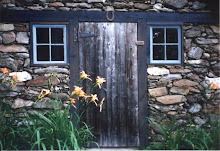
photo : © bob arnold


Saturday, July 21, 2012

DILLINGER ~


John Dillinger
(June 22, 1903 – July 22, 1934)


I'd like to have enough money to enjoy life;
be clear of everything — not worry;
take care
of my old man,
and see a ball game every day.


— John Dillinger


(a life long Chicago Cubs fan)


"The Dillinger gang had directed its efforts entirely to the robbing of banks. Naturally a great many holdups were erroneously ascribed to the band. The following is a confirmed list of their depredations, although there is often a considerable variance between the losses claimed by banks or reported in the papers and what Dillinger declares he actually obtained.


July 17, 1933 — Commercial Bank, Daleville, Indiana, $3,500


August 4, 1933 — Montpelier National Bank, Montpelier, Indiana, $6,700.


August 14, 1933 — Bluffton Bank, Bluffton, Ohio, $6,000


Dillinger (wearing open vest) being led from jail to a courtroom at Crown Point, Indiana, on Feb. 9, 1934, for arraignment on the charge of killing a policeman in East Chicago, Indiana.


September 6, 1933 — Massachusetts Avenue State Bank, Indianapolis, Indiana, $21,000


October 23, 1933 — Central National Bank and Trust Company, Greencastle, Indiana, $76,000


A driver takes no chances of being suspected of harboring John Dillinger. 26th April 1934
© AP / TopFoto


November 20, 1933 — American Bank and Trust Company, Racine, Wisconsin, $28,000


December 13, 1933, — Unity Trust and Savings Bank, Chicago, Illinois, $8,700


January 15, 1934 — First National Bank and Trust Company, Sioux Falls, North Dakota,
$49,500


Members of the Dillinger Gang (from left) Russell Clark,
Charles Makley, Harry Pierpont, John Dillinger, Ann Martin,
and Mary Kinder are arraigned in a Tucson, Arizona courtroom.

Photo courtesy the Associated Press.


March 13, 1934 — First National Bank, Mason City, Iowa, $52,000


June 30, 1934 — Merchants National Bank, South Bend, Indiana, $29,890"


from Dillinger, the untold Story
G. Russell Girardin with William J. Helmer
(Indiana University Press, 1994)


During these holdups, fifteen officers of the law and private citizens were killed and seventeen wounded.


The police officers who aided in the capture of the Dillinger gang in Tucson Arizona shown above with five sub-machine guns, bullet proof vests, revolvers and ammunition taken from members of the gang of Bank Robbers and escaped convicts. From left to right standing Detective Dallas Ford ; Chief of Police Gus Wellard ; Harry Foley ; Frank Eyman ; Captain Jay Smith ; Chet Sherman ; James Herron . From left to right kneeling Milo Walker ; K. Mullaney Earl Nolan . 28th January 1934


Out of the Dillinger gang, eleven were killed and twenty-three sent to prison. This would include John Dillinger himself, killed in Chicago by federal agents and police officers on July 22, 1934.
Homer Van Meter was shot by police in St. Paul, Minnesota on August 23, 1934. Harry Pierpont was electrocuted in the state penitentiary at Columbus, Ohio October 17, 1934, and on November 27, 1934, George "Baby Face" Nelson (Lester Gillis) died from gunshot wounds given by federal agents in Barrington, Illinois.


John Dillinger, Fred Barker,
'Pretty Boy' Floyd, Homer Van
Meter, Alvin Karpis, and 'Baby
Face' Nelson


Along with the human life lost, three-hundred thousand dollars was taken in bank robberies, and a million dollars spent by federal, state and local governments, plus private organizations, at protecting the public while running this gang down.


A photograph of the exterior of the house in Chicago where John Dillinger lived prior to his death near a Chicago theater. Here, the outlaw, who had changed his appearance with the aid of a plastic surgeon, stayed only to make frequent trips to the theater where he was killed. 25th July 1934


John Dillinger was the only criminal designated "Public Enemy Number One" by a federal official.


Dillinger once more nabbed by lawmen
(will escape)


Though Girardin and Helmer state the Dillinger gang only held up banks, it's been noted they also robbed four police stations.


(click on images to enlarge)


John Dillinger was alleged to have killed an East Chicago, Indiana police officer during a shoot-out. This has since been disputed but if true would be Dillinger's only known homicide. He was charged but never convicted.


After eluding the law in four states for almost a year, Dillinger returned to Chicago, Illinois, a city he felt comfortable in, and met his end on July 22, 1934 while leaving the Biograph Theater when federal agents and police officers closed in to make an arrest. A woman companion, Ana Cumpanas, the legendary "Woman in Red" (she actually wore an orange dress that night (10:35) while with Dillinger, as a signal to the law) was the turncoat. Dillinger pulled a revolver and was shot dead by a fuselage of lawman led by federal agents Melvin Purvis and Samuel P. Cowley with three, some say four, bullets that struck home. Purvis was given credit for shooting Dillinger, but he never fired his gun. Three men fired the fatal shots: Clarence Hurt fired twice, Charles Winstead fired three times, and Herman Hollis fired once.


Two months earlier, in Louisiana, Bonnie & Clyde were gunned down.


Biograph Theater, Chicago


A little background on Ana Cumpanas (alias Anna Sage), a native of Romania : early that year she was facing deportation to Romania, after the authorities described her as "alien of low moral character". She was the madam of a Chicago, Illinois brothel. On July 4, 1934, John Dillinger began frequenting Cumpanas' establishment which included twenty-six year old Polly Hamilton, Dillinger's latest girlfriend.


Polly Hamilton


Both Cumpanas and Polly Hamilton would be on either side of Dillinger when he walked out of the Biograph Theater that fatal night. Once AC became aware of Dillinger's criminal identity, and the large reward being offered for his capture, she fingered the bank robber as a way of obtaining permanent US residence.


Ana Cumpanas (alias Anna Sage)


Dillinger on the floor of a police vehicle as he was taken to the mortuary after he had been killed.


After Dillinger was gunned down, the FBI shuffled Cumpanas first to Detroit and then to California. She earned herself a $5,000 reward, only half of what she had been promised.
In the meantime mixed messages were occurring whether she was staying in the country or being shipped out — the FBI went so far as to admit they were powerless to stop the deportation proceedings due to shoddy communication between branches of the federal government. Little has changed! Cumpanas appealed this decision in Chicago but the court stood with the lower court and Ana Cumpanas was that same year deported to Timișoara, Romania, where she lived out of the public eye until her death in 1947 from liver disease.


The bank robber on display at Cook County Morgue


"Nash theory of Dillinger's escape —

In "The Dillinger Dossier," author Jay Robert Nash maintains that Dillinger escaped death at the Biograph simply by not being there. In his stead was a "Jimmy Lawrence," a local Chicago petty criminal whose appearance was similar to Dillinger's. Nash uses evidence to show that Chicago Police officer Martin Zarkovich was instrumental in this plot. Nash theorizes that the plot unraveled when the body was found to have fingerprints that didn't match Dillinger's (the fingerprint card was missing from the Cook County Morgue for over three decades), it was too tall, the eye color was wrong, and it possessed a rheumatic heart. The F.B.I., a relatively new agency whose agents were only recently permitted to carry guns or make arrests, would have fallen under heavy scrutiny, this being the third innocent man killed in pursuit of Dillinger, and would have gone to great lengths to ensure a cover up. In shooting this dupe, F.B.I. agents were stationed on the roof of the theater and fired downward, causing the open cuts on the face which were described through the media as "scars resulting from inept plastic surgery." The first words from Dillinger's father upon identifying the body were "that's not my boy." The body was buried under five feet of concrete and steel to prevent any exhumation. Nash produced photos that were sent to Melvin Purvis just prior to his 1960 suicide (more probably an accident) along with fingerprints of Dillinger as he would appear in 1960 (he was apparently living and working in California as a machinist) under what would have been an early form of the witness protection program."


~ Wikipedia


Friday, July 20, 2012

( DON'T WORRY ) ~


Curtis Mayfied


(Don't Worry) If There's A Hell Below We're All Going To Go by Curtis Mayfield on Grooveshark


Curtis Lee Mayfield (June 3, 1942 – December 26, 1999) was an African-American soul, R&B, and funk singer, songwriter, and record producer born in Chicago, Illinois. He is best known for his anthemic music with The Impressions during the Civil Rights Movement of the 1960s and for composing the soundtrack to the blaxploitation film Super Fly, Mayfield is highly regarded as a pioneer of funk and of politically conscious African-American music. He was also a multi-instrumentalist who played the guitar, bass, piano, saxophone, and drums. His influence on the likes of fellow musicians of the time period, Jimi Hendrix and Bob Marley is outstanding; his influence on today's rappers, rockers and R & B artists is heroic. Mayfield was a double inductee into The Rock and Roll Hall of Fame, inducted as a member of The Impressions into The Rock and Roll Hall of Fame in 1991, and again in 1999 as a solo artist. He is also a two-time Grammy Hall of Fame inductee.

EARTH ~


Daylilies


( caw caw caw )


Once In Vermont films
© bob arnold


Thursday, July 19, 2012

MISS YAMADA ~


Isuzu Yamada
(1917-2012)


Mitsu Yamada was born in Osaka on Feb. 5, 1917. Her father was an onnagata theater actor, a male performer who specialized in female roles. She studied traditional dance and music as a child and at 13 joined the Nikkatsu studio, where she mainly appeared in period dramas.

Ms. Yamada was married six times, most recently to the actor Tsutomu Shimomoto, who died in 2000. She had one child, the actress Michiko Saga, with her first husband, the actor Ichiro Tsukida. Ms. Saga died in 1992.

The scholar Donald Richie, who wrote about Ms. Yamada in his book “Japanese Portraits” (2006), described her as a peerless technician who mastered the art of the kata, the intricate physical language specific to classical Japanese dance and theater. “This art informs everything that Yamada does: the way she turns, the way she lifts her hand, the way she smiles,” Mr. Richie wrote. “A knowledge this encompassing means that Yamada always knows precisely what to do and how to do it.”


Dennis Lim ~ New York Times ~ 15 July 2012


Wednesday, July 18, 2012

DAISY DAISY ~


The other day we bicycled every street and byway and side alley and short cut between towns in two side by side western Massachusetts towns and then over its noted bridge of flowers and came to daisy


photo : bob arnold


EARTH ~


HANDS


He was the first

One ever to show

Me anything, and

Make sense, about

A garden. When he

Called me down into

The fenced half-acre

I walked through the

Wire gate and found

Him shoulder high

In the early morning

Blossom of peas.

And snapping a pod

Open, with the same

Hands that cut timber,

Mended fence and

Milked cows — who

Came in here every

Morning before he

Went off to chores —

He put everything

Into my hands

When he said,

Now taste this.


___________________

from Where Rivers Meet
by Bob Arnold
Mad River Press (1990)


photo © susan arnold

Tuesday, July 17, 2012

POSTAGE DUE ~


John Brandi / Steve Sanfield


All day I've been writing away on the final leg of the Longhouse Bibliography for the years 2008-2012. I'm at 2011 and thought to charge ahead and get more under the belt and then I opened the mail ~ and here was a new book by John and Steve (sent by Steve, with other loose poems to share) and I couldn't help myself but to read. Everything.


Then go out and snap a photograph


Then type you up some of the poems from the book


So you are here with me


Like these two guys are

_____________________________________


no clouds

but the sky fills

with snowflakes


solitude —

every knot on the floor

begins to move


another pal becomes a recluse

almost no one left

to not visit


unburned brush pile

beginning

to bud


three mistakes / two stumbles

and not even

out the door yet


jury summons

he wears exactly

what they told him not to


changing the stream's song

simply by moving

a stone or two


years of pine needles

on the path

soften his own fall


so happy for their visit

he opens the gate

for the swirling leaves


200 copies, text printed at Country Copy, Grass Valley, California
over image, printing & binding by Jerry Reddan, Tangram Press


Monday, July 16, 2012

LOOK UP ~


Number of private U.S. citizens killed in terrorist attacks in 2010 : 15

Number killed by falling televisions : 16


from Harper's Index, August 2012


Sunday, July 15, 2012

THE WOLVES' TURN ~


Los Lobos
Chicago, 2010


Los Lobos
Vic Theater
November 6, 2010


David Hidalgo
Booker T. & the MGs

Crossroads Guitar Festival 2004


enjoy!


MORE WOODY ~


Arlo Guthrie Family
(w/ Woody Guthrie children, grandchildren and great grandchildren)
photo : Annie Leibovitz


We returned from the concert last night around midnight feeling runny, crummy and a little funny (meaning exhilarated). We had just been front stage, in what shade any of us could find, in a treeless field scorched at 9o degrees, and would stand the next four hours enduring beautifully a heart of Americana between two bands: Los Lobos and the Arlo Guthrie Family Reunion band. I had last seen Arlo play (at a small bar) 42 years ago, so there were all sorts of reunions going on.


We had got there after doing a full morning of chores and sweating up, then dunking in the river and heading out in small touring car to a few more errands like first finding a bite to eat, then doing groceries and packing it all away in our large thermos with a bag of ice, and the grocer has been strategically chosen because it allows us a spot to park the car, groceries in the tub under blankets and head off on-foot, each of us with a good apple to chew in hand, and hoof it the two miles into the concert, because you see — we don't have $110 to spend on tickets. There's a brake job to do on the car next week and that's going to cost plenty. So, with any luck, after we walk in and see how the place feels (all outdoors, mucho security, ID bracelets everywhere), we'll see if we can find two people who are leaving early and don't mind parting and gifting us with their ID bracelets. It didn't take long. In fact one fellow went to such lengths to dig down into his backpack and bring forth a fresh free ticket (for Sweetheart) from Yankee Candle. We plan to give a little bow next time we pass Yankee Candle, that strange tourist attraction on the horizon. To the kind man we already bow.


With about fifteen minutes to spare, joyous, criminal, free floating with this sea of field-filled faces and bodies we joined the great human race and got ourselves into place for Los Lobos, to our minds, the mightiest touring band of America. We had last seen them 15 years ago in Lenox, Massachusetts when we had bought tickets for ourselves, our son Carson, Janine Pommy Vega and Jim Koller and we all showed up there as a big family ready for our own reunion and zest. And guess what? — the tickets were never charged to us — so don't tell me something eerie, sweet and nice isn't following us around with this band. Besides, we're here in the first place for Woody Guthrie's 100 birthday celebration (Los Lobos doesn't mention him once) or as Woody might have said, "Whatever it takes."


Los Lobos is finishing up an eastern tour tonight here, though they aren't quite sure where they are, nor does it matter, they start and end in full throttle Mexico~East L.A.,~ the bigger world catch-as-catch-can mixture of classical rock 'n' roll and blues meets traditional conjunto masterpieces. I don't know if that was Cougar Estrada on the drums with them, some of his mighty drum kit was blocking my view, but if it was, his playing and backfill engine literally thrummed under our feet. There were a few jam portions here to backfill our own lives for at least the next year to come. This band stream rolling as free wolves since the early 70s.


That's one segment of the Americana that is occurring right before our eyes — from the Mexico borderlands into East L.A., and my Sweetheart-sneak who has gotten in with me tonight reminds me, with her own L.A., childhood memories, that the weather right now, as the band hits the stage, is very reminiscent of the very best California dry ground breezy lingering humidity solace. It's even in the trees on the edges of our view. No wonder the band is all smiles, except for, of course, Luis Perez.


After Los Lobos, and a short breather (everyone goes to the free water cooler, a very thoughtful contribution by the concert architects) comes what has to be the grandest showcase of American music family tradition since The Carter Family, if you trace the lineage. Arlo Guthrie and his relaxed and top-notch family brood of musicians including his daughter Sarah Lee Guthrie and husband Johnny Irion. Just to show you the lineage right there: Arlo is the son of Woody Guthrie, who handed his son a guitar at the age of 5. Even though Arlo, as a youngster, wanted to be a forest ranger and work in a fire lookout tower for the rest of his life (who didn't in the 60s?!), the Oklahoma gene pool genius had other plans for him. It turns out Johnny Irion, who married Arlo's daughter, had a grand-uncle by the name of John Steinbeck. So right there on the stage, strumming, alive as you or me, is a mighty flash of
The Grapes of Wrath between Woody and Steinbeck. And it will play out powerfully when all this family begins to play, sing and speak — from Arlo's children and grand children, who are Woody Guthrie's children and grand children and great children, right down to little Sophia and Olivia Irion who sang and talked, trust me, just like small fry Woody's. If you didn't have tears in your eyes at this charmed spectacle, then you did when Arlo Davy Guthrie, as son, broke into Woody's masterpiece "Deportee" (Plane Wreck at Los Gatos).


A beautiful night. We all left as one. It will disperse, yes, but it was one.


_____________________________


I found a clip of Arlo Guthrie and most of the same family band playing "Deportees" (not from our concert) from a few years back, with classic Arlo speakeasy and play.


Saturday, July 14, 2012

HAPPY BIRTHDAY, WOODY ~


Woody Guthrie
New York City 1943


Woody Guthrie
The Library of Congress Recording Sessions


With no plans to be released as commercial recordings, some of the tracks from these legendary recordings were first released in 1964 on Elektra Records three-LP set titled Woody Guthrie: Library of Congress Recordings.

Rounder Records in 1988 — when I bought my vinyl boxset — released the full recordings on LP and CD.

The Library of Congress Recording Sessions are known as the first recordings made of Woody Guthrie. Born Woodrow Wilson Guthrie in Okemah Oklahoma on July 14, 1912, he passed away at age 55 in New York City on October 3, 1967. No surprise, the recordings were developed by folklorist Alan Lomax over a period of days in March 1940 when Guthrie was 28 years old. They catch early versions of "So Long It's Been Good To Know You" and "Talking Dust Bowl Blues" with Guthrie in a talkative mood, sharing autobiographical memories of his home state of Oklahoma, the Dust Bowl, riding freight trains and personal observations of his life during America's great depression.


Woody's 33 New Year's Resolutions
click on image to enlarge


Woody getting a shine
New York City 1943
Photo : Eric Schaal


Woody entertaining commuters, 1943
Photo : Eric Schaal


Woody & kids
photo courtesy Larry Long


Woody Guthrie entertains commuters in New York, 1943.
Photo : Eric Schaal


click on image to enlarge


Greystone Mental Hospital

"A building on the grounds of the Greystone Park Psychiatric Hospital (once known as the Greystone Park Lunatic Asylum). Morris County, New Jersey. Now partially abandoned and in a state of decay as some of the buildings return to dust and weeds. The facility occupies some 700+ acres and has been taken over by the state of New Jersey.

Legendary folk singer Woody Guthrie was hospitalized here from about 1956 to 1961 due to symptoms from Huntington's disease which caused him to sometimes lose control of his muscle movements. While hospitalized here, Bob Dylan came to pay a visit to Woody."
Rob Klurfield, photographer


top photo : Eric Schaal