Thursday, April 5, 2018

HENRY MILLER ~


—————————————————
It is not enough to overthrow governments,
masters, tyrants: one must overthrow his own
preconceived ideas of right and wrong, good
and bad, just and unjust. We must abandon the
hard-fought trenches we have dug ourselves
into and come out into the open, surrender our
arms, our possessions, our rights as individuals,
classes, nations, peoples. A billion men seeking
peace cannot be enslaved. We have enslaved
ourselves, by our own petty, circumscribed
view of life. It is glorious to offer one's life for
a cause, but dead men accomplish nothing. 
Life demands that we offer something more —
spirit, soul, intelligence, goodwill. Nature is
ever ready to repair the gaps caused by death,
but nature cannot supply the intelligence, the
will, the imagination to conquer the forces of
death. Nature restores and repairs, that is all. It
is man's task to eradicate the homicidal instinct
which is infinite in its ramifications and mani-
festations. It is useless to call upon God, as it is
futile to meet force with force.

H E N R Y      M I L L E R
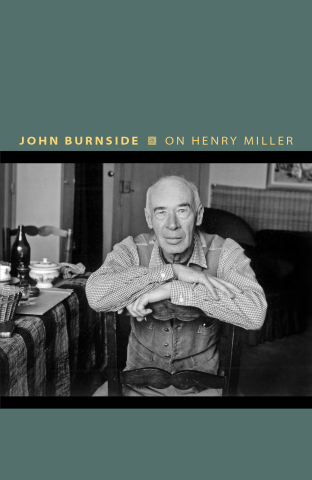


Anyone lifting their head up to recognize the power and the glory
of Henry Miller, in my book, is a good day for the reader,
the individual, the world. Although a bit of a boggy
appreciation, Burnside does dig down into the golden
essence of Miller — not simply the once popular
lust of his Tropic books — but the realer lust
for life, which hasn't been equaled in his
many books of essays, travel, philosophy
and like Whitman, the greater love
of poetry and liberation.


Princeton 
2018

photo: Henry Miller
home on Big Sur


Wednesday, April 4, 2018

BESO, the Donkey ~


Beso and the Mailman


Beso is tired and old

but will wake up

and travel the pasture

to greet the mailman.


He carefully studies

the mouth of the box being

opened and the hand

feeding it.


I wonder if he remembers

the rum cake

my mother sent to me

last year.


Beso the Helmsman


A tide of gray fog floods

the valley floor.


Iron oaks drink their brew

with the dead and loom.


Beso measures deep waves

lifting pasture, hills,

and hemisphere,

with ancient earth legs.


The world seems unhidden.


We were marched onto this ark

a long time ago —


what was I?


Ask Beso


Are you wonderful?

Ask Beso

what he thinks about

the drinking song

he endured

when he carried you home

last night.


Beso's Dialect


Woud I know

if Beso spoke?

Maybe he has been

conversing with me

in a dialect that he

assumes I understand

because sometimes

I scratch his ears,

fetch the apple,

or leave him alone,

as requested.


Beso Keeps


Overcome by weariness,

Beso keeps to his stall.


One halfhearted ear tracks

hawks passing over the barn.


———————————

Richard Jarrette
Beso the Donkey
Michigan State University Press


Tuesday, April 3, 2018

WINTER REVELS ~


About One More Wood


From this little wood,

at last,

for ever or for years

the mushrooms have gone.

This happened slowly,

over thirty years.

And now, as I think back,

this disappearance, their "going"

seems one single action,

like the dying away

of a long-lived orchestra

of a long-lived choir.


————————

Gennady Aygi
translated by Peter France


Monday, April 2, 2018

WOODLANDERS ~


Woodlanders


She sat in the last of a summer sun

Her eyes closed

All ocean


Winter Light


We walked the town

By staying in the sun

And the sun was everywhere

That day and so were we


Fucking


Going grocery shopping

With the one you love

Isn’t grocery shopping


All At Once


Is my love for her really that vast — 

or is the heart-shaped onion she


brings to my hand at the grocery cart

really that beautiful? 


————————————
BOB ARNOLD
I'm In Love With You
Who Is In Love With Me
Longhouse 2012


Sunday, April 1, 2018

BETTYE LAVETTE ~


I'M WORKING ON A BUILDING ~


THE ROCK IS MY HOME ~


Der Fels ist mein Haus
Le Rocher est ma demeure
The Rock is My Home

VAN NOSTRAND REINHOLD
1977

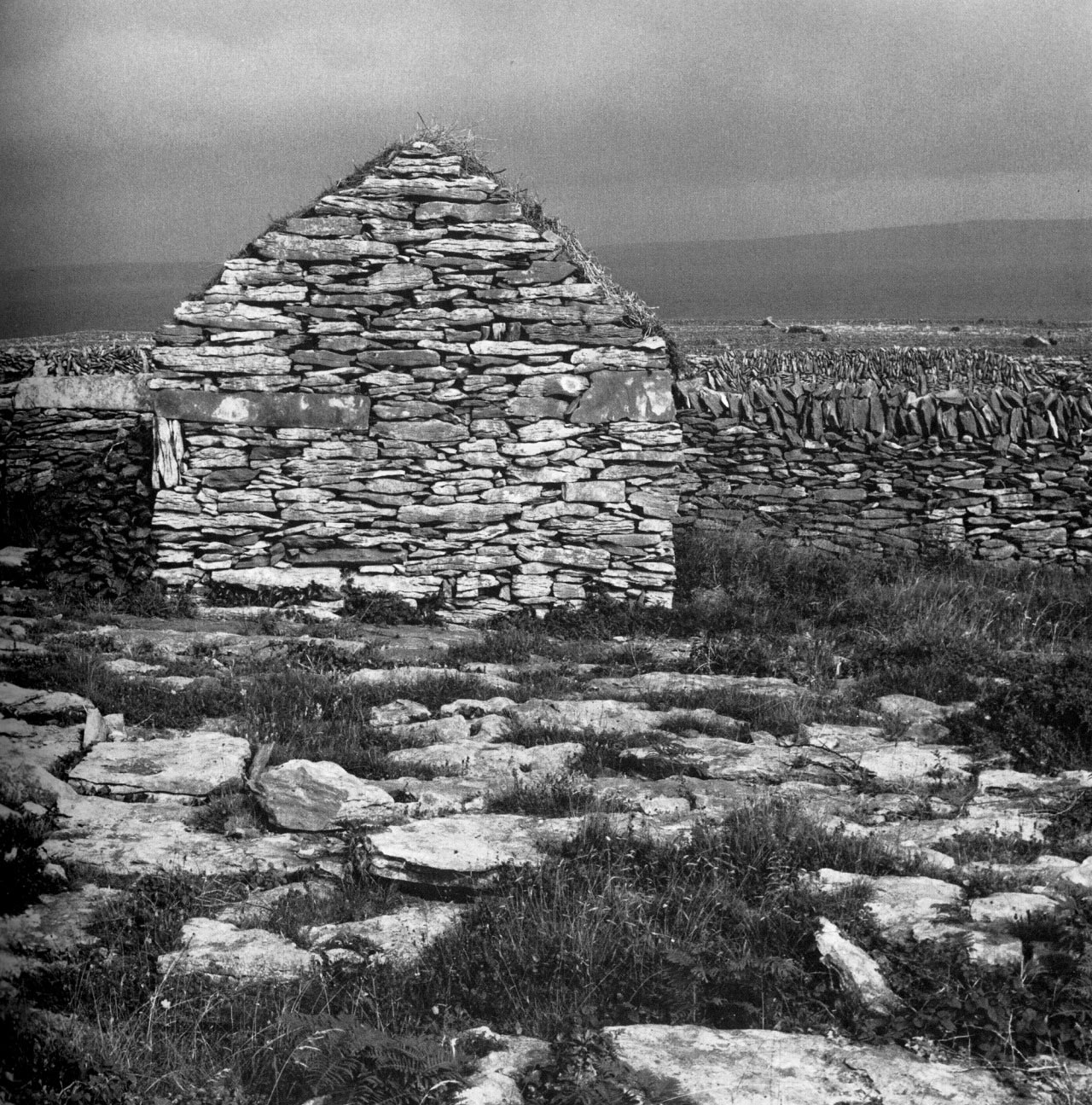
My bible for the last 40 years of stone work
and no book to my knowledge gets down to the ground level
of appreciation of touching, lifting and placing stone.
Now very costly to purchase, in the many 100s$
but far beyond the thought of money to me.
With stone work you want someone with the
Werner Blaser eye, who wrote the text
and took the photographs
and found the treasures.

[ BA ]


Monday, March 26, 2018

EVEN INSIDE ~


There


From no place —

a small striped gull feather

blowing closer to me


Cape


The wilder

the place the

wilder the birds


~


Top down —

hair blowing

fields blowing


Edge Of Land


What overtakes me more —

The blue of the sea or her dress

Raised, wading, high above her knees


Today


3 days since we’ve been to the sea —

But there again

When I kiss your hair


Even Inside


You were asleep

I blew out the lamp

Turned to you —

A firefly blinked


————————————
BOB ARNOLD
I'm In Love With You
Who Is In Love With Me
Longhouse 2012


Saturday, March 24, 2018

INDIAN TALES: JAIME DE ANGULO ~


No more excuses 
that you have nothing 
to share 
with your children 
or grandchildren. 
Start here~


Indian Tales by Jaime de Angulo
Tales of the Pit River Indians as recounted by anthropologist Jaime de Angulo for KPFA in 1949. Re-edited and produced by Gui de Angulo in 1991.


Friday, March 23, 2018

IRMA THOMAS ~


Yes ~ head to You Tube, a quick away (as they say)


DAVID BLUE ~


Thursday, March 22, 2018

RYSZARD KRYNICKI ~


. . . May Slaves


. . .

. . .

. . .

may slaves not strive for power at any cost,

may power govern nothing but itself,

may judges be fallible rather than venal,

may prosecutors not stop at nothing,

may the police work to reveal their own crimes,

may burglars break into their own apartments,

may censors redact themselves out of existence,

may informers deliver reports on themselves,

may customs officers look up their own asses,

may guards build the prison of their dreams

and locking themselves up to a man, from inside

throw the key into the ocean


                                                           73/74


———————————————

Ryszard Krynicki
OUR LIFE GROWS
New York Review of Books 2018
translated by Alissa Valles
afterword Adam Michnik


Tuesday, March 20, 2018

TITANIC ~


THE BATTLE OF MICHIGAN AVENUE ~


"How Hard It Is To Accept The Truth"


Film Notes


The Urban Crisis and the New Militants, Part 2—Social Confrontation: The Battle of Michigan Avenue (1969)
Production Company: The Film Group, Inc. Transfer Note: Digital file made from a 16mm print preserved by the Chicago Film Archives. Running Time: 11 minutes.
The Film Group, a Chicago-based production company set up to create industrial films and ads, found a new purpose during the Chicago Democratic Convention in late August 1968. On a lunch break from shooting a Kentucky Fried Chicken commercial, founding member Mike Gray and his crew were shocked by police violence on the very streets where they lived and worked. Radicalized, they filmed the chaos and created their feature-length documentary American Revolution 2. From their footage grew the educational series, The Urban Crisis and the New Militants.
Produced by the Film Group’s accountant Bill Cottle, the series consists of seven self-contained modules that “teach by raising questions rather than by attempting to answer them.” The modules tell their story through editing rather than voice-over narration and show “real events, with real people acting spontaneously,” as the Group explained to an educational film distributor. In Social Confrontation, the filmmakers juxtapose events inside the convention hall with those on the streets, connecting the brutality of police with the oppressive tactics of the Democratic leaders.
The 1968 convention brought together a Democratic Party enraged and dispirited by the assassinations of Martin Luther King and Robert Kennedy just a few months before and torn by opposition to the Vietnam War. President Johnson had refused to seek reelection and many saw front runner Vice President Hubert Humphrey as little better. Antiwar and civil rights protesters converged on Chicago but the police and National Guards had little patience with their demonstrations. On August 28, in part of what the Walker Report to the National Commission on the Causes and Prevention of Violence called a “police riot,” authorities clubbed protesters and released tear gas so intense that it permeated the convention hotel. The ensuing mayhem came to be known as “The Battle of Michigan Avenue.”
Social Confrontation captured the havoc firsthand. While convention-goers debated the Vietnam plank, protestors filled Grant Park for a rally. In a series of escalating confrontations documented by the film, police released tear gas, National Guards surrounded the park, and protesters escaped onto Michigan Avenue, mingling with the covered wagons of the Poor People’s March led by Reverend Ralph Abernathy. A stand-off ensued in front of the Conrad Hilton Hotel, headquarters of the major convention-goers. Receiving an order to clear the streets, the police charged into the 5,000-strong crowd, beating anyone in their path—protestors, reporters and bystanders—and dragging them into police wagons.
The delegates in the convention hall gradually received reports of the melee. When Wisconsin delegate Donald Peterson noted that thousands of young people were being beaten in the streets and proposed moving the convention he was cut off mid-sentence by Convention Chair Carl Albert. The film cuts to bloodied protesters before returning to the convention, shock gripping the hall as Senator Abraham Ribicoff went off script to exclaim “When George McGovern is president of the United States we wouldn’t have to have Gestapo tactics in the streets of Chicago!” The Mayor of Chicago, Richard Daley (father of the current mayor), shouted back in protest, leading Ribicoff to add, “How hard it is to accept the truth!” By the convention’s end 668 people had been arrested and a thousand more treated by medics. Hope, however, still lived on at the candlelight vigil concluding the film.
To counter the images in the news, Chicago commissioned the film What Trees Do They Plant? (1968), titled after one of the mayor’s rejoinders. But the violence documented by national television and films like Social Confrontation had been seared into the public consciousness. The truth proved hard, but not impossible to accept.
About the Preservation
Thanks to release prints of The Urban Crisis and the New Militants donated by Bill Cottle and Mike Gray and grants from the NFPF, the CFA has preserved the entire seven-part series.
More Information
The Film Group’s award-winning documentaries American Revolution 2(1969) and The Murder of Fred Hamptonare available on DVD (Facets Video, 2007); Cicero March, another entry from the Urban Crisis series, is included as an extra.
About the Archive
Founded in 2003, The Chicago Film Archives is a non-profit organization devoted to the acquisition, preservation, and exhibition of films that reflect the history and culture of Chicago and the Midwest. Holding over 9,200 titles, the CFA focuses its collections on independent documentaries as well as industrial, educational, experimental, sponsored, and amateur films.