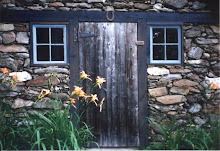
YOU KNOW YOU'RE IN FOR TROUBLE IF ON THE FIRST DAY OF SPRING, IT SNOWS!
___________________
WILLIAM BLAKE
RON PADGETT
LEW WELCH
LUCILLE CLIFTON
MATTHEW ZAPRUDER
WALLACE STEVENS
KENNETH REXROTH
CLAUDE MCKAY
KIM ADDONIZIO
GOTTFRIED BENN
ANONYMOUS / FRANCES DENSMORE
TOMAS TRANSTROMER
BOB ARNOLD
ALICIA OSTRIKER
___________________
Spring's Answer
Earth rais'd up her head,
From the darkness dread & drear.
Her light fled:
Stony dread!
And her locks cover'd with grey despair.
Prison'd on watry shore
Starry Jealousy does keep my den
Cold and hoar
Weeping o'er
I hear the Father of the ancient men
Selfish father of men
Cruel, jealous, selfish fear
Can delight
Chain'd in night
The virgins of youth and morning bear.
Does spring hide its joy
When buds and blossoms grow?
Does the sower?
Sow by night?
Or the plowman in darkness plow?
Break this heavy chain,
That does freeze my bones around
Selfish! vain!
Eternal bane!
That free Love with bondage bound.
WILLIAM BLAKE
I’m in the house.
It’s nice out: warm
sun on cold snow.
First day of spring
or last of winter.
My legs run down
the stairs and out
the door, my top
half here typing
RON PADGETT
Springtime in the Rockies, Lichen
All these years I overlooked them in the
LEW WELCH
LUCILLE CLIFTON
April Snow
MATTHEW ZAPRUDER
The trade-wind jingles the rings in the nets around the racks
SPRING, COAST RANGE
CLAUDE MCKAY
Onset
KIM ADDONIZIO
As my eyes search the prairie
I feel the summer in the spring.
TOMAS TRANSTROMER
racket of the rest, this
symbiotic splash of plant and fungus feeding
on rock, on sun, a little moisture, air —
tiny acid-factories dissolving
salt from living rocks and
eating them.
Here they are, blooming!
Trail rock, talus and scree, all dusted with it:
rust, ivory, brilliant yellow-green, and
cliffs like murals!
Huge panels streaked and patched, quietly
with shooting-stars and lupine at the base.
Closer, with the glass, a city of cups!
Clumps of mushrooms and where do the
plants begin? Why are they doing this?
In this big sky and all around me peaks &
the melting glaciers, why am I made to
kneel and peer at Tiny?
These are the stamps of the final envelope.
How can the poisons reach them?
In such thin air, how can they care for the
loss of a million breaths?
What, possibly, could make their ground more bare?
Let it all die.
The hushed globe will wait and wait for
what is now so small and slow to
open it again.
As now, indeed, it opens it again, this
scentless velvet,
crumbler-of-the-rocks,
this Lichen!
LEW WELCH
spring song
the green of Jesus
is breaking the ground
and the sweet
smell of delicious Jesus
is opening the house and
the dance of Jesus music
has hold of the air and
the world is turning
in the body of Jesus and
the future is possible
LUCILLE CLIFTON
April Snow
Today in El Paso all the planes are asleep on the runway. The world
is in a delay. All the political consultants drinking whiskey keep
their heads down, lifting them only to look at the beautiful scarred
waitress who wears typewriter keys as a necklace. They jingle
when she brings them drinks. Outside the giant plate glass windows
the planes are completely covered in snow, it piles up on the wings.
I feel like a mountain of cell phone chargers. Each of the various
faiths of our various fathers keeps us only partly protected. I don’t
want to talk on the phone to an angel. At night before I go to sleep
I am already dreaming. Of coffee, of ancient generals, of the faces
of statues each of which has the eternal expression of one of my feelings.
I examine my feelings without feeling anything. I ride my blue bike
on the edge of the desert. I am president of this glass of water.
MATTHEW ZAPRUDER
Indian River
The trade-wind jingles the rings in the nets around the racks
by the docks on Indian River.
It is the same jingle of the water among roots under the
banks of the palmettoes.
It is the same jingle of the red-bird breasting the orange-trees
out of the cedars.
Yet there is no spring in Florida, neither in boskage perdu, nor
on the nunnery beaches.
WALLACE STEVENS
Toward An Organic Philosophy
SPRING, COAST RANGE
The glow of my campfire is dark red and flameless,
The circle of white ash widens around it.
I get up and walk off in the moonlight and each time
I look back the red is deeper and the light smaller.
Scorpio rises late with Mars caught in his claw;
The moon has come before them, the light
Like a choir of children in the young laurel trees.
It is April; the shad, the hot headed fish,
Climbs the rivers; there is trillium in the damp canyons;
The foetid adder’s tongue lolls by the waterfall.
There was a farm at this campsite once, it is almost gone now.
There were sheep here after the farm, and fire
Long ago burned the redwoods out of the gulch,
The Douglas fir off the ridge; today the soil
Is stony and incoherent, the small stones lie flat
And plate the surface like scales.
Twenty years ago the spreading gully
Toppled the big oak over onto the house.
Now there is nothing left but the foundations
Hidden in poison oak, and above on the ridge,
Six lonely, ominous fenceposts;
The redwood beams of the barn make a footbridge
Over the deep waterless creek bed;
The hills are covered with wild oats
Dry and white by midsummer.
I walk in the random survivals of the orchard.
In a patch of moonlight a mole
Shakes his tunnel like an angry vein;
Orion walks waist deep in the fog coming in from the ocean;
Leo crouches under the zenith.
There are tiny hard fruits already on the plum trees.
The purity of the apple blossoms is incredible.
As the wind dies down their fragrance
Clusters around them like thick smoke.
All the day they roared with bees, in the moonlight
They are silent and immaculate.
KENNETH REXROTH
After the Winter
Some day, when trees have shed their leaves
And against the morning’s white
The shivering birds beneath the eaves
Have sheltered for the night,
We’ll turn our faces southward, love,
Toward the summer isle
Where bamboos spire the shafted grove
And wide-mouthed orchids smile.
And we will seek the quiet hill
Where towers the cotton tree,
And leaps the laughing crystal rill,
And works the droning bee.
And we will build a cottage there
Beside an open glade,
With black-ribbed blue-bells blowing near,
And ferns that never fade.
CLAUDE MCKAY
Onset
Watching that frenzy of insects above the bush of white flowers,
bush I see everywhere on hill after hill, all I can think of
is how terrifying spring is, in its tireless, mindless replications.
Everywhere emergence: seed case, chrysalis, uterus, endless manufacturing.
And the wrapped stacks of Styrofoam cups in the grocery, lately
I can’t stand them, the shelves of canned beans and soups, freezers
of identical dinners; then the snowflake-diamond-snowflake of the rug
beneath my chair, rows of books turning their backs,
even my two feet, how they mirror each other oppresses me,
the way they fit so perfectly together, how I can nestle one big toe into the other
like little continents that have drifted; my God the unity of everything,
my hands and eyes, yours; doesn’t that frighten you sometimes, remembering
the pleasure of nakedness in fresh sheets, all the lovers there before you,
beside you, crowding you out? And the scouring griefs,
don’t look at them all or they’ll kill you, you can barely encompass your own;
I’m saying I know all about you, whoever you are, it’s spring
and it’s starting again, the longing that begins, and begins, and begins.
KIM ADDONIZIO
Last Spring
Fill yourself up with the forsythias
and when the lilacs flower, stir them in too
with your blood and happiness and wretchedness,
the dark ground that seems to come with you.
Sluggish days. All obstacles overcome.
And if you say: ending or beginning, who knows,
then maybe—just maybe—the hours will carry you
into June, when the roses blow.
GOTTFRIED BENN
trans. from the German by Michael Hofmann
Spring Song
As my eyes search the prairie
I feel the summer in the spring.
ANONYMOUS
FRANCES DENSMORE (translated)
Source: Chippewa Music II Bulletin 53 (1913)
The Indoors Is Endless
It’s spring in 1827, Beethoven
hoists his death-mask and sails off.
The grindstones are turning in Europe’s windmills.
The wild geese are flying northwards.
Here is the north, here is Stockholm
swimming palaces and hovels.
The logs in the royal fireplace
collapse from Attention to At Ease.
Peace prevails, vaccine and potatoes,
but the city wells breathe heavily.
Privy barrels in sedan chairs like paschas
are carried by night over the North Bridge.
The cobblestones make them stagger
mamselles loafers gentlemen.
Implacably still, the sign-board
with the smoking blackamoor.
So many islands, so much rowing
with invisible oars against the current!
The channels open up, April May
and sweet honey dribbling June.
The heat reaches islands far out.
The village doors are open, except one.
The snake-clock’s pointer licks the silence.
The rock slopes glow with geology’s patience.
It happened like this, or almost.
It is an obscure family tale
about Erik, done down by a curse
disabled by a bullet through the soul.
He went to town, met an enemy
and sailed home sick and grey.
Keeps to his bed all that summer.
The tools on the wall are in mourning.
He lies awake, hears the woolly flutter
of night moths, his moonlight comrades.
His strength ebbs out, he pushes in vain
against the iron-bound tomorrow.
And the God of the depths cries out of the depths
‘Deliver me! Deliver yourself!’
All the surface action turns inwards.
He’s taken apart, put together.
The wind rises and the wild rose bushes
catch on the fleeing light.
The future opens, he looks into
the self-rotating kaleidoscope
sees indistinct fluttering faces
family faces not yet born.
By mistake his gaze strikes me
as I walk around here in Washington
among grandiose houses where only
every second column bears weight.
White buildings in crematorium style
where the dream of the poor turns to ash.
The gentle downward slope gets steeper
and imperceptibly becomes an abyss.
TOMAS TRANSTROMER
translated by Robin Fulton
Passing
It is Spring
Already you relax in a cotton skirt
Passing through mountains is a strong feeling
Fields plowed, new wood split, a hawk floating
Puffs of softwood in the gray hills
A river runs with snow melting
A small bridge neatly built to get by
There is pleasure in such places
An old woman and her huge straw hat
Raking the far corner of a hayfield
BOB ARNOLD
The optimists among us
taking heart because it is spring
skip along
attending their meetings
signing their e-mail petitions
marching with their satiric signs
singing their we shall overcome songs
posting their pungent twitters and blogs
believing in a better world
for no good reason
I envy them
said the old woman
The seasons go round they
go round and around
said the tulip
dancing among her friends
in their brown bed in the sun
in the April breeze
under a maple canopy
that was also dancing
only with greater motions
casting greater shadows
and the grass
hardly stirring
What a concerto
of good stinks said the dog
trotting along Riverside Drive
in the early spring afternoon
sniffing this way and that
how gratifying the cellos of the river
the tubas of the traffic
the trombones
of the leafing elms with the legato
of my rivals’ piss at their feet
and the leftover meat and grease
singing along in all the wastebaskets
ALICIA OSTRIKER
________________
little spring anthology compiled by BA ~
william blake: the collected poems (anchor/doubleday)
claude mckay: complete poems (u illinois press)
lucille clifton: the collected poems (boa editions)
ron padgett: collected poems (coffee house books)
kenneth rexroth: the collected shorter poems (new directions)
tomas transtromer; new and collected poems (bloodaxe books)
kim addonizio: tell me (boa editions)
matthew zapruder: come on all you ghosts (copper canyon press)
bob arnold: where rivers meet (mad river press)
wallace stevens: the collected poems (knopf)
lew welch: ring of bone (grey fox press)
Passing
It is Spring
Already you relax in a cotton skirt
Passing through mountains is a strong feeling
Fields plowed, new wood split, a hawk floating
Puffs of softwood in the gray hills
A river runs with snow melting
A small bridge neatly built to get by
There is pleasure in such places
An old woman and her huge straw hat
Raking the far corner of a hayfield
BOB ARNOLD
April
The optimists among us
taking heart because it is spring
skip along
attending their meetings
signing their e-mail petitions
marching with their satiric signs
singing their we shall overcome songs
posting their pungent twitters and blogs
believing in a better world
for no good reason
I envy them
said the old woman
The seasons go round they
go round and around
said the tulip
dancing among her friends
in their brown bed in the sun
in the April breeze
under a maple canopy
that was also dancing
only with greater motions
casting greater shadows
and the grass
hardly stirring
What a concerto
of good stinks said the dog
trotting along Riverside Drive
in the early spring afternoon
sniffing this way and that
how gratifying the cellos of the river
the tubas of the traffic
the trombones
of the leafing elms with the legato
of my rivals’ piss at their feet
and the leftover meat and grease
singing along in all the wastebaskets
ALICIA OSTRIKER
________________
little spring anthology compiled by BA ~
william blake: the collected poems (anchor/doubleday)
claude mckay: complete poems (u illinois press)
lucille clifton: the collected poems (boa editions)
ron padgett: collected poems (coffee house books)
kenneth rexroth: the collected shorter poems (new directions)
tomas transtromer; new and collected poems (bloodaxe books)
kim addonizio: tell me (boa editions)
matthew zapruder: come on all you ghosts (copper canyon press)
bob arnold: where rivers meet (mad river press)
wallace stevens: the collected poems (knopf)
lew welch: ring of bone (grey fox press)