Sunday, February 21, 2010


TAOIST


we're

light


as

fear


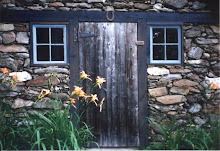
photo © bob arnold


WHAT THE WRITER INSTRUCTOR ME TOLD ME


To be a success, me boy

you have to write the stuff

the people want


what do they want?

what do they want?!

they want the stuff that


makes them feel miserable

to make some sense and it only

makes sense if you're miserable, too


so stop with the love poems

even though every one secretly

loves love poems
A PRIVATE LITTLE POEM
FOR ED MARKOWSKI


vincent t. lives maybe 12 miles from me

we've never met


no man is

an island


wanna bet?


Saturday, February 20, 2010


Let us return to old times, and that will be progress
— Igor Stravinsky


THE ONE OR TWO THINGS. . .


The one or two things I have been thinking about lately —

what happened to all the poets I was reading in the 60s-70s? Did they all just one day blow away? I have a library in the thousands of such books and I hate to tell you we have a bookshop with much of the same; and on top of that, I have close friends who care for me and Sweetheart, who wonder how we are possibly making a living? Like always, scratching away. Working all the time on a magnanimous load of wasted time. That’s dreamers for you. And even more, we publish all the time poets who don’t sell but write wonderful work. Ain’t life grand? I mean it is.


The other thing I’ve been thinking about is what in the world has happened to the world —

meaning, how we operate in it and so with one another. We actually aren’t. I hesitate to knock, even though I have, Twitter users and cellphones and all the junk that now fills our daily lives. Not my life, but lives of people I could be tossing a ball to, or having a conversation with, or waving hello to, or walking into a room where there is one person and only me and that person is having the grandest time yakking into his cellphone. I say leave home and so leave home, leave the stuff at home. Return to the world and be part of it. Carry away from home a book in your pocket, a fiddle on the back seat, guitar, a pair of binoculars, okay take a camera....but Blackberry, Twitter, cellphone, all the gizmos, keep those in their place: for an emergency, for practical use. Get back to talking to one another, walking down the street open for action. Ever think about whistling while you walk?


photo © susan arnold

Thursday, February 18, 2010

LUCILLE CLIFTON


It's time to say goodbye to a poet — one I heard read in a small town library 35 years ago and of the many readings I've dropped into and out of, indoors & outdoors, this one was one of the best. A friendly poet, a giving poet, a poet ready for conversation and strangers afterwards. All in a small town that folded up at dark. Poetry, because of Lucille, the only show that day in town.

Move three decades later and here is a poem I liked to read on the street with friends when we were working with villagers to make a little of their money to send down to New Orleans and victims of Katrina. Lucille's poem rang always so true.


MEMPHIS


. . . at the river i stand,
guide my feet, hold my hand

i was raised
on the shore
of lake erie
e is for escape

there are more s'es
in mississippi
than my mother had
sons

this river never knew
the kingdom of dahomey

the first s
begins in slavery
and ends in y
on the bluffs

of memphis
why are you here
the river wonders
northern born

looking across buffalo
you look into canada toronto
is the name of the lights
burning at night

the bottom of memphis
drops into the nightmare
of a little girl's fear
in fifteen minutes

they could be here
i could be there
mississippi
not the river the state

schwerner
and chaney
and goodman

medgar

schwerner
and cheney
and goodman
and medgar

my mother had one son
he died gently near lake erie

some rivers flow back
toward the beginning
i never learned to swim

will i float or drown
in this mississippi
on the mississippi river

what is this southland
what has this to do with egypt
or dahomey
or with me

so many questions
northern born


(1936-2010)


Tuesday, February 16, 2010


TOUGH GUY


PAST ONE O'CLOCK. . . (1930)


Past one o'clock. You must have gone to bed.

The milky way streams silver through the night.

I'm in no hurry; with lightning telegrams

I have no cause to wake or trouble you.

And, as they say, the incident is closed.

Love's boat has smashed against the daily grind.

Now you and I are quits. Why bother then

To balance mutual sorrows, pains, and hurts.

Behold what quiet settles on the world.

Night wraps the sky in tribute from the stars.

In hours like this, one rises to address

The ages, history, and all creation.

trans. George Reavey


A brilliantly sized and scoped feeling nonanthology~anthology of writings by and about Vladimir Mayakovsky, the unofficial poet laureate of the Russian Revolution, as if official ever meant anything to such a big-hearted river man. Here are short essays, ruminations, art work, daring photographs, plenty of the stalwart poems, and just getting the right breed of translators and thinkers to tinker with this mighty one. Testimonials often like to align Allen Ginsberg, Frank O'Hara and Kenneth Koch as the "most conspicuous inheritors of Mayakovskian energy and style", and somehow leave out the most most conspicuous: Lawrence Ferlinghetti, Jack Hirschman, Margaret Randall, Thomas McGrath and Charles Bukowski. Can't you just see Bukowski and Mayakovsky delivering mail together!


from HOW ARE VERSES MADE? (1926)


I walk along, waving my arms and mumbling almost wordlessly, now shortening my steps so as not to interrupt my mumbling, now mumbling more rapidly in time with my steps.

So the rhythm is trimmed and takes shape — and rhythm is the basis for any poetic work, resounding through the whole thing. Gradually, individual words begin to ease themselves free of this dull roar.

Several words just jump away and never come back, others hold on, wriggle and squirm a dozen times, until you can't imagine how any word will ever stay in its place (this sensation, developing with experience, is called talent). . .

Where this basic dull roar of a rhythm comes from is a mystery. In my case it's all kinds of repetitions in my mind of noises, rocking motions, or in fact any phenomena with which I can associate a sound. The sound of the sea, endlessly repeated, can provide my rhythm, or a servant who slams the door every morning, recurring and intertwining with itself, trailing through my consciousness, or even the rotation of the earth, which in my case, as in a shop of visual aids, gives way to and inextricably connects with the whistle of a high wind.

Rhythm is the fundamental force, the fundamental energy of verse. You can't explain it, you can only talk about it as you do about magnetism and electricity. The rhythm can be the same in a lot of poems, even in the whole oeuvre of the poet, and still not make the work monotonous, because a rhythm can be so complex, so intricately shaped, that even several long poems won't exhaust its possibilities. . .

It's a good idea to write a poem about the first of May in November or December, when you feel a desperate need for May.

In order to write about the tenderness of love, take Bus No. 7 from Lubyansky Square to Nogin Square. The appalling jolting will serve to throw into relief for you, better than anything else, the charm of a life transformed. A shake-up is essential, for the purposes of transformation.

trans. G.M. Hyde


NIGHT WRAPS THE SKY, WRITINGS BY AND ABOUT MAYAKOVSKY
(Farrar), edited by MICHAEL ALMEREYDA

Sunday, February 14, 2010

BOB ARNOLD


VALENTINES
(morning noon night)


-------------------------------for Susan


photo © bob arnold


LOVE RAP


I won't get no tattoo

wear no earring

put big holes in the lobes of my enlightenment

no

I'm still dressing in

slim jeans, blue work shirt, boots

just like I have for 6 decades no

no reason to change

cheap living

no tattoo either on my love

no spread tattoo just

below her waist like I

see regular office worker

young woman has when she

drops papers at the post office

and bends to retrieve

the same tattoo rising

out of her skirt

the same tattoo her husband

or boyfriend likes on porno sites

looks strange peeking out of

professional dress

get off my back about your dull

slacker and no intimacy ways of

not loving

give me love and buckets of it

kiss me right in public

hold my hand

have the erotic be neurotic

right in the every day

unblemished

unperformed

no posing, no airs

just the blue skies and eyes with no lies


MANY TIMES


There is the absolute way

Of doing it, and we have done it

Many times and again

How I will come to you

How you will meet me

The early morning sun

Perfect on the bed and the

Stripes in the Mexican blanket

Like blood, the sea, yellow iris petals

And it is a silly lovers ritual of ours

I hug you and you hug me and step onto

My boots and I walk you and me around the

Sunlit room, the way of patchouli in your hair

And your face smooth against my lips

Like the inside of your hands


US


Between Ives and Messiean you move and I move with you.

In one more stupid mall with cheap price CDs and three

hundred Sunday shoppers all with the same behavioral instincts,

what’s to look at? The ceiling is more curious, all suspended

with some panels complete, some open straight up to the no man’s

land of steel trusses and cheapness. I know when it rains it

rains in the book section, and wouldn’t you know? A leak in

the roof still to be found. Before we leave with our fix of

CDs Carson wants to take me back into the book section to show

me where he sits each time we come right in front of a rack

of comic books and he often brings real books to this chair.

Now I know where to find him. I remind him this is the best

way to use this place — read for hours on a rainy day respectful

of the merchandise but don’t buy a thing. How I move with you

is standing still, not even thinking of much; will it be a CD

Ives or Messiean juggling prices, and in green cotton dress

between racks you hesitate in its alphabetical organization,

tight waist and hips curve, a freshly and very fuckable look

between us.


Friday, February 12, 2010


DUDLEY LAUFMAN


please click onto poems to enlarge


Available from Longhouse


Dudley Laufman is a fiddler, poet, storyteller, and general good ol' boy from New Hampshire. I believe Dudley told me once upon a time he and a group of fiddlers performed at the Newport Folk Festival when Dylan went electric. He's been many published, and with Jacqueline Laufman, they are the proprietors of Wind in the Timothy Press.


photo Jane Eklund

Tuesday, February 9, 2010


GLORIA FRYM


please click onto poems to enlarge


Available from Longhouse


Bob & Susan met Gloria Frym once upon a time in a car ride in downtown Milwaukee on our combined way to some Lorine Niedecker event. There was an immediate liking. Some of her books include Distance No Object, How I Learned, and By Ear. She lives in Berkeley and teaches at California College of the Arts.


photo Ruth Morgan


Sunday, February 7, 2010


THIS WINTER


Catching snow

Flakes on my glove

Has been enough


photos © bob arnold


Friday, February 5, 2010


THINK BACK, PILGRIM III


dorothy day


Film Clips You May Watch ~ just click a title!


Wednesday, February 3, 2010


FRANCO


DVD: Franco Beltrametti / SUONI E IMMAGINI
4 videos di Claudio Tettamanti
Edizione 2009


Chance is like an intersecting angel

Franco Beltrametti


Maybe you have a friend in Italy, like I do. Maybe that friend is a very good friend, like mine, and sends you a DVD of the artist, poet and performer Franco Beltrametti. What makes this a good friend is I didn't even ask for the film. I didn't even know of the film. This friend was thinking of me. Franco would like that because Franco was much like that, thinking with and for others. I only met him a few times — and we corresponded and exchanged gifts, too — but each time was in the right company, always with a close mutual friend. Walls were already down. We could reach for the horizon.

In 1965, from his home in Switzerland, Franco hatched this idea, maybe sprung from Cendrars? to get aboard the Siberian Express and travel to Japan where he would meet for the first time Cid Corman, Gary Snyder and Philip Whalen, American poets all. In the spring of 1967 he arrived on the west coast aboard the freighter Washington Bear where he was met by Jim Koller, and friendships would ensue from there with Koller, Joanne Kyger and others. They, of course, all put their tribal heads together and by the 70s Franco began to play a pivotal role in bringing many of these poets over to Europe. He would first warm up the audience at home by including these poets in many anthologies published in the neighborhood, mainly in Italy. Then later in the decade Franco invited many of these same poets to participate in the One World Poetry festivals held in Venice & Amsterdam. Strong international friendships were bonded to this day.

The only time Franco came to our house in Vermont, he actually showed Susan and me his etchings. It's true, artists will seduce you with their etchings, and if the etchings are this fine and involving and true to the moment, then seduce away. Often within Franco's art, his poems will be.

Many knew Franco much better than I. Friends like those mentioned above, and Stefan Hyner, Rita Degli Esposti and Louise Landes Levi. A good bunch. When one of these friends brought Franco to our house we had a warm meal waiting, a big yard of flowers growing, and a bed to sleep in. Before we retired we sat down and watched Kirk Douglas in the film Lonely Are the Brave. Italians love films, Franco knew this film, and he knew the American west where this film was coming from. So all our little audience was nodding and smiling and not saying much, but watching & listening.

In this DVD we have Franco at home in Switzerland, talking amongst his as-if stone layered stacks of books, and I mean many thousands — some carefully shelved in floor to ceiling bookcases, decorated with art work, postcards, postings from friends, found objects, twigs & seeds. This is a man who flows like air between indoors and outdoors, and while the interview carries on we are taken outdoors with Franco and then we come back indoors and talk some more. Here he chain smokes, goes quiet and thinks, talks some more. He's talking to someone he likes or wants to like. This is a very thoughtful and friendly man. Of the quartet of portraits in this DVD this is the only part where you will be helped along with English subtitles.

The remaining three portraits are on the move with Franco catching a train with Jim Koller, or in a museum exhibit of Franco's work with many people in many rooms, always talking, lively faces, what's being said isn't always important. There's some moments with his friends Jean Monod or Tom Raworth or the musician Steve Lacy, and with Lacy there is a background collage of music/conversation just happening. At another event Franco reads with Dario Villa and people mill around while the poets mill around and once again in the background much is happening — now artists are painting the walls. When Franco is done reading he takes a spray can and goes into the painting and adds his two-cents, while Dario is reading. When Dario is done, Franco is back to read and Dario goes and takes a look at the painting. Talks to the painter. The painter is working with a ten foot pole and maybe there isn't a brush on the end of that pole...it's stick painting. In America where they have to call everything something, they'd call this activity "multi-tasking". In Italy they call it another day.

Here is where you can try to find the DVD. The information I have is all in Italian. There is also Franco's website run by his family and supported by all these friends. You see, Franco Beltrametti died way too young in 1995. He was 57 years old. So his friends like to live like he's still here. Because he is.

for more information please contact:

Fondazione Franco Beltrametti Foundation
Via dell'Inglese 3
6826 Riva San Vitale
Switzerland

or: www.beltrametti.com or at info@beltrametti.com.


Franco Beltrametti & James Koller, Vermont 1989

photo © bob arnold


Sunday, January 31, 2010


"The business of book publishing is done mainly in restaurants, at lunch and occasionally at dinner. Staff meetings are held, calls are made, and paperwork is shuffled in the office. Lunch and dinner reservations are made there, but the real work is performed with knife and fork."

So says the esteemed book publisher, editor and raconteur Jason Epstein in his new book Eating. This is a memoir of loving book culture and the food that comes with it. The publishing life has made this book-making-genie and home-style chef a charming memoir of recipes, book remembrances and an overall wholesome attention at being alive. We should stop taking this for granted. The fruits. Few books get written this small and this well any longer, and the reading only gets better as you read.

Once upon a time, I guess, Jack Kerouac was wined and dined first by Robert Giroux, but that didn't last, and things improved somewhat for him with Malcolm Cowley at Viking where On the Road and The Dharma Bums were published. Those were the days, my friends. A raw classic formed in the bowels of Manhattan by writer & editor with heads together. I bet it was less knife and fork and fancy prices and reservations and portly calories added on, and more "Just get us the book Jack, in whatever form you have it in." Like the best of books of poems hatched on a brainstorm idea over the scratched hood of a truck or on a Brooklyn stairway stoop; nothing about food, just carrying on. So one must read Epstein knowing you are walking in the shoes of glitter name literati, but it doesn't matter — making words stick is all the same. It's hard work.

I like hard work and the people who have done it and continue to do it. I admire and continue to respect many of those who worked very hard before I got here. Epstein shares a bit of what I am rummaging about in my thoughts, from a section of his book describing some of the history and real estate of Manhattan. To me he could just as well be writing about saving Hetch Hetchy Valley or farmland disappearing everywhere through our fingers. It's all of the earth and fellowship:

"In the 1950s, when I lived on the top floor of an old town house in Greenwich Village, I could still encounter on walks through my neighborhood relics of the old Bohemia: the old wood-frame house on Bedford Street where Edna Millay once lived; Patchen Place, the rickety mews where e.e. cummings rented a house and where Djuana Barnes still lived; the run-down tenement across town, on St. Mark's Place, where Lev Bronstein, who changed his name to Leon Trotsky, once kept a printing press, and where Wystan Auden and Chester Kallman now lived, amid piles of books and manuscripts, and where you had to check before you sat down that Chester, a good if messy cook, hadn't parked a pot of oxtail stew on your chair. On Hudson Street, Dylan Thomas was drinking himself to death at the White Horse, two blocks north of the modest house where Jane Jacobs wrote The Death and Life of Great American Cities...It didn't occur to to me—as I walked along these century-old streets under leafy sycamore...that we were at the end of an expiring bohemia, which was even then becoming gentrified..."

and more...

"From my flat on Tenth Street, I liked to walk a mile or so downtown to the old Washington Market, which was razed by 1973 to make way for the World Trade Center. There are still a few old-style public markets in New York's ethnic neighborhoods, where merchants hire stalls to display their meat, poultry, produce, and grocery items, and from May to October the green markets throughout the city are a blessing, but the Washington Market, beneath a vast skylit roof bounded by Fulton, Vesey, and Washington Streets, was special, for it had been established before the Revolution on land donated by Trinity Church and still conveyed a sense of those times. Here you could feel immersed in New York's living past as you wandered from booth to booth, tended by merchants with plump red faces in long white coats and straw boaters beside shambles offering racks of feathered game, fine poultry, sides of beef, whole lambs and piglets, while other stalls featured crates of eggs, tubs of yellow butter, neatly piled eggplants and cabbages and oysters on ice, one of which poisoned me so that I could not look at another for a decade."

A rich creamy wandering mind of imagination and concentration, and one we may be losing in the field of editing and publishing. In fact, I know we are
— along with great over-stuffed bookshops and insatiable readers. Now all we have is Twittering twit-twits, rush conversations and screen-eyed wizards selling us toy game hardware. Not hardware like an 8- point handsaw for $15 that can last you a lifetime when taken care of; and, oh yes, it can also assist you in building a house. I'm talking about hardware that goes obsolete in a matter of a year or two. The real stuff of living is going out in the massive flush of steel mills, farms, factory jobs and neighborhoods, corner stores and hardware stores owned by folks who have lived in town for ages. With this in mind, I bless the companionship of my two woodstoves every day.

So here we have in the enriched hands of one Jason Epstein — essentially a literary inventor — how Anchor Books was created, which pretty much launched the paperback revolution. I well remember joining the Anchor Doubleday Book Club for these stylish and well built paperbacks in the 1960s and to this day own all my copies, some neat as a pin. Epstein would go on to be a co-founder of The New York Review of Books, and in 1980 he created The Library of America...followed by The Reader's Catalog. In the hallways of Random House, Jason Epstein is there with James Joyce, Bennett Cerf and many others. What he may now do with Google is a mystery. He could go foolish.

And I want to think it all started, and will end, with Epstein's vivid childhood memories from rural Maine, warmed by a wood cookstove in his grandmother Ida's kitchen. A woman from Russia who liked cold houses with warm kitchens. Think about that — cold houses with warm kitchens, what a feast of patience, understanding and endurance. Mothers, bring your intellectuals up this way! To enjoy forever the books they may still leave us, and if they've got the knack — the food they might serve.


Thursday, January 28, 2010


THE ROCK THE HARD PLACE


I got that funny feeling watching Obama's State of the Union speech last night, and I forgot about it and didn't much care until 10 minutes into it and I remembered to turn it on. We were working! And there he was —noble, smart, teasing, trying to draw in two crowds of the liberals and the conservatives that just have no idea how to work with one another. This country is cooked. It's now owned by the business interests, lobbyists, bankers, and that's the worst lot on earth — they think money first, people second. I also pick up a remorseful and ugly racism, lined with contempt from the Republicans to everything about Obama. The same feeling I picked up all my life from watching and working with regular joes who just won't budge off a dime. It's sickening. The face of McCain captures it all. On the other side, the liberals clap and clap but don't have half an iota of the strength and dream that Obama has. He's a poor fucker in the wrong place at the right time. Michelle's face tells it all — she's already weary, patient and angry at what she sees, and it's what I see. When Obama goes to her during the speech, and the camera sinks in, one sees the tragic captivity of a woman, a spouse, an intelligence that just can't hide the fact she is sickened by what she has been watching: one great idea after another, idea for all people and causes, and there's the Republicans sitting on their hands in contempt. The liberals clapping, splashing like fish in the sea. Obama tries to laugh it off and say, almost rudely, "she's shy". No, she isn't shy; she knows shitheads when she sees them.


Howard Zinn just died. Here's what he had to say that sums up his life work, right out of Thoreau, as you well know, and just sent out to me and others by my high school teacher from 40 years ago: “Democracy doesn't come from the top. It comes from the bottom. Democracy is not what governments do. It's what people do.”—Howard Zinn


The problem is, the people are now so broken and spoiled and disillusioned they don't know what is what. Right where the bankers like them — maxing out their credit cards and so they're owned, beautifully owned.


Let it snow let it snow let it snow, since it is, here in Vermont.


"wobbly rock" built by Bob Arnold for Lew Welch, photo © bob arnold


Wednesday, January 27, 2010


TITMOUSE


I've been listening the past few weeks while working outdoors to the titmouse coming closer and closer. Just before the New Year the bird call was just a hint of a sound. Titmouse? is what I asked myself, when breaking a snow trail between the studio and the cottage. Stop the stomp of boots sound. Wait. There it is, yes, the titmouse. The first thing on my mind is an overpowering feeling of Spring. I'm not inexperienced or nuts enough to think spring is due any moment now. By near February there are at least one or two layers left of winter. Maybe a blizzard to fit in. Definitely mud season and heavy snow to whip us around or break the backs of some folks having both deep mud and deep snow all at the same time. Like a circle of dogs biting and fighting and storming right for you and rolling right over you. Poor you.

So instead, be comforted by the titmouse, the winter sound of spring, since spring is only and always around the corner.

Today as I lugged armloads and armloads of split black birch, oak and rock maple from one stash pile to another stash pile which is only little pit-stops to an overall huge woodshed of wood, the titmouse seemed right on the edge of the woods. Nearly behind my ear. Looking westward, see the hillside actually showing some bare ground under the tallest trees and softwoods. That's what comes after two days of rain and then more sunshine. The dooryard where we live still has over a foot of snow.

Yesterday when Sweetheart drove to town to do errands it was sunny and benign, almost boring. Wait five minutes. Here comes a snowfall out of who knows where, with snowflakes as large as tree leaves it seemed. Quite ephemeral, willing to pass-on at any second. I picked up our kitten Cutie-Pie and carried him out in my arms to let him have a look and feel of it all. And all & all.


photo © bob arnold


Monday, January 25, 2010


ONE MORE QUESTION


I’m so happy you liked the little children's tale of More Questions. Only a dozen people own this little one (so far). This is the sort of children's book I write.

Can I make it onto the "Today Show" showcasing this sort of book? — the camera pulling in for a Hitchcock closeup of my hand opening (ala Ingrid Bergman and the key-in-her-hand scene from "Notorious") and inside my callused palm is the book.

"Oh gee", Matt Lauer whims, "there's the book."

I nod with one of those backwoods slightly demented grins.

"It looks like it is short enough for you to read it all to our viewers right now Bob, would you?"

I do. It takes about a minute, and when I'm done, off-camera (but it quickly shoots to him), the weatherman Al Roker can be heard quipping, "That's it? That's it?!" Obviously sugared up on his bolt of morning java and not ready for rural dreamy ABCs.

The second camera stays on me as I hear the Roker dismissal and I'm now with a look of a bothered owl, not a good sign.

Matt Lauer is holding court and the tension at bay between the weatherman — a sassy and quick-witted black guy and not a sixties radical contingent busted off from the SDS — and the backwooded and patient children's book author me.

This always happens when books are read aloud these days. Someone out there just has to have a complaint.

Whatever happened to getting everyone in a cozy circle and just listening awhile? The campfire light dancing our faces.


Bob Arnold says, it's great to have recognition, even better to write the book you always wanted.


photo © bob arnold


Sunday, January 24, 2010


FAREWELL

KATE McGARRIGLE

(February 6, 1946 ~ January 18, 2010)


Friday, January 22, 2010

IN A CABIN. . .


BOB ARNOLD


TO HAVE


To have every bird in the woods

Finally sing and I am known to it

Is all the morning I ask


To see the flower garden

Move as a dress on your body

Is all the day I wish


To have the stars rise from the river

And you think of me not as crazy

Has to be the night ahead


THE SORT OF WORLD I LIKE


I’m on the roof today cleaning the chimney

Without a sound a bicyclist floats by on the

Dirt road along the river and spots me and

Shouts, “Your house looks great!”


I’ve never seen her before

I look twice to make sure I haven’t

Nope

Don’t know her


But she’s happy


UNDERNEATH THEIR CALLS


Imagine —
hiking at


the end of
the day up


through the
woods and


into a
room of


owls


HER BEAUTY


She has been sick for a long time
a year growing into two


not debilitated, just sick
not herself


I ask her if she ever
feels like
why me?


why can’t I be normal
like everyone else?


never, she says
quietly


unlike most every
one else


SLY


By truck we were

Heading home the same

Time we saw fox heading

Home by the side of the road

Muddy legs like quick

Moving boots he made

His way and I swear

We looked at him

And he looked at us

And the Earth was whole


IN A CABIN, IN A WOOD


It’s a good day —

my work boots are off

socks too


I have rolled up

5 inch cuffs

on my jeans


I’m in a short sleeve

green shirt

no belt


we cut the grass

now heavenly

barefoot


my love is naked

except for the red

dress she’s thrown on


waiting for a rain

that never does

come


we draw buckets of

water for new plants

from the farm pond


cordwood

we cut crackles dry

in all this sun


let the satellites that

circle the earth

try to find this


photos © bob & susan arnold


Tuesday, January 19, 2010

. . . IN A WOOD


BOB ARNOLD


THE WOODCUTTER TALKS


Long before the great ships at sea
There were the deep inland forests


I stand in one today knee-deep in snow
10 degrees with a wind


My saw shut-down
Oil freeze to bar and gloves


Listening awhile to the ships at sea
The long groaning waves


High high
Above me


THE CREEPY CRAWL


There's a stink in the old farmhouse

Maybe a dead squirrel or rat or could it be a cat?

We've a hot water kettle on the woodstove

With apples and cinammon

Nutmeg

Be patient with it

It takes a long time for a life to disappear


PAY ATTENTION


It'd be
so cold


we'd warm
our clothes


right on the
woodstove


not near
the stove


on the
stove


be quick
about it


AN OLD TRUCK IN A FIELD


He said he’d be right down to

Buy the VW pickup truck two

Weeks ago and never has shown up.

Two days ago the same. Yesterday the same.

The same today. Tonight as we supper

Soup and sandwiches around the fire

He left a slow mumbling message how

He would be out here tomorrow but

We were already past that in mind. I

Could see that as I looked over to you

Who looked over to me. The truck

Down in the field still in the rain.

A quarter-century old and barely any rust to it.

Never ever had to buy a new a muffler.

Made in Germany.

When we started it after two years stone cold

A rat ran out from his home around the engine.


HEAVENLY RING


Tonight —
because of her


because of me
& the telescope


I bought for her
birthday and she


has become so adept
she calls me out into


the chill spring eve to
look straight up


through lenses to a
miraculous visitation


with Saturn, of all places


WORK SONG


We carried the saw and ax to the top of the hill

Hop-hornbeam logs waiting dry off the ground

I cut the logs into firewood size and split each one

You do the ground work, keep everything in order

We stack the splits into heavy canvas sacks

Carry it all down a trail under trees of meadowy leaves

I’m in love with you who is love with me

The woodshed at home is filled to the brim

I’m in love with you who is love with me


photos © bob & susan arnold