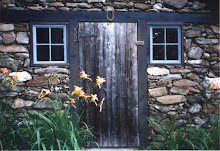
EARTH ~
Watch the full episode. See more Tavis Smiley.

An excellent conversation on the state of this union ~
who owns it, runs it, and for what reasons
right under (above) the peoples noses
daydreaming w/ Bob Arnold
Watch the full episode. See more Tavis Smiley.


WASHINGTON — The Department of the Interior on Thursday granted Royal Dutch Shell conditional approval of its plan to begin drilling exploratory wells in the Arctic Ocean next summer, a strong sign that the Obama administration is easing a regulatory clampdown on offshore oil drilling that it imposed after last year’s deadly accident in the Gulf of Mexico.
The move confirms a willingness by President Obama to approve expanded domestic oil and gas exploration in response to high gasoline prices and continuing high levels of unemployment. It comes as the issuing of drilling permits in the gulf is quickening, including the granting on Thursday of a permit for a Shell floating drill rig for a 4,000-foot-deep well. That means that that all five of its rigs there will be back to work after a long drilling halt.
The decision to tentatively approve Shell’s plan to drill four exploratory wells in the Beaufort Sea off the North Slope of Alaska represents a major step in the company’s efforts to exploit the vast oil and gas resources under the Arctic Ocean, although some hurdles remain.
The company has spent nearly $4 billion and more than five years trying to win the right to drill in the frigid waters, against the opposition of many environmental advocates and of Alaska natives who depend on the sea for their livelihoods.
Opponents say the harsh conditions there heighten the dangers of drilling and make cleaning up any potential spill vastly more complicated than in the comparatively benign waters of the gulf.
Administration officials cautioned that the company must win a number of secondary permits before it can begin punching holes in the seabed. The plan approved Thursday, considered the overarching one, contains detailed information on how the company would respond to any blowout and spill.
“We base our decisions regarding energy exploration and development in the Arctic on the best scientific information available,” said Michael R. Bromwich, director of the Bureau of Ocean Energy Management, Regulation and Enforcement, which oversees offshore drilling. “We will closely review and monitor Shell’s proposed activities to ensure that any activities that take place under this plan will be conducted in a safe and environmentally responsible manner.”
Shell enthusiastically welcomed the decision. “We feel very good about it,” said Pete Slaiby, Shell’s vice president in Alaska. “It’s one of the road marks we wanted to see. It makes us very happy.”
But the announcement only partly smooths the rocky relations between the administration and the oil industry, with the president remaining committed to repealing $4 billion in annual oil company tax breaks. The administration has also been wary of encouraging the industry’s aggressive plans to drill in shale oil and gas fields across the country because of concerns about potential drinking water contamination.
“This strikes me as a shift back to the track that the administration was on prior to last year’s oil spill,” said Michael A. Levi, an energy and environment fellow at the Council on Foreign Relations. “It seems the lesson that the administration took is that offshore drilling needs to be regulated better and done better, not that it shouldn’t be done at all.”
The plan is almost certain to face legal challenges.
“No drill bits are going to hit the Arctic seafloor until at least one and probably several courts have reviewed this plan,” said Brendan Cummings, senior counsel at the Center for Biological Diversity, which is already suing to stop drilling in the Chukchi Sea west of Alaska. “From the perspective of ocean drilling and climate, it’s hard to see a difference between this administration and the last one.”
Shell still needs to win approval of its drilling plan for the Chukchi Sea, which is west of the Beaufort Sea and more remote.
The company has proposed drilling four wells at a depth of approximately 160 feet of water about 20 miles from shore in the Beaufort Sea. The BP well that exploded in the gulf in April 2010 was at a depth of more than 5,000 feet and 40 miles from the Louisiana coast. The accident killed 11 workers and spilled nearly five million barrels of oil into the gulf.
Energy experts and industry executives said the move on Thursday reflected a partial warming of relations between the oil industry and Obama administration since the BP disaster.
“I don’t know if I would call them friends yet, but I look at this as a step in the right direction,” said Craig T. Castille, operations manager for deepwater projects at Stone Energy, who added that the permit process in the Gulf of Mexico remained slower than the industry would like.
Shell has spent years trying to convince federal regulators and several courts that it can drill safely in the Arctic, and every year one hurdle or another has stood in its way.
Shell has already invested nearly $4 billion on its 10-year offshore leases and preparations for exploration in the forbidding Chukchi and Beaufort Seas. Its current plan is to drill up to 10 exploratory wells in the two seas, potentially leading to production by the end of the decade.
Shell has been obliged over the years to tighten its spill response plan, especially since the BP accident at the Macondo well in the gulf. It is proposing to use two drill ships in the Arctic, each capable of drilling a relief well for the other; to put an extra set of shears on its blowout preventers; and to keep emergency capping systems near drill sites to capture any leaks.
The Alaskan Arctic may hold 27 billion barrels of oil, enough to fuel 25 million cars for 35 years. But environmentalists warn that a spill in the Arctic would be more catastrophic than the Gulf of Mexico accident was because the Alaskan waters are dark and inaccessible, and because they are vital breeding grounds for many aquatic species that are endangered or at risk.
Marilyn Heiman, director of the Pew Environment Group’s Arctic program, said that the region was the harshest area in the world in which to drill for oil, as well as a delicate habitat for a variety of sea mammals. The proposed well sites are subject to fierce winds and high seas in the fall and lie hundreds of miles from the nearest Coast Guard stations.
“Hard questions need to be asked about any oil company’s ability to mount a response to a major oil spill in hurricane-force winds, high seas, broken and shifting sea ice, subzero temperatures, and months of fog and darkness,” Ms. Heiman said in an e-mail from Alaska.
John M. Broder reported from Washington, and Clifford Krauss from Houston.
UPDATE:
http://www.nytimes.com/2011/08/18/opinion/dont-allow-oil-drilling-off-alaskas-coast.html?hp
photo : moratoriumnow
n.y. times
Foray and Stan Freberg are among the few surviving voice artists from the Golden Age of theatrical cartoons.


Albert Saijo
Albert Fairchild Saijo, 85, of Volcano, died June 2, 2011 at his residence. Born Feb. 4, 1926, in Los Angeles, he was a member of the 100th Battalion, 442 Regimental Combat Team, serving in Italy; a designer, carpenter and woodworker; a poet whose book, "Outspeaks -- a Rhapsody," won the National Small Press Award for Poetry in 1998; and his work is mentioned in the "Norton Anthology of Modern Contemporary American Poetry" and numerous other anthologies.
Private services will be held.
He is survived by wife, Laura Saijo, of Hilo; sister, Hisayo Saijo, of Hilo; four stepchildren; one niece; one nephew.
Arrangements by Homelani Memorial Park and Crematory.
from West Hawaii Today


Have no doubt: those in the upper ranges of the top 1% of wealth in this country (aka The Money Party) want to kick you to the curb.
They want to reduce your social security and make you go broke paying for medical care.
They want to lower your wages and trash your retirement.
They ignore the clear facts that we've had negative job growth since 2000 and the situation is just getting worse.
They want to ship jobs, factories, and entire businesses overseas and give companies that do that a big fat tax credit for doing so.
They've been given so much for nothing for so long. Now, they're ready to take it all. It's their time!
The most recent assault is the ridiculous debate about raising the debt ceiling. There should be no debate. Failing to raise the ceiling right now means deliberate default on debts, refusing to pay bills the government can pay. It's called fraud.
The pressing need to fix the budget is a separate issue. Reduced spending and increased revenues should come through broad public involvement and open debate. It mandates that the rulers behave like adults.
But this crisis isn't about putting together a real budget. It's about creating a budget that punishes you, your family, and friends. It's about taking your attention away from your vital interests to maximize income and control by The Money Party.
Were the leaders on either side of the debate serious, the Bush era tax cuts would be rescinded. These cuts on the top 1% were temporary. Guess what? Congress lied. When the temporary tax breaks ran out a few months ago, they were revived and renewed just when we had the greatest need for revenues.
The Money Party won't give up its wars either. Iraq and Afghanistan have added $4 trillion to the national debt of $14 trillion. Why not stop the wars? How hard is that to figure that out?
Getting rid of Bush tax cuts for the super-rich, ending the wars, and moving out of the recession/depression would be huge steps toward balancing the budget. But that won't happen with this Congress and this president. Why? That would cost the financial elite money for taxes and lost income for all those weapons they sell to support the wars.
The Attack on You Began in Earnest Just Years Ago
Congress repealed Depression era banking regulation that kept your banks from risky investments in 1999.
Congress enacted legislation in 2000 that allowed extremely risky investments in real estate and other derivatives, illegal for nearly a century.
In 2001, the big banks and Wall Street celebrated its newly purchased freedoms with a decade-long binge of fraud and risky investments. Like a greedy con artist, they took everything they could from people here and around the world until there was no more to take. We have now hit the wall thanks to them.
The outrageous expenses of wars based on lies caught up with us and shoved the deficit to new heights. The tax cuts for the top 1% took away revenues needed to balance the budget.
The money they steal from the Social Security surplus is no longer enough. They want to keep the tax in place for us and take an even bigger rake-off.
This crisis is manufactured by the ongoing greed of The Money Party. It is funded by the US Treasury. You pay for it, all of it.
End
This article may be reproduced with attribution of authorship and a link to the article.