Friday, October 28, 2011

EARTH ~


EMERSON 1862


When newly awaked from lively dreams, we are so near them, still in their sphere; — give us one syllable, one feature, one hint, and we should re-possess the whole; hours of this strange entertainment and conversation would come trooping back to us; but we cannot get our hand on the first link or fibre, and the whole is forever lost. There is a strange wilfulness in the speed with which it disperses, and baffles your grasp.


Cannot we let people be themselves, and enjoy life in their own way? You are trying to make that man another you. One's enough.


Hitch your wagon to a star. Do the like in your choice of tasks. Let us not fag in paltry selfish tasks which aim at private benefit alone. No god will help. We shall find all the teams going the other way. Charles's Wain, the Great Bear, Orion, Leo, Hercules. Every god will leave us. Let us work rather for those interests which the gods honour and promote: justice, love, utility, freedom, knowledge.


Thoreau. Perhaps his fancy for Walt Whitman grew out of his taste for wild nature, for an otter, a woodchuck, or a loon. He loved sufficiency, hated a sum that would not prove; loved Walk and hated Alcott.


The old school of Boston citizens whom I remember in my childhood had great vigour, great noisy bodies; I think a certain sternutatory vigour the like whereof I have not heard again. When Major B. or old Mr. T.H. took out their pocket handkerchiefs at church, it was plain they meant business; they would snort and roar through their noses, like the lowing of an ox, and make all ring again.


Sam Staples yesterday had been to see Henry Thoreau. "Never saw a man dying with so much pleasure and peace." Thinks that very few men in Concord know Mr. Thoreau; finds him serene and happy.


The first care of a man settling in the country should be to open the face of the earth to himself by a little knowledge of Nature, or a great deal of knowledge, if he can, of birds, plants and astronomy; in short, the art of taking a walk.


Henry Thoreau (died May 6, 1862) remains erect, calm, self-subsistent, before me, and I read him not only truly in his Journal, but he is not long out of mind when I walk, and, as to-day, row upon the pond. He chose wisely no doubt for himself to be the bachelor of thought and nature that he was, — how near to the old monks in their ascetic religion! He had no talent for wealth, and knew how to be poor without the least hint of squalor or inelegance. Perhaps he fell — all of us do — into his way of living, without forecasting it much, but approved and confirmed it with later wisdom.
If there is a little strut in the style of Henry, it is only from a vigour in excess of the size of his body.


A man's connections must be looked after. If he surpasses everybody in mother wit, yet is scholar like the rest, be sure he has got a mother or father or aunt or cousin who has the uncorrupted slang of the street, the pure mind, and which is inestimable to him as spice and alterative, and which delights you in his rhetoric, like the devil's tunes when put to slow time in church-music.


The art of the writer is to speak his fact and have done. Let the reader find that he cannot afford to omit any line of your writing, because you have omitted every word that he can spare.
You are annoyed — are you? — that your fine friends do not read you. They are better friends than you knew, and have done you the rarest service. Now write so that they must.


As people rise in the social scale, they think more of each other's opinion than of their own. And it is hard to find one who does not measure his business and daily performance from the supposed estimate. And yet, his own is the only standard. Down in the pits of hunger and want life has a real dignity, from this doing the best, instead of the seemly. The sailor on the topmost in a storm, the hunter amidst the snowdrifts, the woodman in the depth of the forest, cannot stop to think how he looks, or what London or Paris would say, and therefore his garb and behaviour have a certain dignity, like the works of Nature around him; he would as soon ask what the crows and muskrats think of him.


When I bought my farm, I did not know what a bargain I had in the bluebirds, bobolinks, and thrushes; as little did I know what sublime mornings and sunsets I was buying.


from The Journals of Ralph Waldo Emerson (Modern Library)


Henry David Thoreau


Each time I find another edition of Emerson's Journals, feeling right in the hand, I take it up and read from it again. Bring it home. I may have some version of the Journals in every room of our house. Not unusual, there's a lamp in every room of the house.


Thursday, October 27, 2011

LYNDA BARRY ~


THE IMAGE ~
(for a moment)


Lynda Barry


EARTH ~


"Exxon Mobil, the largest U.S. oil company, reported that its net income rose to $10.33 billion in the three months through September, from $7.35 billion a year earlier, helped by an increase in oil prices of about 48 percent from a year ago. "


read more:


society.ezinemark.com
ny times


A MOMENT OF CLARITY ~


Wednesday, October 26, 2011

BELIEVE YOU ME ~


We remember the white building with the mossy cedar shingles on the roof to be a bank at one time. When I wasn't looking it became an insurance company. This small building under the maple trees. Before they built the shopping center behind it, which once was a farmer's pasture. Everyone in town has their own memory of the location. What had once been there. The shopping center came in with a grocer and a Home Depot that folded up its tent in less than a year. We're in a builders region, but we all like our local hardware store. Shoo.

So when we bought our week of groceries and figured we may as well have supper off the grocer's salad bar, the only spot that looked halfway quiet in a loco area was over under the maple trees near the old white building. We'd stay in our pickup truck and have a picnic in the cab, all easy to do with the company you love. We drove over 100 feet from where we had parked and we were there. Our backs to the parking lot, facing the white building, some of the tree shade and still some of the late summer sunshine.

Except just as we were arranging our spread, a car pulled up on our driver side. Funny, who would park here? The business is all over-there. It couldn't possibly be another picnic bunch, could it?

For a moment we stopped our picnic to see what would happen. Maybe it was all a fluke and the couple was disoriented.

But no, a woman got out on the passenger side while a silhouette-figure of a man sat at the wheel. The woman hesitated a moment and then proceeded over the unmowed lawn, seemingly oblivious to the sallow look of the building, the dark windows, the poor roof. She came to the front door and found it bolted. As soon as she touched and felt the lock she shot a glance straight back to her companion who remained where he sat. In her plain and gray skirt and top, the woman returned the same way. She hesitated a moment at the car door and took another look at the building, then through the window to her companion, before opening the door and getting back inside. They didn't wait long. The car started back up and moved out toward the shopping center parking lot. But we noticed it didn't move like a car as much as it flew like a bird, as if floating on its wheels. It was so softly unusual that I had to look away, as if I wasn't sure what it was I was looking at. Hours later I would know.

For ten minutes we joyfully ate and talked and tried not to mess ourselves or the truck. Fresh fruit is always a wise choice when altering the taste of the salad bar. Neat slices of pineapple and melon.

Suddenly, right before our eyes out the windshield, a solo figure appeared at the back car port of the white building. Where cars used to drive through making their money transactions. Where the furry moss cedar shingles on the roof looked the worst. This was a young man, t-shirted, well suntanned, built and scruffy trousered, like he knew physical work and he moved about with an easy agility. His first plan of action was to peer into one of the building's windows. Nothing of course. Then he tried the window and turned away all with a split second instinct of giving a try and knowing it wasn't working. The brains and touch of hand movement. He moseyed unnoticed, except by us, across the small lawn and out from under the trees and into the parking lot where as soon as he was there, he seemed to vanish.

We were becoming full of food, lazy now with our perceptions. It wasn't dawning on us at that time we were seeing ghosts.

It was only hours later in the night asleep I woke up with a start. Yes, the first couple had perished in a house fire and they were returning to the insurance company, long after it had gone out of business. To the dead there is no end to the story. As to the solo young man — a motorcycle fatality. He had borrowed money years earlier from the bank and had business to finish up.

Try to go back to sleep.


photo & story © bob arnold
from a possible eden (longhouse)


Tuesday, October 25, 2011

SHARE & SHARE ALIKE ~


STRAIGHT TALK ~


George Carlin


Monday, October 24, 2011

O PIONEERS! ~


Peter Seeger now!


The following has been sent to me now by countless friends and supporters from various sources, and I've added a few two-cents to the short piece to best flesh out the marvel of what it means to be an activist from sea to shining sea ~

Pete Seeger has spent decades protesting against war, racial inequality and unfair labor practices, and on Friday night, he lent his support -- and voice -- to the growing Occupy Wall Street movement.

After performing at New York City's Symphony Space, the legendary folk singer, using two canes, fell in with a group of roughly 1,000 protestors and marched more than 40 blocks down Broadway. Upon reaching Columbus Circle, he sang a version of 'We Shall Overcome,' one of the many up-with-the-people anthems he's helped to popularize over the years.

Joining the 92-year-old music legend were fellow folk artist Arlo Guthrie, musician grandson Tao Rodriguez Seeger, bluesman Guy Davis, composer David Amram and singer-storyteller Tom Chapin. May I also include veteran activist folksinger Tom Paxton, as well. And I'm sure a few other wonders were tucked in there and kept quietly modest to it all. Many of the very best have often worked this way.
Sing out!


CINEMA ~


Geraldine Page


For starters, F. Murray Abraham when presenting Geraldine Page with her Oscar for best actress in The Trip to Bountiful said to the world, "I consider this woman the greatest actress in the English language." This was finally said to her in public the year before she died at age 62 in 1987 of a heart attack.

For a sample of what Abraham means, just take a look at three films by this supreme method actress: Hondo (1953), Summer and Smoke (1961) and The Trip to Bountiful (1985). No one played Tennessee Williams finer, and we haven't even reached into her more legendary place on the stage. She passed away while hard at work on Broadway with Noel Coward's Blithe Spirit.

Geraldine Sue Page was born in Missouri on November 22, 1924 and was gone June 13, 1987. Her husband, the father of her three children and right with her to the end, is the actor Rip Torn. They delighted in the fact they called their country estate Torn Page.


http://youtu.be/XKw6su_e6Z0


photo:
the academy awards


Sunday, October 23, 2011

BUK ~


Charles Bukowski being shunned and his response:


http://www.lettersofnote.com/2011/10/charles-bukowski-on-censorship.html


bukowski.net
thanks, gerard


Saturday, October 22, 2011

EARTH ~


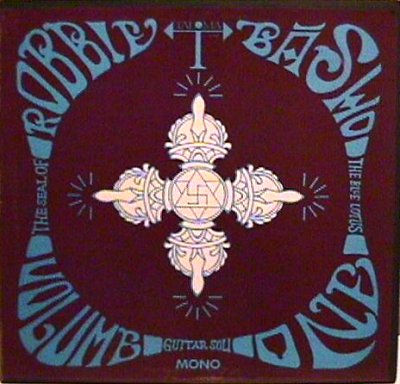
ROBBIE BASHO


Another eastener kid (Baltimore) who came west and drew out remarkable music and songs to the lay of the land. In Robbie's hands it was all ragas.

Orphaned as an infant, Daniel Robinson, Jr. changed his name in the late 50s to Basho in honor of Matsuo Basho, the Japanese poet. He picked up his first guitar at the same time and moved quickly through various styles and techniques from the American blues and folk to a deep interest and study in eastern thought and music, taking his beloved 12-string guitar drone and tone closer to a sarod than most anyone. India and the North American Indian was much in his heart.

His first album appeared on John Fahey's Takoma label in 1965 and I highly recommend all the albums.

I'm concentrating here mainly off his ravishing Visions of the Country, from Windham Hill, where he also released a stunning album of classical 12-string compositions from the label.

Some say he was never long with this world, and may have even died a virgin. Thirty years ago he would write to me handwritten letters on his pad of yellow, lined stationary, often including his poems influenced by the American Indian. Money was always a problem, his health wasn't right, he never had a driver's license. Somehow he got east a few years before he passed away, way too young, and played a date one summer night in the small town of Buckland, Massachusetts. If you were there, you haven't forgotten.

Robbie Basho was born August 31, 1940 and died Feb 28, 1986 after a freak accident in the hands of his chiropractor. Apparently blood vessels in his neck were ruptured during a procedure which led to a fatal stroke.


Friday, October 21, 2011

MOB ~


The way
Libya
takes down
their leader
is
exactly
like
Che Guevara
was murdered
and shown

There are
no lessons
learned

The bad
get worse
no matter
which side
of the
equation

It seems
one is
now
ignored
forgotten
or killed

Or dutifully
left
alone
if
dutifully
complying


OCCUPY ~


Friend, activist and filmmaker Laki Vazakas just sent this fresh off his fingertips.


Bob,

I shot this on Monday afternoon in Zuccotti Park. If you look closely, one of your books is visible.


All Best,

Laki


film © laki vazakas

Thanks, Laki!


Thursday, October 20, 2011

EARTH ~
(for pennies)


http://shine.yahoo.com/event/green/20-unusual-uses-for-vinegar-2588664/


what my grandmas
and neighborhood
elder wise women
always told me
as a boy


WELCOME TO OUR WORLD ~


OCCUPY ~


A man signs a huge banner during "Occupy DC" anti-corporations protest at Freedom Plaza in Washington, DC. Oct. 10, 2011.


Wednesday, October 19, 2011

EARTH ~


Mario Vargas Llosa


from The Fictions of Borges


When I was a student, I had a passion for Sartre, and I firmly believed in his notion that the writer's commitment was to his own times and to society in which he lived, that "words were actions," and that through writing a man or woman could influence history. Today, such ideas seem naive and even tedious — we live in an age of smug skepticism about the power of literature as well as history — but in the 1950s the notion that the world could be changed for the better, and that literature should contribute to this, struck many of us as both persuasive and exciting.

By then, Borges' influence was beginning to be felt beyond the small circle of admirers who read his work in the Argentine literary magazine Sur. In a number of Latin American cities, ardent followers fought over the rare editions of his books as if they were treasure and learned by heart those visionary random lists, or catalogues, that inhabit Borges' pages — the particularly beautiful one from "The Aleph," for instance — and tried to incorporate in their work not only his labyrinths, tigers, mirrors, masks, and knives but also his strikingly original use of adjectives and adverbs.

In Lima, the first of these Borges enthusiasts I came across was a friend and contemporary with whom I shared my books and literary dreams. Borges was always an inexhaustible topic of discussion. In a clinically pure way, he stood for everything Sartre taught me to hate: the artist retreating from the world around him to take refuge in a world of intellect, erudition, and fantasy; the writer looking down on politics, history, and day-to-day reality, while shamelessly displaying his skepticism and wry disdain for everything that was not literature; the intellectual who not only allowed himself to treat ironically the dogmas and utopias of the left but who took his own iconoclasm to the extreme of joining the Conservative Party and breezily justifying this move by claiming that gentlemen prefer lost causes.

In our discussions, I tried to show with all the Sartrean malice I could command that an intellectual who wrote, spoke, and behaved the way Borges did somehow shared responsibility for all the world's social ills. That his stories and poems were little more than
bibelots d' inanite sonore, mere trinkets of high sounding emptiness, and that History with its terrible sense of justice — which progressives wield, as it suits them, like an executioner's ax or a gambler's marked card — would one day give him his just deserts. But once the arguments were over, in the solitude of my room or the library — like the fanatical puritan of Somerset Maugham's Rain, who gives in to temptation of the flesh he renounces — I found Borges' spell irresistible. I would read his stories, poems, and essays in utter amazement; and the adulterous feeling I had that I was betraying my mentor Sartre added a perverse pleasure.

I have been somewhat fickle in my literary passions; and nowadays when I reread many of the writers who were once my models, especially during adolescence, I find them boring — Sartre included. But the secret, sinful passion I harbored for Borges' work has never faded, and rereading him, which I have done from time to time like a believer performing a sacred ritual, has always been a happy experience. Only recently, I read all his work again, one piece after the other, and once more I marveled — exactly as I had done the first time — at his elegant and limpid prose, the refinement of his stories, the excellence of his craftsmanship. I am quite aware of how ephemeral literary assessments can be, but in Borges' case we can quite justifiably state that he is the most important thing to happen to imaginative writing in the Spanish language in modern times, and one of the most memorable artists of our age.

I also believe that the debt we who write in Spanish owe to Borges is enormous. That includes even those of us, like myself, who have never written a story of pure fantasy or felt any particular affinity with ghosts and doubles, with infinite, or with the metaphysics of Schopenhauer. For Latin American writers, Borges heralded the end of a kind of inferiority complex that inhibited us, unwittingly of course, from broaching certain subjects and that kept us imprisoned in a provincial outlook. Before Borges, it seemed a piece of foolhardiness of self-delusion for one of us to feel at home in a larger world culture, in the way that a European or a North American might.

A handful of Latin American
modernista poets had previously done so, of course, but their attempts — even in the case of the most famous among them, Rubén Dario — smacked of pastiche or whimsicality, something akin to a superficial, slightly frivolous journey through a foreign land. Latin American writers had forgotten what our classical writers like Inca Garcilaso or Sor Juana Inés de la Cruz never doubted — that through language and history they were part and parcel of Western culture, not mere amanuenses or colonials but a legitimate part of that tradition, ever since Spaniards and Portuguese, four and a half centuries earlier, extended the frontiers of Western culture to the southern hemisphere. With Borges, this engagement became possible once more. But at the same time, Borges' work was proof that being part of this broader cultural history took nothing away from a Latin American writer's sovereignty or originality.

Few European writers have assimilated the legacy of the West as completely and thoroughly as this poet and storyteller from the periphery. Who among Borges' contemporaries handled with such ease Scandinavian myths, Anglo-Saxon poetry, German philosophy, Spain's Golden Age literature, the English poets, Dante, Homer, and the myths and the legends of the Far and Middle East that Europeans translated and gave to the world? But this did not make Borges European. I remember the surprise of my students at Queen Mary College in the University of London during the 1960s — we were reading ficciones and El Aleph — when I told them that some Latin Americans accused Borges of being Europeanized, of being more than a little English writer. They could not see why. To them, this writer, and whose stories so many different countries, ages, themes, and cultural references are intertwined, seemed as exotic as the cha-cha-cha, which was all the rage at the time. They were not wrong. Borges was not a writer imprisoned within national tradition, as European writers are often, and this facilitated his journeys through cultural space, in which, thanks to the many languages he knew, he moved with consummate ease.

This cosmopolitanism, this eagerness to be a master of such a far-ranging cultural sphere, this desire to invent a past for oneself in dialogue with the outside, was a way of being profoundly Argentine — which is to say, Latin American. But in Borges' case, his intense involvement with European literature was also a way of shaping his own personal geography, a way of being Borges. Through his broad interests and his private demons he was weaving a fabric of great originality, made up of strange combinations in which the prose of Stevenson and The Arabian Nights, translated by Englishmen and Frenchmen, appear alongside Gauchos out of Martin Fierro and characters from Icelandic Sagas, and in which two old-time hoodlums, from a Buenos Aires more imagined than remembered, fight with knives in a quarrel which seems like the extension of a medieval dispute that results in death by fire of two Christian theologians. Against the unique Borgesian backdrop, the most heterogeneous creatures and events parade — just as they do, in "The Aleph," in Carlos Argentino Daneri's cellar. But in contrast to what takes place on that tiny passive screen, which can reveal the elements of the universe only at random, in Borges' work every element and every being is brought together. Filtered through a single point of view, and given individual character through verbal expression.

Here is another area in which Latin American writers owe much to the example of Borges. Not only did he prove to us that an Argentine could speak with authority on Shakespeare and create convincing stories set in Aberdeen, but he also revolutionized the tradition of his literary language. Note that I said "example" and not "influence." To the extent that Borges' prose has "influential," it has — because of its wild originality — wrecked havoc among countless admirers, in whose work the use of certain images or verbs or adjectives established by him turns into mere parody. This is the most readily detectable influence, for Borges was one of the writers who managed completely to put his own personal stamp on the Spanish language. "Word music" was his term for it, and it is as distinctive in him as it is in the most illustrious of our classical writers — namely, Quevedo, whom Borges admired, and Gongora, whom he did not. Borges' prose is so recognizable to the ear that often in someone else's work a single sentence or even a simple verb (conjeturar, for example, or fatigar use transitively) becomes a clear giveaway of Borges' influence.

Borges made a profound impression on Spanish literary prose, as before him Rubén Dario had on poetry. The difference between them is that Dario imported and introduced from France a number of mannerisms and themes that he adapted to his own world and to his own idiosyncratic style. To some extent, all this expressed the feelings (and at times the snobbery) of a particular period and a certain social milieu. Which is why his devices could be used by some many without his followers losing their individual voices. The Borges revolution was personal. It represented him alone, and only in a vague, roundabout way was it connected with the setting in which he was formed and which in turn he helped crucially to form — that of the magazine Sur. Which is why in anyone else's hands Borges' style comes across as caricature.

— Mario Vargas Llosa
from Wellsprings
(Harvard University Press 2008)


Jorge Luis Borges and friend


from BUENOS AIRES


Not by morning light, not when day has come, and not even at night do we really see the city. Morning is an overwhelming blue, a swift and massive surprise spanning the sky, a crystallizing, a lavish outpouring of sunlight that piles up in squares, smashes mirrors with fictitious stones, and lowers long insinuations of light down wells. The day is a playing field for our endeavors or for our idleness, and there is only room for them on their usual chessboard. The night is a truncated miracle: the crowning moment of wan streelights, when palpable objectivity becomes less insolent and less solid. The dawn is an infamous, dragged-out affair, because it conceals the great plot arranged to set right everything that fell apart ten hours before. It goes about straightening streets, decapitating lights, and repainting colors exactly where they were the previous afternoon. Finally, we — with the city already hanging on our necks and the abyssal day yoked to our shoulders — have to give in to the mad plenitude of its triumph and resign ourselves to having yet another day riveted to our souls.


Now for the afternoon: the dramatic altercation and conflict between the visible and the shadows. It's as if visible things begin twisting, going insane. After weakens us, eats away at us, abuses us, but because of its persistence the streets recover their human meaning, their tragic meaning of volition that manages to last in time, time whose very essence is change. The afternoon perturbs the day, and for that reason it agrees with us, because we too are perturbed. The late afternoon prepares the easy decline of our spiritual electricity. It's by force of afternoons that the city goes about entering us.

Jorge Luis Borges,
from Inquisitions (1925)


Tuesday, October 18, 2011

OCCUPY ~


thank you, Kim for sharing


Monday, October 17, 2011

EARTHEN ~


While watching Antonioni's
Blow-Up (1966) last night — and go back and watch it yourself — you'll see the first few minutes of the film are right out of Occupy Wall Street — I was working over two new pairs of work boots, bought the other day at half-price from a local merchant known for their fine footwear. This merchant, with many other shop owners, had gone through Hurricane Irene's flood waters rushing in a four foot tide of mud and misery through the lower channels of town and where this shop owner's boots and hiking and camp gear are housed. It made a royal mess of things. I guess instead of taking the foot wear as a total loss, the shop owner got his army of workers together by digging out of the muck the best of the lot and these were on makeshift shelves today in the same part of town where the flood knocked over the apple cart. Right next door to this temporary headquarters for the boot sale, builders were mad at it laying up new wallboard and putting down tape and mud and making a new place in a rush before winter. The weather has been cooperating, except for the rain, and it was cats & dogs rain when we arrived for the sale.


I was deeper into the film while damp sponging with vigor these new boots of light crud. I was trying to imagine an older work ethic selling boots in this condition and shape, and of course they wouldn't. Every boot would have been wiped down clean on the shelf and managing its best to be civil and presentable. Every worker at work. I watched a half-dozen workers in one big room that day just stand around and bumble around, never thinking of cleaning the boots up more than half-baked. It's a culture thing. In the meantime, I’ve picked up brand new high heel and no steel toe or shank work boots just like I like them but can’t afford them like once upon a time. I have 3 pair of steel toe Red Wing work boots banged up and sloped in my work room back home all with years more life in them. I couldn’t pass up the regular work boot crew, and Sweetheart found a pair of sturdy shoes she likes. Just rub off the dirt.


Occupy.


The consciousness raised from Occupy Wall Street is its merit. It doesn't have to have a "philosophy" since its philosophy is survival. Basic fact. It's the 1% who are now forced to explain, not the 99% who are the victims. The party lines will be dropped when everyone finally gets it through their rigid platform heads that they've been abused and taken to the cleaners by a vast minority who are living way beyond their means, and criminally, with all our earnings. And in many cases peoples lives (who have died because-of). This is when the despicable nature of humankind comes to the forefront without any explanation, except its greed. Von Stroheim spelled it out ages ago in another film. We free the many innocent in prison, and put into shackles the very indecent and crooked. There will be plenty. If Obama is smart, and gets off his slightly elitist horse, he will begin to marshal his vivid instincts into Occupy Wall Street quarters. If he's afraid of losing his giant corporate backing (and he is), it will be the mistake of his lifetime. The climate, the economy, the media, the crass, has now reached a fever pitch

— it's time for the right boot.


image:
from Blow-Up, Michelangelo Antonioni