THE WORKER'S COUGH I hear the worker coughing down below; his cough comes up through the ground-floor grating giving onto my garden, so that it avoids resonating among the plants touched by the sun on this last morning of good weather. He, the worker, down below, intent at his job, coughs now and then pretty sure no one's hearing it. It's a seasonal sickness but his cough's not a good one; it's worse than a flu. He endures the illness, takes care of it, I imagine, like we did when we were kids. Life for him remains decidedly uncomfortable; no rest awaits him at home after work, exactly like it is with us poor or almost poor guys. See, life seemed to us to consist entirely of that poverty in which one doesn't even have the right —naturally — to the quiet use of a john or the solitude of a bed; and when illness comes it's received heroically: a worker's always 18, even if he has kids bigger than him, ones new to those heroism's. In short, in those wracking coughs the tragic meaning of this beautiful October sun is revealed.
1969. Translated by Jack Hirschman
_____________________________
from In Danger A Pasolini Anthology\edited, with an introduction by Jack Hirschman (City Lights Books 2110)
Today
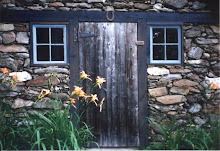
I sat on the step stoop at the cabin I built in the woods twelve years
ago. A lot has not happened and a lot has happened since then. The
helper that worked with me moved away. The twin towers in New York City
went down. We lived through a hurricane. A flood. The cabin didn't care,
its back to the world. At the dutch door I built and the only door in
and where I sit and look to the woods all the woods did was grow, much
brush. Right to the door. You sat there and couldn't see much, only the
brush. So you thought, often deeply, breathing and feeling the brush at
your feet. Years of this. One day I got tired of the brush and no view
and took my tools and chain saw for a few days and cleared all the
brush. Not only at the cabin site but away from the cabin and up through
an old sugar bush. Trees too. Made firewood. The more I cut, the more I
cut some more, until I was to the top of the hill, looking back at the
cabin through a glade of massive sugar maple trees. The sunlight coated
the trees now, so did shadows. It was a splendid work effort. The brush
all piled. I went back to sit on the step stoop. The cabin hadn't moved.
We know poets — Lew Welch and James Dickey, among others, have had jobs in advertising. Here's a half-minute ad (poem) from Direct-TV.
LUCILLE CLIFTON ~
my poem
a love person from love people out of the afrikan sun under the sign of cancer. whoever see my midnight smile seeing star apple and mango from home. whoever take me for a negative thing, his death be on him like a skin and his skin be his heart's revenge.
.
lucy one-eye she got her mama's ways. big round roller can't cook can't clean if that's what you want you got it world. lucy one-eye she sees the world sideways. word foolish she say what she don't want to say, she don't say what she want to. lucy one-eye she won't walk away from it. she'll keep on trying with her crooked look and her wrinkled ways, the darling girl.
.
if mama could see she would see lucy sprawling limbs of lucy decorating the backs of chairs lucy hair holding the mirrors up that reflect odd aspects of lucy.
if mama could hear she would hear lucysong rolled in the corners like lint exotic webs of lucysighs long lucy spiders explaining to obscure gods.
if mama could talk she would talk good girl good girl good girl clean up your room.
.
i was born in a hotel, a maskmaker, my bones were knit by a perilous knife. my skin turned around at midnight and i entered the earth in a woman jar. i learned the world all wormside up and this is my yes my strong fingers; i was born in a bed of good lessons and it has made me wise.
.
light on my mother's tongue break through her soft extravagant hip into life. lucille she calls the light, which was the name of the grandmother who wanted by the crossroads in virginia and shot the whiteman off his horse, killing the killer of sons. light breaks from her life to her lives . . .
Three color unfolding concertina format with photographs and poems
New and limited
Longhouse, 2012 A signed edition is available upon request $8, unsigned Buy now (U.S. addresses with $2 s/h) with Paypal:
Thursday, September 27, 2012
VOICE ~
Kurt Schwitters
Superman
artist/performer Kurt Schwitters (Kurt Hermann Eduard Karl Julius
Schwitters), was dead at age 60 on January 8, 1948. He was born and was
later buried in Hanover, Germany.
He composed in an
exhilarating galaxy of media and genre — Surrealism, Dada,
Constructivism, poetry, painting, sculpture, sound, graphic design,
typography and what came to be known as installation art. His collages,
called "Merz Pictures", made his name.
Merz ABCD (1928)
Schwitters composed and performed an early example of sound poetry, Ursonate (1922–32; a translation of the title is Original Sonata or Primeval Sonata).
The poem was influenced by Raoul Hausmann's poem "fmsbw" which
Schwitters' heard recited by Hausmann in Prague, 1921. Schwitters
performed the piece regularly, developing and extending it, until
finally publishing his notations for the recital in his last Merz
periodical, 1932.
The musician and painter
Billy Childish has a Kurt Schwitters poem tattooed on his left buttock.
He made a short film on Schwitters's life, titled The Man with Wheels, (1980, directed by Eugean Doyan).
Florence Margaret Smith, known as "Stevie Smith" (20 September 1902 – 7 March 1971)
was an English poet and novelist. Born in Kingston upon Hull, was the
second daughter of Ethel and Charles Smith. She was called "Peggy"
within her family, but acquired the name "Stevie" as a young woman when
she was riding in the park with a friend who said that she reminded him
of the jockey Steve Donaghue.
__________________
Not Waving but Drowning
Nobody heard him, the dead man,
But still he lay moaning:
I was much further out than you thought
And not waving but drowning.
Poor chap, he always loved larking
And now he’s dead
It must have been too cold for him his heart gave way,
They said.
Oh, no no no, it was too cold always
(Still the dead one lay moaning)
I was much too far out all my life
And not waving but drowning.
~ Stevie Smith New Selected Poems
(New Directions Publishing Corporation, 1988)
__________________
Novels ~
Novel on Yellow Paper (Cape, 1936)
Over the Frontier (Cape 1938)
The Holiday (Chapman and Hall, 1949)
Poetry ~
This Englishwoman (1937)
A Good Time Was Had By All (Cape, 1937)
Tender Only to One (Cape, 1938)
Mother, What Is Man? (Cape, 1942)
Harold's Leap (Cape, 1950)
Not Waving but Drowning (Deutsch, 1957)
Selected Poems (Longmans, 1962) includes 17 previously unpublished poems
The Frog Prince (Longmans, 1966) includes 69 previously unpublished poems
The Best Beast (Longmans, 1969)
Two in One (Longmans, 1971) reprint of Selected Poems and The Frog Prince
Scorpion and Other Poems (Longmans, 1972)
Collected Poems (Allen Lane, 1975)
Selected Poems (Penguin, 1978)
New Selected Poems of Stevie Smith (New Directions, 1988)
Also ~
Some Are More Human Than Others: A Sketch-Book (Gaberbocchus, 1958)
Me Again: Uncollected Writings of Stevie Smith (Virago, 1984)
"The Necessity of Not Believing" (Gemini No. 5, Spring 1958, Vol. 2, No. 1)
Monday, September 24, 2012
"A book can take you anywhere"~
Hernando Guanlao and his library in the centre of Manila in the Philippines
there's an exhilaration going
on here — a combined landscape love and two people love in a new rental
car, borrowed for four days, let loose and sweeping a landscape these
passengers have returned to after an absence of decades. little has
changed, unlike where they have come from and will return to. the
territory is too far away from the mainstream and too extreme in its
properties to be easily changed — see how the highway, built for and by
farmers and woodsmen and large families and isolation, sweeps with the
lay of the land, each building needed and cared for or else long gone.
this is a no-fooling place, and we are self-guiding through, passing
through, having been here before, exactly the same way: of love for one
another and for the earth but hurdling at large speed through large
landscape. for days and weeks and months and years before this moment we
have been on-foot, traveling. now this. tense changes in the text will
be unavoidable. someone watching this knows exactly where we are, but
I'm calling it earth since we are caught in a matter of time
the
film began on the far northern reaches between two states, finally
stopping for gas, traveling since the middle of the night, climbing
climbing to this spot, where like I say we've been here before. a corner
market and not much else, still a pay phone, big old fashioned
coca-cola sign white and red lettered, a much older sign rusting and
saying even more of what this place once was. a beatup car pulls in next
to us, solo driver, a pit-stop with a cd or tape left going, window
cracked, the driver grunts getting out and will grunt when he stoops to
get back in behind the wheel, pearl jam is playing. he's local — you can
tell from his clothes, his walk, his familiarity, and the car has been
diminished to short runs. we have pearl jam somewhere with us and so
from this driver and stranger we take up his music as we continue our
journey, over a landscape that will be slowly but surely disappearing,
although it hasn't that much in the four decades since we've been away no
one is about where we are, some of these buildings we pass may be
abandoned, though someone has run up that flag, and someone is caring to
mow that cemetery, it's saturday and people are home, good size trucks
are parked in dooryards and we're still early birds. where's this
highway going? it's wilderness and expansive tracts of water, lakes,
ponds, bogs, swamps, the famous pointed fir trees of another author's
book title. and what will keep it all sustained? the landscape will do
quite fine without us, thank you, but what of this highway and where it
is all headed to? there is an exhilaration in the love and to the land,
the music brought along but inspired by its use from another and taken
from his car into this car, the camera is running
Mark Murphy (born March 14, 1932)
1956 Meet Mark Murphy (Decca)
1957 Let Yourself Go (Decca)
1959 This Could Be the Start of Something Big (Capitol)
1960 Mark Murphy's Hip Parade (Capitol)
1960 Playing the Field (Capitol)
1961 Rah! (Riverside Records)
1962 That's How I Love the Blues (Riverside)
1965 Swingin' Singin' Affair (Fontana)
1966 Who Can I Turn To (Immediate)
1970 Midnight Mood (Saba)
1973 Bridging a Gap (Muse)
1975 [[Mark 2 (Muse)
1975 Mark Murphy Sings (Muse)
1977 Mark Murphy Sings Mostly Dorothy Fields & Cy Coleman (Audiophile)
1978 Stolen Moments (Muse)
1979 Satisfaction Guaranteed (Muse)
1981 Bop for Kerouac (Muse)
1982 The Artistry of Mark Murphy (Muse)
1983 Brazil Song (Cancões Do Brazil) (Muse)
1983 Mark Murphy Sings the Nat King Cole Songbook (Muse)
1984 Living Room (Muse)
1985 Beauty and the Beast (Muse)
1986 Kerouac Then and Now (Muse)
1987 September Ballads (Milestone)
1990 What a Way to Go (Muse)
1991 I'll Close My Eyes (Muse)
1991 Night Mood (Milestone)
1996 North Sea Jazz Sessions, Vol. 5 (Jazz World)
1997 Song for the Geese (RCA)
2000 Some Time Ago (High Note)
2000 The Latin Porter (Go Jazz)
2001 Links (High Note)
2002 Lucky to Be Me (High Note)
2003 Memories of You (High Note)
2004 Bop for Miles (High Note)
2004 Dim the Lights (Millennium)
2005 Once to Every Heart (Verve)
2007 Love Is What Stays (Verve)
2010 Never Let Me Go (Self produced)
Saturday, September 22, 2012
VOICE ~
Mary Lou Williams
PYNCHON / ORWELL ~
Prophecy and prediction are not quite the same, and it would ill serve writer and reader alike to confuse them in Orwell's case. There is a game some critics like to play, worth maybe a minute and a half of diversion, in which one makes lists of what Orwell did and didn't "get right." Looking around us at the present moment, for example, we note the popularity of helicopters as a resource of "law enforcement," themselves forms of social control — and for that matter at the ubiquity of television itself. The two-way television bears a close enough resemblance to flat plasma screens linked to "interactive" cable systems, circa 2003. News is whatever the government says it is, surveillance of ordinary citizens has entered the mainstream of police activity, reasonable search and seizure is a joke. And so forth. "Wow, the Government has turned into Big Brother, just like Orwell predicted! Something, huh?" "Orwellian, dude!" Well, yes and no. Specific predictions are only details, after all. What is perhaps more important, indeed necessary, to a working prophet, is to be able to see deeper than most of us into the human soul. Orwell in 1948 understood that despite the Axis defeat, the will to fascism had not gone away, that far from having seen its day it had perhaps not yet even come into its own — the corruption of spirit, the irresistible human addiction to power, were already long in place, all well-known aspects of the third Reich and Stalin's USSR, even the British Labour party — like first drafts of a terrible future. What could prevent the same thing from happening to Britain and the United States? Moral superiority? Good intentions? Clean living? What has steadily, insidiously improved since then, of course, making humanist arguments almost irrelevant, is the technology. We must not be too distracted by the clunkiness of the means of surveillance current in Winston Smith's era. In "our" 1984, after all, the integrated circuit chip was less than a decade old, and almost embarrassingly primitive next to the wonders of computer technology circa 2003, most notably the Internet, a development that promises social control on a scale those quaint old twentieth-century tyrants with their goofy mustaches could only dream about.
from Thomas Pynchon's foreword
George Orwell, 1984
SPEECH ~
The Great Dictator (1940)
The Great Dictator is a comedy film by Charlie Chaplin released in October 1940. As usual, Chaplin wrote, produced, and directed, in addition to starring as the lead ("Adenoid Hynkel": Adolf Hitler). Having been the only Hollywood film maker to continue to make silent films well into the period of sound films, this was Chaplin's first full-fledge talking picture as well as his most commercially successful film. A digitally restored version of the film was released on DVD and Blu-ray by The Criterion Collection in May 2011. In this famous scene, and the closing of the film, the dictator has come to his senses and is now playing not as a dictator or even an actor, but as Charlie Chaplin with something to say.
A poem (or more) will be offered by the hour or with the day and at the very least once a week. So stay on your webbed toes. The aim is to share good hearty-to-eat poetry. This is a birdhouse size file from the larger Longhouse which has been publishing from backwoods Vermont since 1971 books, hundreds of foldout booklets, postcards, sheafs, CD, landscape art, street readings, web publication, and notes left for the milkman. Established by Bob & Susan Arnold for your pleasure. The poems, essays, films & photographs on this site are copyrighted and may not be reproduced without the author's go-ahead.
New from Bob Arnold ~ "Faraway Like The Deer's Eye" ~ Bob Arnold Faraway Like the Deer’s Eye — A Saga — FOUR BOOKS IN ONE VOLUME ~ A Poet’s Memoir // 50 Years of Longhouse & Poets // A Builder’s Life, with photo assembly // The Selected Poems of Bob Arnold // An afterword by Andrew Schelling
Longhouse Bibliography Quick Link —
Link to the Birdhouse Bibliography
Visit the Longhouse Bibliography (a press edited by Bob Arnold) ~
"Poets Who Sleep" by Bob Arnold, Longhouse 2019. 500 portraits by Bob Arnold of poets worldwide & others. Please link on image for ordering information.
Link to a Preview of Poets Who Sleep
Shared at "Dispatches from the Poetry Wars"
Heaven Lake by Bob Arnold
Available from Longhouse. Please link on the image for ordering information.
The Woodcutter Talks by Bob Arnold
Available from Longhouse. Please link on the image for ordering information. Drawing from years of poetry and also new poems, The Woodcutter Talks is Bob Arnold at his finest branching love poems with back country work poems and settlement with community, family and individual portraits. The extensive collection also showcases vintage photographs from woodcutters and woodchoppers and big-saw-pullers of old. Sweat runs down the cheeks of the mere literary and they adore one another.
Stone Hut by Bob Arnold
"Once again, my friends, this is your best book! Exquisite in design, fat enough to be a feast, pretty enough to just wade around in, but deep enough to dive into and stay with, all I can say is WOW, you guys really did it – it’s the first of its kind, a scrapbook novel that is also a how-to and a mystery -- how did he do it, and how does he make rocks balance like Thor? — Gerald Hausman" ~
Museum, An Unlikely Meditation, written by the poet Bob Arnold, is as much an unlikely novel. Visit this page for details.
Cid Corman's Of, Volumes 4 & 5 from Longhouse.
ANNOUNCING. The final volumes to Corman's opus in one book ~ of, volumes 4 & by Cid Corman. 1500 poems, 850 pages edited by Bob Arnold, now available in a limited edition from Longhouse, 2015. Please link on the cover image for details & Paypal payment information ~
'Fully a book ~
An interview with Bob Arnold on Cid Corman’s ‘of’
Janina by Janine Pommy Vega
New and available now from Longhouse ~ Janine Pommy Vega Janina Visions, Tales & Lovesongs 288 pages perfect bound packed with poems and photographs. Janine's full course album of photographs, travel journals, poems, facsimile notebooks of poems, childhood photographs, and family, Beat family, plus her unfinished memoir of Jerusalem.
Walking Woman with the Tambourine is the final book of poems by Janine Pommy Vega.
"Walking Woman with the Tambourine is the final book of poems by Janine Pommy Vega. The author completed the manuscript and left it as she wished with her executor Bob Arnold … New and available now from Longhouse ~ Poetry. 144 pages. Perfect bound softcover. Please link on the image for ordering information
New! James Koller : Selected Poems 2003-2004-2005
James Koller — Selected Poems 2003-2004-2005 Longhouse 2016, 72 pages, perfect bound. Please link on the cover image for details & Paypal payment information PLUS more from Longhouse
OPENINGS by JAMES KOLLER
Selected poems 1959 ~ 1985 edited by Bob Arnold. New and available now from Longhouse ~ 72 pages . Perfect bound softcover. Please link on the cover image for details & Paypal payment information PLUS more from Longhouse
Lorine Niedecker's A Cooking Book
A Cooking Book Lorine Niedecker Longhouse 2015 72 pages, perfect bound. Please link on the image to purchase this new title from Longhouse.
Kent Johnson's "I Once Met"
Available once again now in 2022! $25 plus shippingVisit the Birdhouse for Kent's book information :
JD Whitney's Selected Poems
J.D. Whitney ~Sweeping the Broom Shorter Selected Poems 1964-2014 from ~ Longhouse 2014. 192 pages. Please link on the cover image for details & Paypal payment information PLUS more from Longhouse
New! from Longhouse ~ Island Dreams by Gerald Hausman Please link for details & Paypal payment
ISLAND DREAMS by GERALD HAUSMAN Selected Poems 1968 ~ 2015 chosen & edited by Bob Arnold New and available now from Longhouse ~ 160 pages Perfect bound softcover. Please link on the cover image for details & Paypal payment information PLUS more from Longhouse
John Bradley's "And Thereby Everything"
L O N G H O U S E is very proud to announce a new book by John Bradley in their on going series of S C O U T book publications — other titles from the series have been by Kent Johnson, Janine Pommy Vega, James Koller, Bob Arnold and Lorine Niedecker with more in the works. An opening salvo at the front of the book by Patrick Lawler should provide ample cover for what the reader should come to expect. And Thereby Everything John Bradley Longhouse 2015 First edition only issued in softcover 208 pages, perfect bound illustrated throughout by Bob Arnold with 150 photographs
Dudley Laufman : Bull & More Bull
Visit this page for information on this new Longhouse by Dudley Kaufman (2016)
Dudley Laufman's Islandian Poems
The Islandian Poems & Fables Dudley Laufman Longhouse 2015. 72 pages, perfect bound. Please link on the image to purchase this new title from Longhouse.
Duo by Bob Arnold — New from Longhouse Please link to A Longhouse Birdhouse for more information
DUO Bird Poems by BOB ARNOLD. New and available now from Longhouse ~ 92 pages. Perfect bound softcover. Please link on the cover image for details & Paypal payment information PLUS more from Longhouse
Start With The Tree by Bob Arnold
New in 2015. Building a marriage, building a family, building a small barn out in the woodlands together as a family, as a marriage, and seeing the roof go on. Over 150 color photographs
Beautiful Days by Bob Arnold
Beautiful Days ~ new poems of living and working in the Vermont woodlands and to Hurricane Irene
Yokel by Bob Arnold
[from "Yokel, A Long Green Mountain Poem" by Bob Arnold] ~ that and more at Bob Arnold webpage of books & poems: Please link on this image for more
Go West by Bob Arnold
Filled with poems and travel photography — shares one cross-country trip the couple took in the mid-1980s to California from Vermont.
"I'm In Love With You Who Is In Love With Me" by Bob Arnold
from Bob Arnold's new book "I'm In Love With You Who Is In Love With Me" ~~~~~~~40 years of love poems
"Rain Bear" by Bob Arnold
Bob Arnold's first children's book "Rain Bear" New and available now from Longhouse ~ 50 pages. Perfect bound softcover with photographs ~ & drawings by Jason Clark
"Heretic" by John Phillips from Longhouse
New from Longhouse ~ John Phillips "Heretic". Poems with collages by the author. Click on the image for more ~
Kim Dorman — "Owner"
"Owner" by Kim Dorman. Including photographs by Kim Dorman. Selected and edited by Bob Arnold. New and available now from Longhouse 2016 ~ 80 pages. Perfect bound softcover