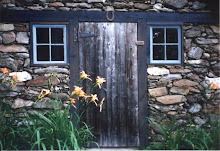
Wednesday, September 10, 2014

RURAL LIFE AND THE NEIGHBORHOOD ( PRESERVE ) ~


`


summer and winter weave


Dear —


You are a powerhouse for Guilford, and never mind Guilford, for the world. Heck, all of Ireland!


My mother came over at age 17 from Ireland with my American WW2 soldier dad (he found his girl friend while stationed after D-Day, 1944). He was then a boy just graduated from Williston Academy in Easthampton, wet behind the ears, and my mother (still alive at 86) was the middle daughter of many from Belfast. Her father was a baker with a horse & cart, and then he became a policeman on a bicycle, as did his youngest son Brian when he grew up and moved to Hartford, Connecticut. Home of the great poetry 'policeman' Wallace Stevens. Brian was one of my guideposts as a boy. His older brother, David, a skilled carpenter at slate roofing already at age 15 in Belfast, became the other one. They all came over pretty much with my mother and father after WW2 and plunked themselves down in the northern Berkshire hills where my family had the sawmill and lumber industry (right down the road from our Green River house, really) and I had the good fortune of growing up with them all. Soda and potato bread the staple, laughter and safe hard drinking, which made me a teetotaler. Sometimes it works that way.


We have not only noticed all the clarity and goodness by the hand of Friends of Algiers Village, we marvel at its presentations each time we pass through. One doesn't tire at seeing restoration work done correctly. Elegantly. And it's no accident a skilled mechanic with a generosity and intelligence by hand via one Doug Richmond is already set up in the same locale. The corner is humming, thanks to you all.


Have you walked out into the wash of the moonlight tonight? my my. Sweetheart and I are up at 3AM just to have this and all day yesterday all I did was build one barn door, and here I am at 7 this morning off to build barn door #2. Part of the Bell family just drove by at 3:30 in their open-to-the-weather ATV to get someone up to the footbridge crossing and I guess to one of their vehicles and off to their job. Another one in the family will follow up again at 5 o'clock. This is one way it works when you have to work . . . with a covered bridge out, and that wash of moonlight right in and up the river. Let it be your guide.


After we watch the select board meeting c/o Brattleboro-TV we'll put our heads together and have another letter to you. 


"Use it up, wear it out, make it do, or do without."
~ old New England adage


"Cronies" are wonderful but not when they are sticks in the mud and hurting true progress — which is about doing a job right. Right means beneficial to both man and environment. A lesson this entire country is still learning the hard way about, after many who passed through Ellis Island showed them the right way. The "cronies" think they have a better way but it's most often next generation half-baked impatience; they didn't sit long enough on their grandparents' knees.


I think back at Bill Nebelski's presentation at the previous select board/feasibility meeting and these guys are the type of guys I worked with once upon a time. Good-natured and seeing things from "1965" when they're working on a covered bridge from 1872. It's 1872 we're trying to preserve and the entire community should get their heads around, or it will be gone. For good. Facsimiles and fake villages are the "vanilla box" you speak of. A dorky plan of a "footbridge" for a covered bridge already pronounced as "in good shape" by Hoyle Tanner and after all the effort Peter Welch and his crew are mustering out is an insult to their disciplined, yeoman work. We went up and happened to meet Peter last week, nice guy. When Nebelski spoke about roofing the covered bridge, that height! it brought back memories when I steel roofed the bed & breakfast garage right next to the covered bridge —same height, same river, same rocks below — and I did this long before the bed & breakfast was there. When a vehicle went through the covered bridge while I worked on the roof of the garage, I felt the earth rumble all the way up to where I was perched. Same ledge it all sits on.


In Vermont we all sit on the same ledge. So build it right.


 [ BA ]


photos 2014  ©  susan arnold


http://brattleborotv.org/green-river-feasibility-study-public-info-mtg-82514


Tuesday, September 9, 2014

JONTHAN WILLIAMS (PHOTOGRAPHS) ~


Jonathan Williams, Photographer


Black Mountain College
Museum & Arts Center
56 Broadway
Asheville, NC 28801


Monday, September 8, 2014

INGEBORG BACHMANN ~


Anxieties


What then will remain?
I sigh, suffer, search,
and my wanderings
will never end.
The dark shadow
which I have followed from the start
leads me into the deep loneliness of winter.
There I stand still.
The frost coats my hair
and the cold burns through my limbs.
Melodies of dead silence play a dance,
endlessly turning round each other.
Blue spirits leap into the room —
the departed who wandered off before me
desiring, like lords, an ancient right.
Now they will be paid with blossoms
which many summers saw
and which break and fall this winter.
The trees exude the cold from within,
and tears, which the moonlight draws out,
hangs as thin cones coated in ice.
Over there, above the glacier,
the long departed pour out their blood,
and so I follow their example and do the same to them.
I listen close to the centuries,
though I don't want to be swallowed up by them.
Into the shadow which wants to stretch this far
I try to press a vestige of myself,
despite the idle fear of wasting my leaf.


Libraries


The shelves sag.
The volumes are weighted down with the past.
Their sweat is dust.
Their impulse is rigidity.
They no longer struggle.
They have saved themselves
upon the island of knowledge.
Sometimes they've lost their conscience.
Here and there, protruding
from them, human fingers
point directly towards life
or towards heaven.


[ I'm still afraid]


I'm still afraid to snare you with my breath,
drape you with blue banners of the dream,
or outside the misty door of my darkened castle,
burn torches, such that you'd find me . . .

I'm still afraid to free you from shimmering days,
from the golden river bed of time's own river of sun,
fearing my heart would burst silvery above the moon's
own terrible countenance.

Look up and don't look at me!
The banners are sinking, the torches have been extinguished,
the moon follows the course it traces.
It's time you came to seize me, holy madness!


I Know of No Better World


Who knows of a better world should step forward.
Alone, no longer out of bravery, not wiping away this saliva,
this saliva worn upon the cheek
as if to a coronation, as if redeemed, whether at communion
or among comrades. The weak rabbit,
the rat, and those fallen there, all of them,
no longer alone, but as one, though still afraid,
the dream of returning home
in the dream of armament, in the dream
of returning home.


The Radical Means


Wasteland, but only to the eye

that serves life,

feather-light rubble.


__________________


Darkness Spoken, with a foreword by Charles Simic, gathers together Ingeborg Bachmann’s two celebrated books of poetry Borrowed Time and Invocation of the Great Bear, as well as early and late poems not collected in book form, over 100 of them appearing in English for the first time, as well as 25 poems never before published in German. Bachmann is considered one of the most important poets to emerge in postwar German letters, and this volume represents the largest collection available in English translation. Influencing numerous writers from Thomas Bernhard to Christa Wolf to Elfriede Jelinek (winner of the 2004 Nobel Prize in Literature), Bachmann’s poetic investigation into the nature and limits of language in the face of historical violence remains unmatched in its ability to combine philosophical insight with haunting lyricism.

Bachmann was born, the eldest of three children, in 1926 in Klagenfurt, Austria. She studied philosophy at the universities of Innsbruck, Graz, and Vienna. In 1953 she received the poetry prize from Gruppe 47 for her first volume, Borrowed Time (Die gestundete Zeit). Her second collection, Invocation of the Great Bear (Anrufung des großen Bären), appeared in 1956. Her various awards include the Georg Büchner Prize, the Berlin Critics Prize, the Bremen Award, and the Austrian State Prize for Literature. Writing and publishing essays, opera libretti, short stories, and novels as well, she divided her time between Munich, Zurich, Berlin, and Rome, where she died in 1973 from a fire in her apartment caused by her falling asleep in bed while smoking a cigarette  — she awoke to find herself surrounded in flames. Horribly burned at age forty seven the poet was gone to us three weeks later.


The translator, Peter Filkins has published two volumes of poetry, What She Knew (1998) and After Homer (2002), and has translated Bachmann’s The Book of Franza and Requiem for Fanny Goldmann. He is the recipient of an Outstanding Translation Award from the American Literary Translators Association and the Berlin Prize from the American Academy in Berlin. He teaches at Simon’s Rock College of Bard in Great Barrington, Massachusetts.


Sunday, September 7, 2014

PROSPECTORS ~


Sam Shepard, Johnny Dark
2 Prospectors
University of Texas Press,  2013


DON HUNSTEIN ~


Don Hunstein, photographs
Jon Pareles, text
Keeping Time
Insight Editions, 2013


Saturday, September 6, 2014

RECORD INDUSTRY ~


Cowboys and Indies
Gareth Murphy
St. Martin's Press 2014


Another fairly homely book cover with text on cheap paper yet a terrific read inside, skimping on no part of the historical record, with the giant cast of characters all showing up: Lomax, Hammond, Phillips, Clive Davis, Ertegun, Spector, Oldham, Blackwell, Dylan, Beatles, Stones, Punk, Sugarhill, and of course Thomas Edison.

[ BA ]


"Our whole musical world is an ethnic melting pot containing just a few core ingredients. For the Irish-bred Dave Robinson, "England has always been cold because its music has always been theatrical. The indigenous music in England and Ireland is really folk music, but that's not what the British public buys to a large extent. It buys a theatrical kind of pop. It's very different from America, whose music has gone through several ethnic and urban filters." As Robinson points out, country music, centered around East Tennessee, was heavily influenced by Scots-Irish traditional music — as was the folk scene of Greenwich Village. In fact, boiled down to its lowest common denominators, modern music has been built on three main waves: African blues, Irish folk, and English vaudeville. "If you mix all that together," reasons Robinson, "that's where the great songs are, that's where the great rhythms and lyrics are. That's where Jimi Hendrix was. And at the end of the day, that's where most of rock 'n' roll came from." . . .

". . . As an older man contemplating the historical importance of African American music, Sam Phillips believed "we've now learned so much from some of these people we thought were ignorant, who never had any responsibility other than chopping cotton, feeding the mules, or making sorghum molasses. When people come back to this music in a hundred years, they'll see these were master painters. They may be illiterate. They can't write a book about it. But they can make a song, and in three verses you'll hear the greatest damn story you'll ever hear in your life."

    For centuries, folk and blues was accumulated wisdom passed ever downward. "Think about the complexity, yet simplicity, of music we have gained from hard times," says Phillips, "from the sky, the wind, and the earth. If you don't have a foundation, you won't know what the hell I'm talking about." His proudest discovery was not Elvis, or even Johnny Cash, but blues shaman Howlin' Wolf.

      Whether it's in dense cities or across open country plains, the search for the divine comedy is a timeless art that just adapts to different environments. In the big city, cut off from the elements, records have become our folklore, our spiritual medicine, our last sacred connection to the tribal godhead. In a game populated by snake-oil salesmen, the real record man is the one selling the magic potions that actually work.

      Music is one of several domains — sports, politics, movies, books, and fashion included — that will always remain governed by tribal genes inherited from the campfire. Thousands of years of technological progress and where are we? Still huddling up at night around the glow, trying to make sense of it all — dreaming our lives into the stars.

Seek and ye shall find."


~ Gareth Murphy, Cowboys and Indies


Friday, September 5, 2014

HERNAN BAS ~


"A Boy's Own Compendium"
by Jonathan Griffin
Rizzoli, 2014


http://www.saatchigallery.com/artists/hernan_bas.htm


I saw one of his paintings recently at the Williams College art museum — the first painting inside the door in fact — and I couldn't step any further for awhile. Across the room, all by itself, a Joan Mitchell balanced my legs & eyes.


Wednesday, September 3, 2014

GARRETT CAPLES ~


You don't quite know what you're looking at here, I know, I didn't either. I had to read the spine to know what the book cover was telling me. But none of this matters, it's what inside that counts, always does, and I'll share with you what is in the inside, and you'll get as excited as I did, if you can read my code. It will be a bunch of names, here goes: Arthur Jerome Eddy, Pamela Colman Smith, Victor Segalen, Gordon Onslow Ford, Jimmy Ernst, Sylvia Fein, Philip Lamantia, Andre Breton, John Hoffman, Marie Wilson, Barbara Guest, Richard Tagett, Richard O. Moore, Jean Conner, John Anderson, Sotere Torregian, Alden Van Buskirk! Yes, all of them are in this book. It's the only book out there in the world of its kind. I don't quite know why City Lights, the beacon, didn't publish the book since the author works at the poetry oasis as an editor, but the new wave of grand editors with grand titles, Wave Books, knew what to do. They published the book. The essays have an intermingling and inter-locking method to them. I believe the author swims between the essays with a surrounding passion. He has thought about all of this for a very long time. It's beyond book cost now and whether you buy the book or not. You're of course stupid if you love poetry, and even moreso, those forgotten who should have never been forgotten, and don't buy the book. Who you callin' stupid?! I am. You owe it to yourself. These are all the people your parents told you stay away from and you have tried to get your kids to read.


[ BA ]


Retrievals
Garrett Caples
Wave Books
2014 


http://www.wavepoetry.com/


Tuesday, September 2, 2014

Monday, September 1, 2014

LOSERS WEEPERS ~


Scrawled Note To Self
Found In A Used Copy
Of Herrigel's book
Zen in the Art of Archery


INTRO


MAKEUP


SKIN CARE


DONTS


FASHION


FITNESS


HAIR


[ BA ]


___________


photos 2014  © susan arnold


Richard Jefferies
Landscape With Figures:
Selected Prose Writings
Penguin


Sunday, August 31, 2014

RURAL LIFE AND THE NEIGHBORHOOD ( STONE ) ~


Stone from the job site at the Green River covered bridge
 August 2014


Dear K —

 
I attempted to describe why we can't be quite physically involved with the Green River citizen group to you in my last letter. It's a delicate question, in fact a quandary, since we're dealing with some individuals who have worked to this day at abusive tactics against us, and what's worse, they work these tactics in a lynch-mob smear, with a great deal of personal prejudice. This can be worked out in a professional capacity as many have to do in their jobs, we've all been there. But when you watch the same tactics being leveled against you as a couple, and your own persuasion is to forever work with people, no matter the differences, there is no "mustering" here, it's bad business. I've already overly detailed to you by letter the case by case point with key individuals in this GR group, who not only purposely left us off the GR list of people at their initial first meeting, the community organizer then went to some length at essentially blaming you for not having our names included! This happens daily on the professional level, where workers all attempt to find some sort of staccato harmony; it's deadly on a personal and neighborhood level.

 
Obviously this bunch have been allowed to run roughshod with us, and paint us as difficult, deceptive, divisive, deriding and every other "d" work in the book, with basically selectman Richard Clark's approval (he did the same against us with another town employee) and life is supposed to go merrily-along. It doesn't. It's also a shame since the GR group are hoping to gain a fraternal quorum, so some of this past trouble could be healed by coming to speak with us and admit to their corrosive behavior, wishing to end it now and move forward with a mending and better habit of cooperation. Not only do we not see this, we see people wishing to bear down and make things worse and worse.

 
In the meantime, we continue to write letters, and I write my essays and post these on the Birdhouse and I send all of this to everyone in the GR group. These key players, of course, say nothing.

 
Instead we see exaggerations, dangerous ones:

 
A covered bridge is closed down for only three months and while the work site should have had foot traffic access for the public to move through during the construction, it is only three months, with proper detours, and still we watch both a town and a citizenry work like a chicken with its head cut off complaining or avoiding the obvious: stay calm, the bridge will open, take your kids to school in a car, or ford the river as you can, we're all trying to work together. Asking for tax breaks, and whining that there are less services, which is really stretching things, all sums up a public image with an embarrassing lack of independence.

 
Only Anne Rider of anyone on the selectboard is listening; the other two members have their minds made up about not only the Green River covered bridge but their only alternative — stuck in their brain pans — a new bridge it is. Nothing will sway this. This isn't a viable brain trust. You can see at the latest meetings the squad of construction workers and big business of Guilford are hardly present as they were in the opening salvos. They are simply waiting for the second bridge to get applied. Mr. Minott is doing his ever best to supply this by providing access to cut into an edge of his land for this new bridge on the western side of River Road where a broader swing will be required to turn off any bridge; but he is mum, in fact impatient and frantic, about the genius idea of a bypass that includes his land. This isn't a citizen thinking truly of other citizens, the town folk, the town budget! and the greater care of a river valley and its solace.

 
Minott also makes his play for this Bailey Bridge plan as an immediate service after all meetings are curtained and in the waning moments of the final meeting last Monday. He speaks plainly with the selectboard as if it's a private meeting, and a deal is improperly being cut. He states at the meeting "let's just put it in by Spring." Amazing. Meaning a temporary bridge. This may be where someone might see cheaters at work. We did. Steve Lembke at least had the wherewithal to slip back into this tete-a-tete of Minott's with his selectboard cronies, listening and adding some two-cents, but while thoughtful, it's meaningless. Lembke isn't even aware that Clark is simply using him and seducing him along to keep the peace for the town on the River Road while they ram this new bridge alternative through. This is what I meant in my previous letter about "tissue boxes" in each corner and a general mild questioning by the GR group to the town. The ONLY firm and activist philosophy we see in evidence is the determination by chairman Clark at shutting down the covered bridge as a full access entity and hauling in almost anything to make a second bridge. Like the footbridge, it's more litter. Further exaggeration.

 
Exaggerations continue with a footbridge being constructed at a time when we have TWO months left, if not less time, before the covered bridge may be opened for foot traffic. This isn't a dainty footbridge neither. It's a little too heavy, can actually hold a motorcycle or a band of them if it wishes to. The footbridge is improper to say the least for canoe and kayak passage. It's already a burden for any thought of ice jam, flood, hurricane (remember those?), storms. And what remains in question is any liability factor due to any accident. Again, the town planners for the most part love all this since it takes responsibility off their backs; liability falls onto all those involved in the village and River Road, and any forum for real opposition against any litter on the river is nowhere in evidence . . .except, we hope, with the engineers and better planners out there.

 
And none of this is to belittle the hard work and achievement of both Alex Bell and Steve Lembke and others to make-do an access for now. But it's another example of exaggeration, forced onto the citizens by terrible planning and communication by everyone involved at not recognizing it isn't our immediate wishes that is involved here, but maintaining the wholeness of where and how we live.

 
After witnessing the two meetings held last Monday with the selectboard and town folk and the rash of shoddy plans by some to yank a Bailey Bridge into immediate existence, crash through a natural woodlands, with a serious wetland issue, we thought it best to contact our friend Eleanor VanWaveren who once owned this property, certainly cared for decades this property, and who is intimate with the trust who now owns this parcel. This then took us to the attorney representing this property in the hopes of establishing a proper alliance as to what is their persuasion and desire as landowners in Green River. It may be they don't wish to have a road proposal that would bisect their property front and back of the grand home, killing of a woodland habitat along a river, and gunrunning a "temporary" bridge right down from the vista view of the seminal covered bridge. In this day and age of short-time, short- budgets, short-memories, and of course the repeated exaggerations, "temporary" quickly settles in with a fatigue as "permanent." And a modern bridge beside the covered bridge is a loser spectacle of a community that just couldn't rally and preserve a hardy constitution.

 
We're rambling along here. And critics of the alternative bypass road, without the use of any new bridge, will squawk at the unnecessary rambling of a bypass road over hill and dale, rather than the expedient shot of — rip through a meadow, bang over a clanky modern bridge and a-way-we-go. But take a moment to realize we live in Vermont where the best roads ramble, and for good reason. Often to save a mowing, a glade of trees, a whole forest, or to preserve a river situation, and even an undeveloped village. It's all about bending and turning in Vermont. So bend and turn. I think about this every time I bend around, gladly, the road by Bub Visser's old barn. The barn wins, as it should.

 
It's going to take an opposition that truly wishes to save its Green River village as the great knowing piece it already is, which needs stewardship and sheltering and proper balancing of every need: municipal, personal, ecological etc., We're dealing with an environment here, not a burden. It's our place to protect and provide for it and ourselves. The covered bridge is the heart around the larger body of the valley life and the people. The bypass road, without any bridges and future headaches, is the remarkable plan to provide for a deeper resource and opportunity. It's an old farmer's back-door dream scheme at getting the cows home around the swale. It's working with the river, not dominating the river.

 
Let's stop exaggerating.


[ BA ]


photo 2014  © bob arnold


http://www.nytimes.com/2014/08/30/arts/design/behold-new-lebanon-offers-rural-tourism.html?hp&action=click&pgtype=Homepage&version=LargeMediaHeadlineSum&module=photo-spot-region&region=top-news&WT.nav=top-news


Friday, August 29, 2014

TOM MONTAG ~


Forever and to be Tom Montag will always mean to me that mover & shaker from Wisconsin (but Iowa boy) who published MARGINS which for many of us through the 70s and 80s was a direct life line to all good and soulful and earth bound in the small press world. Long before the Internet, long before slow poetry, fast poetry, Slams and all the other hullabaloo which I'm sure is beneficial to many but seems like a lot of cheeze wiz to me, Tom was manning, single-handedly, a terrific magazine churned out on newsprint and stuffed page by page with remarkable networking heart. 
I cherish that sort of heart.

Little did many know, at the same time, the guy was writing poetry. A ton of it. Have a look.


Tom Montag
In This Place
Selected Poems 1982-2013
MWPH Books
PO Box 8
Fairwater, WI. 53931


http://www.bigbridge.org/young/margins.htm


from  In This Place ~


Holding that
of her,

as if
she holds

this
of me.


After the burial,
one star in the sky.


An eagle dead
along the road.


The sky has fallen.


Flash of orange —
nothing rhymes


with oriole.


Rain in my face.
Someday the ocean.


Sunlight
in the water —

you can't
get it out.


A greasy snow—
you could slide


all the way to hell.


The mud. Cattle
knee-deep in spring.


The swelling
sadness —


evening falls
on these fields.


Not birds but the trees
themselves, singing.


Wind pauses
where once


the tree stood.


The lonely
trees of 
Nebraska

wave to every
passerby.


__________________


There are hundreds of poems in this book and many are couched inside chapter headings that place the reader squarely with the eye of the poet: Wyoming, birds, seasons, travel, right-at-home, a marriage and love. When I came to the poem about the midwest boy having the rain on his face and thinking "someday" the ocean, he had me. The poems can all blow onto the ground and across the earth with the wind and we can find them, one at a time if need be, and all will be fine.